Setting up waste separation in your office does not have to be complicated. With the right preparation and a clear plan, you can move from a single overflowing bin to a fully functional waste sorting office system in a matter of days. This guide walks you through every step, from assessing your current situation to measuring real results over time.
Whether you are responding to legal requirements, reducing waste processing costs, or strengthening your organisation's sustainability credentials, the steps below give you a practical, repeatable process you can follow regardless of office size or sector.
What you need before getting started
Before you touch a single bin, take stock of what you already have and what you will need. Rushing into purchasing decisions without this groundwork leads to mismatched equipment, frustrated colleagues, and a system that quietly falls apart within a few months.
Gather the following before moving on to the next step:
- A floor plan or rough sketch of your office layout, including kitchen areas, meeting rooms, open workspaces, and corridors
- Current waste volumes and types, even rough estimates from your cleaning staff or waste contractor
- Information on which waste streams your local waste collector accepts separately (paper, plastic, organic, residual, etc.)
- Your organisation's sustainability targets or compliance requirements, if any apply
- A rough budget range and an idea of how many collection points you need
Once you have these basics in place, you are ready to move into the analysis phase with confidence rather than guesswork.
Map your waste streams and collection points
Walk through your office with your floor plan in hand and note where waste is actually generated, not just where bins currently sit. These two things are often very different. In most offices, the highest-volume waste zones are the kitchen or coffee area, printer stations, and open-plan desks.
For each zone, identify which waste types are produced there. A meeting room generates mostly paper and plastic cups. A kitchen produces organic waste, packaging, and glass. An open workspace generates a lot of paper and mixed packaging. This mapping exercise forms the backbone of your entire office waste management setup.
Mark your collection points on the floor plan. A good rule of thumb is to place a shared sorting station within ten to fifteen metres of any workstation, rather than providing individual bins at every desk. Centralised, clearly labelled stations consistently outperform individual desk bins when it comes to correct sorting behaviour.
Choose the right bins for each office zone
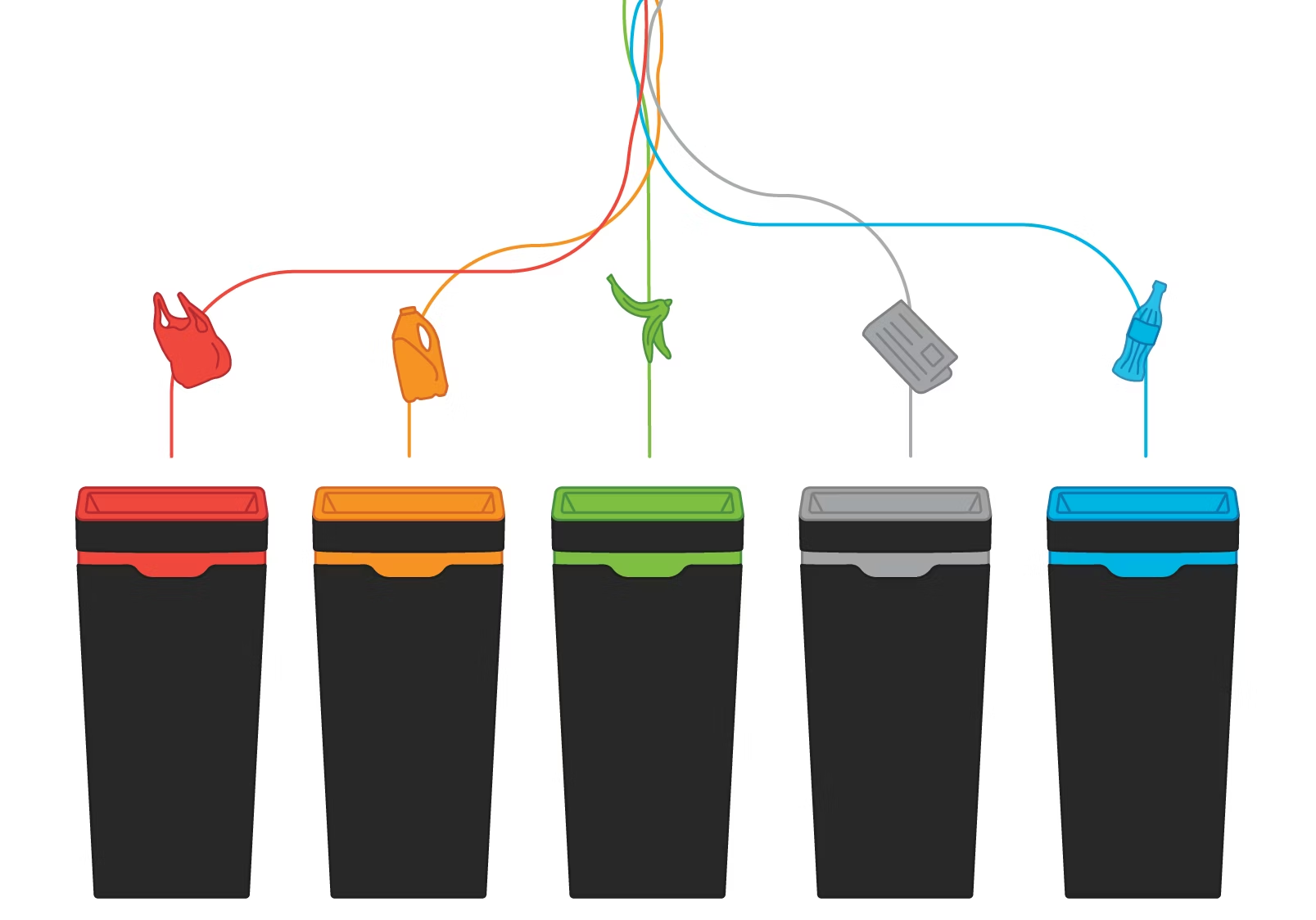
Select your bins based on the waste streams you identified in the previous step. Not every zone needs the same configuration. A kitchen station may need four or five compartments, while a corridor near a printer needs only two or three.
Consider these factors when choosing equipment for your office recycling setup:
- Number of streams per location: Match the number of compartments to the waste types generated in that specific zone, not a one-size-fits-all count.
- Volume capacity: High-traffic areas need larger or more frequently emptied bins. Estimate daily waste generation and choose accordingly.
- Adaptability: Office needs change. Look for modular systems that let you add, remove, or reconfigure compartments without replacing the entire unit.
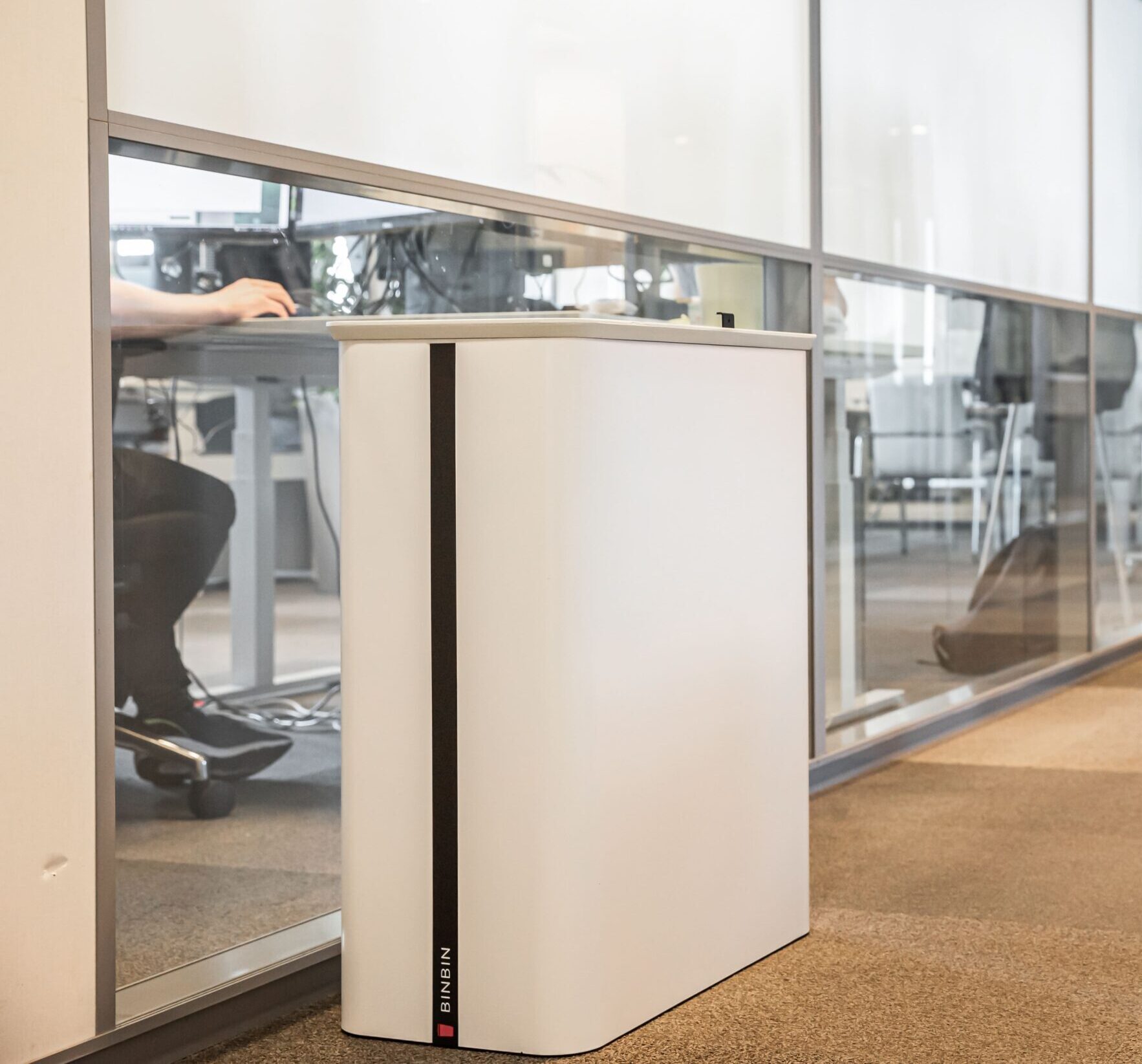
- Aesthetics: Bins that look good get used correctly. A system that clashes with the office environment tends to be ignored or misused.
When you have confirmed your configurations, request a tailored quote to get accurate pricing before finalising your order.
Position and label your bins for maximum compliance
Place your bins in high-visibility, high-traffic locations. The entrance to the kitchen, next to the coffee machine, near the printer, and at the main exit from an open-plan area are all strong positions. Avoid tucking bins into corners or behind doors where they are easy to overlook.
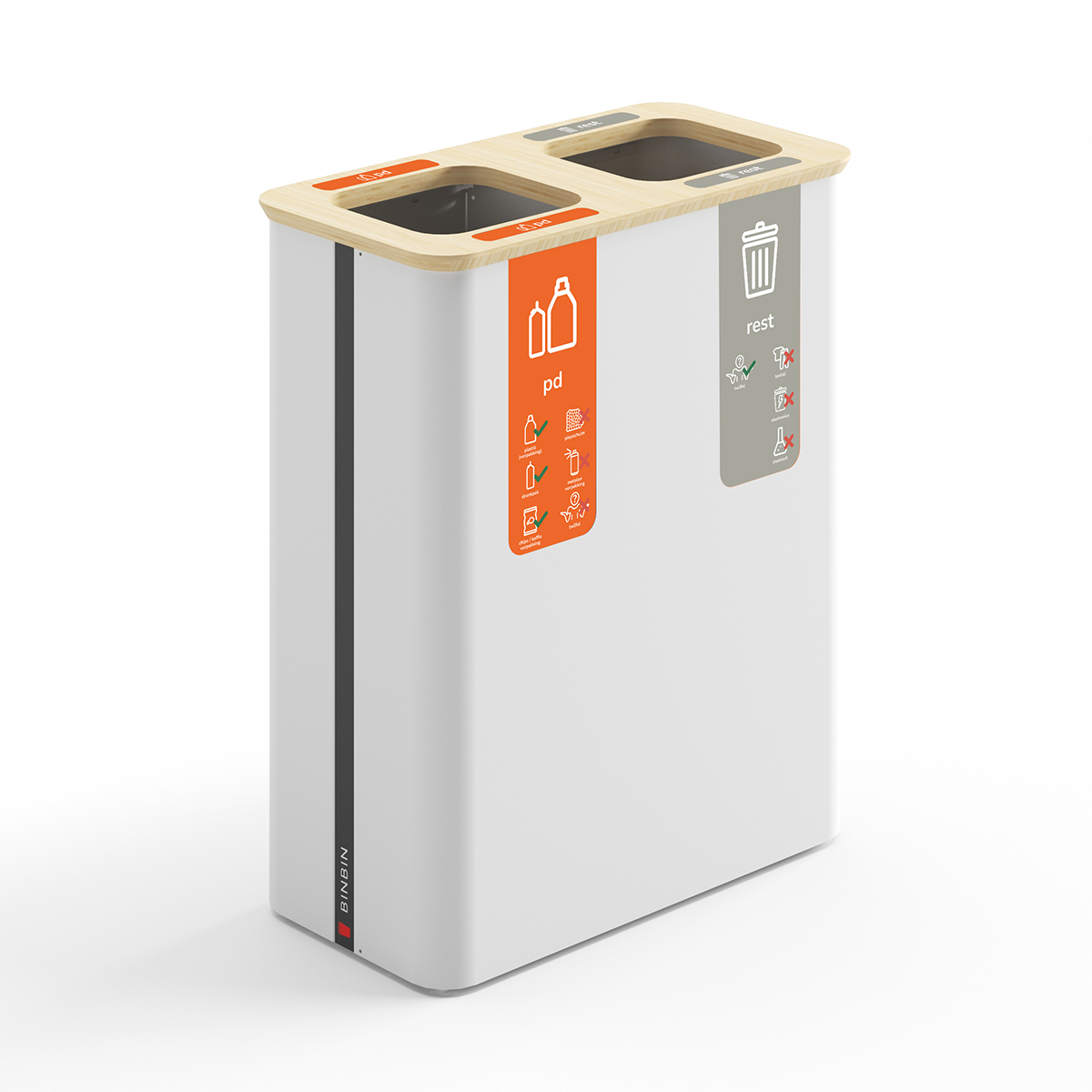
Labelling is where many office recycling setups fail. Use clear, consistent visual cues on every compartment: a short text label, a colour code, and ideally a pictogram showing what belongs inside. The combination of three cues reduces sorting errors significantly, particularly for new employees or visitors.
Check that every bin is positioned so that someone approaching it can read all labels without having to move around it. If a label is only visible from one angle, reposition the bin or add a label to a second face.
Communicate the new system to your team
Even the best-designed waste separation office system will underperform if your team does not understand it. Plan a short communication campaign around your launch date rather than simply placing new bins and hoping for the best.
A practical communication approach includes:
- Send a brief email or intranet post one week before launch explaining what is changing and why it matters.
- Hold a five-minute team briefing or include it in a regular stand-up on launch day, showing where the new stations are and what goes where.
- Post a simple one-page sorting guide in the kitchen and near each main station for the first month.
- Nominate a point of contact per floor or team who can answer questions and flag any issues.
Engagement does not need to be elaborate. People sort waste correctly when they understand the reason, know exactly what to do, and find it easy to do the right thing. Your communication just needs to cover those three bases clearly.
Track results and adjust your setup over time
Review your system after the first four to six weeks. Ask your cleaning team or waste contractor for feedback on what they are finding in each stream. High contamination in a specific bin is a signal that either the labelling needs to improve or the bin is positioned in the wrong zone.
Schedule a brief quarterly review to assess whether your setup still matches your office's actual waste patterns. Teams grow, office layouts change, and new waste streams emerge. A system that was right at launch may need reconfiguring six months later.
Track a few simple metrics to measure progress over time: the proportion of waste going to residual versus separated streams, the frequency at which bins need emptying, and any feedback from employees. These numbers give you concrete data to report back to management and to justify future investment in your office waste management infrastructure.
How BINBIN helps with office waste separation
We designed our modular bin systems specifically for organisations that want a professional, flexible, and future-proof approach to waste sorting in the office. Rather than replacing your entire setup every time your needs change, our Globular series adapts with you.
Here is what working with us looks like in practice:
- Fully configurable compartments: Set up one to eight waste streams per unit, and split or merge compartments as your office layout or waste volumes evolve
- Clean, professional design: Our bins integrate naturally into modern office environments without looking like an afterthought
- Sector-specific experience: We work with offices, educational institutions, hospitality businesses, and public spaces across the Netherlands and beyond. Explore our industry solutions to see what applies to your context
- Trial placement available: Not sure which configuration works best for your office? We offer a trial placement so you can test before committing
- 99% circular materials: Our bins are made from recycled and recyclable materials, keeping your procurement aligned with your sustainability goals
Ready to build a waste separation system your team will actually use? Request a quote or browse our product range to find the right fit for your office.