Hospitals generate enormous amounts of waste every day, making them some of the most resource-intensive facilities in any community. Healthcare facilities produce multiple waste streams that require specialised handling, from general refuse to hazardous medical materials. Understanding hospital waste patterns reveals both environmental challenges and opportunities for more sustainable healthcare operations through better hospital waste management practices.
How much waste do hospitals actually generate every day?
A typical hospital generates between 25 and 35 pounds of waste per patient per day, significantly more than most other industries. This includes general waste, regulated medical waste, pharmaceutical waste, and hazardous materials that require specialised disposal methods.
The waste composition breaks down into several distinct categories. General waste accounts for roughly 80–85% of total hospital waste and includes items such as food packaging, office paper, and non-contaminated materials. Medical waste represents 10–15% but requires the most expensive disposal methods due to infection-control requirements.
Hazardous waste, including chemotherapy drugs and laboratory chemicals, makes up 3–5% of the total volume but carries the highest disposal costs and environmental risks. Large teaching hospitals with more than 500 beds can generate 15–20 tonnes of total waste daily, while smaller community hospitals typically produce 3–8 tonnes per day.
The sheer volume creates logistical challenges that hospitals must address in their waste management. Storage areas quickly fill up, requiring frequent collections and creating potential safety hazards when different waste types are not properly separated.
What makes hospital waste so expensive to manage?
Hospital waste disposal costs are dramatically higher than those for general commercial waste due to strict regulatory requirements and specialised treatment processes. Medical waste can cost 10–15 times more to dispose of than regular refuse, with prices ranging from £800 to £1,200 per tonne.
Regulatory compliance drives much of the expense. Healthcare facilities must follow detailed protocols for waste segregation, packaging, labelling, and documentation. Staff training requirements add ongoing costs, as does the liability insurance needed for handling potentially infectious materials.
Transportation costs are substantial because medical waste requires licensed carriers using specialised vehicles. Treatment facilities use expensive processes such as autoclaving or incineration, which require significant energy and equipment investments that are passed on to hospitals.
Storage requirements add another layer of cost. Hospitals need separate, secure areas for different waste types, often requiring refrigeration for certain materials. When waste is not properly segregated, entire loads may be treated as medical waste, multiplying disposal costs unnecessarily.
Why do hospitals struggle with effective waste separation?
Healthcare facilities face unique challenges in implementing proper waste segregation due to fast-paced environments, complex regulations, and staff training difficulties. Time pressures during patient care often lead to everything being disposed of as medical waste for safety.
Staff turnover complicates training efforts. New employees need comprehensive education about waste categories, but busy schedules make thorough training difficult. Different departments may have varying waste streams, requiring specialised knowledge that is hard to maintain consistently.
The regulatory complexity creates confusion about proper classification. Staff often err on the side of caution, disposing of general waste in medical waste containers to avoid potential violations. This conservative approach significantly increases disposal costs.
Infrastructure limitations present practical barriers. Many hospitals have inadequate space for multiple waste containers in patient rooms and work areas. Existing waste systems may not accommodate the variety of waste streams modern healthcare generates.
Equipment and supply considerations add complexity. Single-use medical devices create large volumes of packaging waste that may or may not require special handling, depending on contamination levels and local regulations.
What are the biggest sources of unnecessary waste in hospitals?
Packaging materials represent the largest source of unnecessary waste in healthcare facilities. Medical supplies arrive with multiple layers of sterile packaging, much of which becomes general waste rather than medical waste once properly handled.
Key waste generation hotspots include:
- Operating theatres - Single-use surgical instruments, drapes, and packaging create enormous waste volumes
- Patient rooms - Food service items, linens, and visitor-related waste are often mixed inappropriately
- Pharmacies - Expired medications and packaging materials requiring specialised disposal
- Laboratories - Sample containers, testing supplies, and chemical waste streams
- Administrative areas - Paper waste, office supplies, and general refuse mixed with clinical waste
Food waste represents another significant opportunity. Hospital cafeterias and patient meal services generate substantial organic waste that could be composted rather than sent to landfill. Poor portion planning and limited food recovery programmes contribute to this waste stream.
Improper segregation creates artificial waste problems. When general refuse gets mixed with medical waste, entire containers must be treated as hazardous material, dramatically increasing disposal costs and environmental impact.
How can hospitals reduce their environmental footprint through better waste management?
Hospitals can significantly reduce their environmental impact through comprehensive waste reduction strategies that focus on source reduction, proper segregation, and alternative disposal methods. Effective programmes typically reduce total waste volumes by 20–30% while cutting disposal costs substantially.
Implementing proper waste segregation training reduces medical waste volumes by ensuring only truly contaminated materials receive expensive treatment. Regular staff education and clear labelling systems help maintain consistent practices across all departments.
Source reduction strategies include:
- Negotiating with suppliers to reduce packaging materials
- Implementing reusable alternatives where safely possible
- Establishing pharmaceutical return programmes for unexpired medications
- Creating food waste reduction and composting programmes
- Installing efficient recycling systems for paper, cardboard, and plastics
Technology solutions can improve tracking and compliance. Digital waste management systems help monitor waste streams, identify reduction opportunities, and ensure regulatory compliance while reducing administrative burden.
Partnering with waste management companies that offer sustainable treatment options, such as steam sterilisation instead of incineration, reduces environmental impact while maintaining safety standards.
How BINBIN helps with hospital waste management
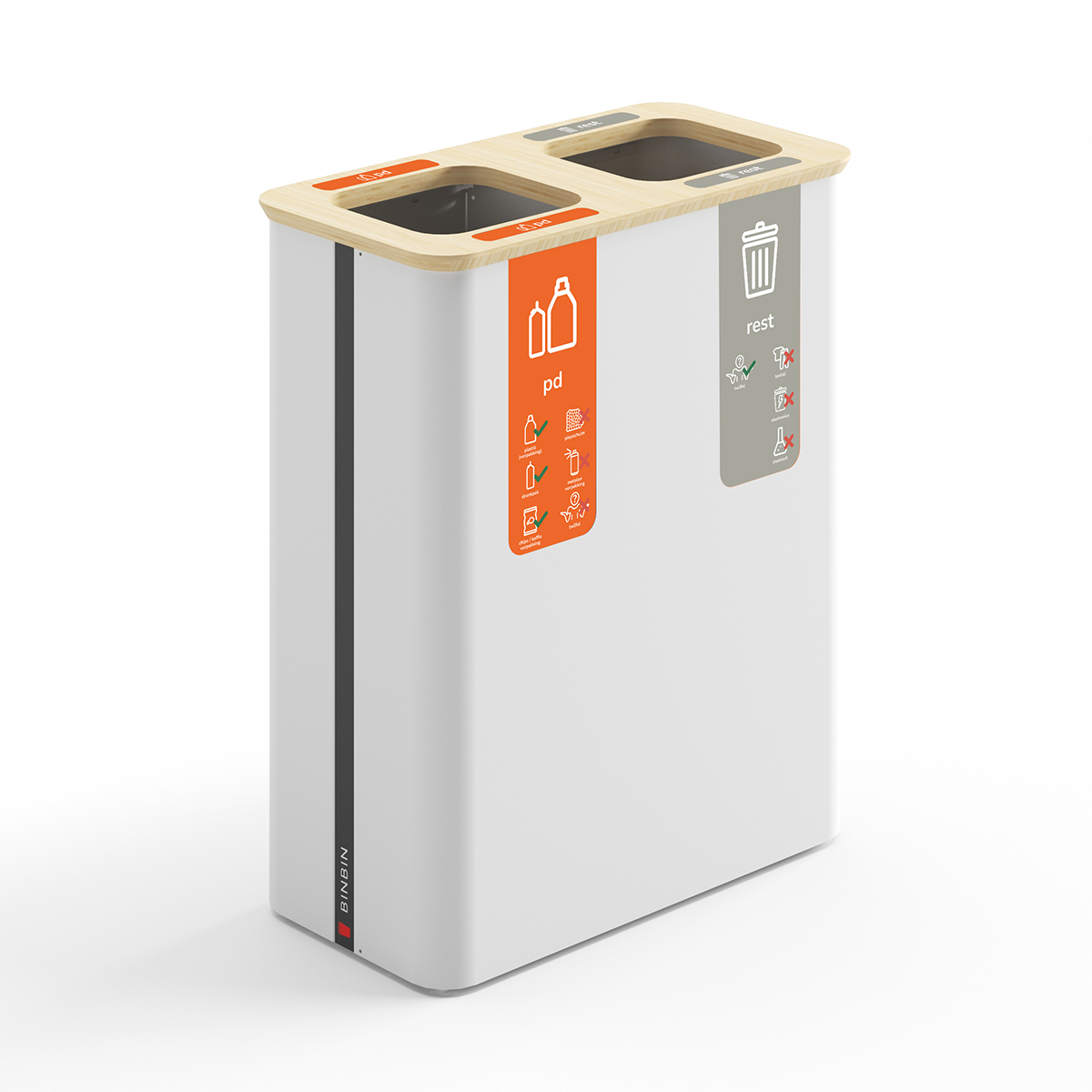
We provide modular waste separation solutions specifically designed to address the complex challenges healthcare facilities face in managing multiple waste streams efficiently and safely. Our systems help hospitals achieve proper segregation while reducing disposal costs and improving compliance.
Our healthcare waste management solutions include:
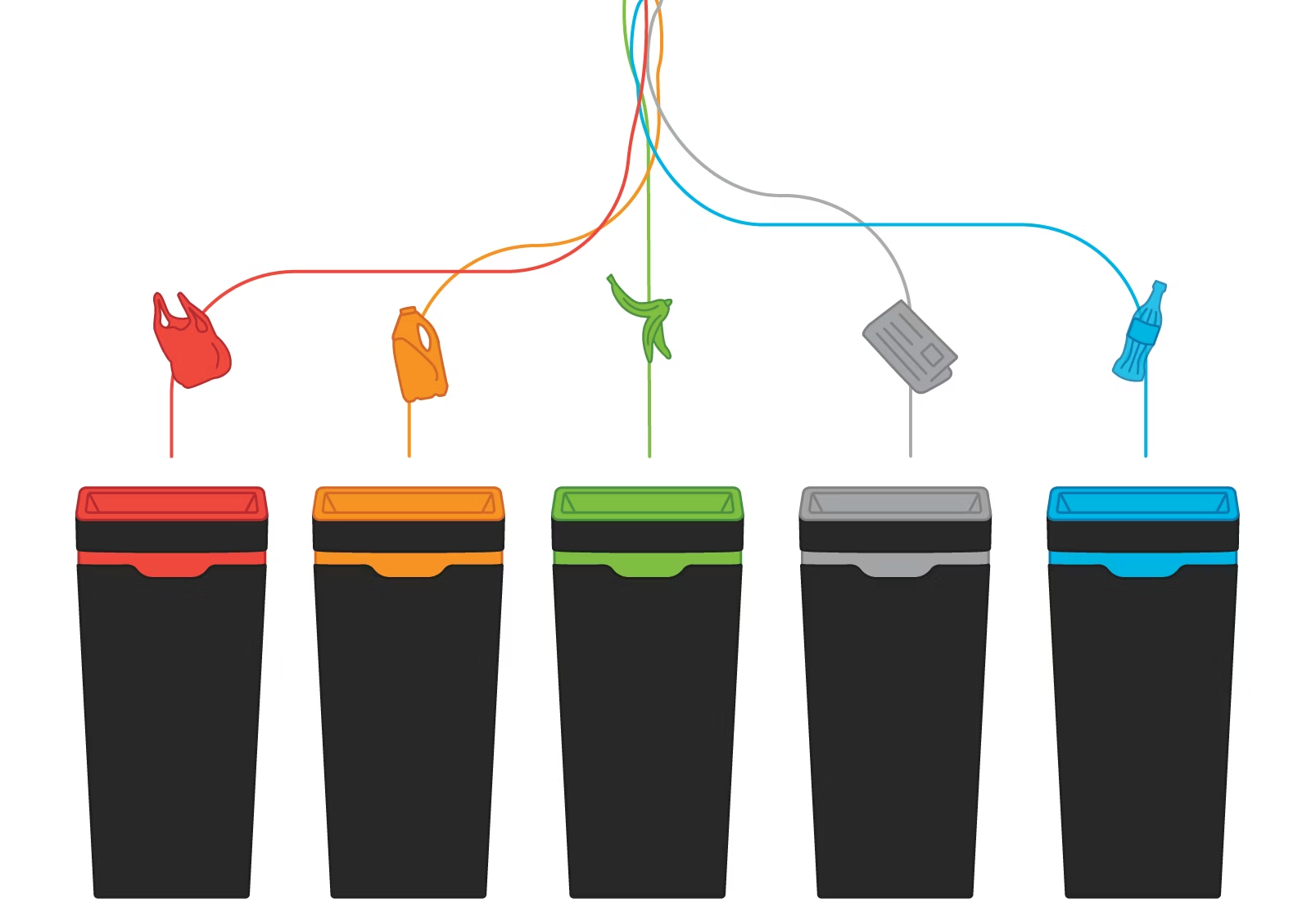
- Modular separation systems that accommodate 1–8 different waste streams in compact footprints suitable for patient rooms and clinical areas
- Clear labelling and colour-coding systems that reduce segregation errors and improve staff compliance
- Flexible configurations that adapt as waste management requirements change
- Durable, easy-to-clean materials that meet healthcare hygiene standards
We offer trial placements that allow hospitals to test our solutions in real-world conditions before making purchasing decisions. Our team provides comprehensive implementation support, including staff training materials and ongoing optimisation advice.
Ready to improve your hospital's waste management efficiency? Contact us for a personalised consultation and quote tailored to your facility's specific needs.