Certain food scraps can completely disrupt your composting process and create serious problems. Meat, dairy products, oils, cooked foods, and diseased plants should never go in your compost bin. These materials attract pests, produce foul odours, and can introduce harmful bacteria that kill beneficial microorganisms essential for proper decomposition.
What food scraps should never go in your compost bin?
The most problematic food scraps include meat and fish, dairy products such as cheese and milk, cooking oils and fats, cooked foods with seasonings, and any diseased or pest-infested plant material. These items fundamentally disrupt the composting process by creating anaerobic conditions, attracting unwanted visitors, and introducing materials that beneficial microorganisms cannot properly break down.
Citrus peels in large quantities can also cause problems because their natural oils can kill earthworms and slow decomposition. Pet waste should never be composted due to potential parasites and diseases that can survive the composting process. Processed foods containing preservatives, artificial ingredients, or high salt content can create toxic conditions for the microorganisms that drive healthy composting.
These materials cause three main issues: they attract rodents, flies, and other pests; they produce terrible smells as they rot rather than decompose; and they can introduce harmful bacteria that contaminate your finished compost. Understanding what to avoid is crucial for maintaining a healthy, productive compost system.
Why do meat and dairy products ruin compost piles?
Meat and dairy products create anaerobic conditions in compost piles, leading to putrefaction rather than proper decomposition. Unlike plant matter, these animal products contain proteins and fats that break down differently, producing hydrogen sulphide and other compounds that smell terrible and attract scavengers such as rats, raccoons, and flies.
The decomposition process for animal products requires much higher temperatures than typical home composting systems can achieve. Commercial composting facilities reach internal temperatures of 60-70°C, which kills harmful bacteria such as Salmonella and E. coli. Home compost piles rarely exceed 40-50°C, allowing these dangerous pathogens to survive and potentially contaminate your garden soil.
Animal products also upset the carbon-to-nitrogen balance essential for healthy composting. They are extremely high in nitrogen, which can make your pile too "hot" and kill beneficial microorganisms. Excess nitrogen can also create ammonia, which produces a sharp, unpleasant smell and can burn plant roots when you eventually use the compost.
Which kitchen scraps attract unwanted pests to compost?
Sweet and fatty kitchen scraps are particularly attractive to pests. Fruit juice, sugary foods, bread, pasta, and anything containing oils or butter will draw flies, ants, mice, and larger scavengers. Cooked foods with seasonings, sauces, or dressings are especially problematic because they combine multiple attractive elements.
The most pest-attracting items include:
- Leftover pizza, sandwiches, or any prepared meals
- Fruit that is overly ripe or fermenting
- Nuts, seeds, and anything containing oils
- Sugary drinks, coffee with milk, or alcoholic beverages
- Pet food, both wet and dry varieties
- Bones of any kind, including chicken and fish bones
These materials create feeding opportunities that attract pests initially for the food, but they often stay to nest in the warm, sheltered environment of your compost pile. Mice and rats are particularly problematic because they can carry diseases and will continue returning once they have identified your compost as a food source.
What happens if you compost the wrong food waste?
Adding inappropriate materials to your compost creates a cascade of problems that can take months to resolve. The immediate consequence is usually foul odours as materials putrefy rather than decompose properly. These smells attract flies, which lay eggs and create maggot infestations that further complicate the composting process.
Inappropriate materials can kill beneficial microorganisms through pH imbalances, toxic compounds, or oxygen depletion. Without these essential bacteria and fungi, your compost pile stops working effectively. The decomposition process slows dramatically, and you may notice that materials that should break down quickly remain unchanged for months.
Pest infestations become increasingly difficult to eliminate once established. Rodents will continue visiting even after you remove the materials that attracted them, and they may have already created nests or burrows in or around your compost area. Contaminated compost may also harbour harmful bacteria that can make you ill or damage your plants when applied to garden beds.
How do you properly separate organic waste for composting?
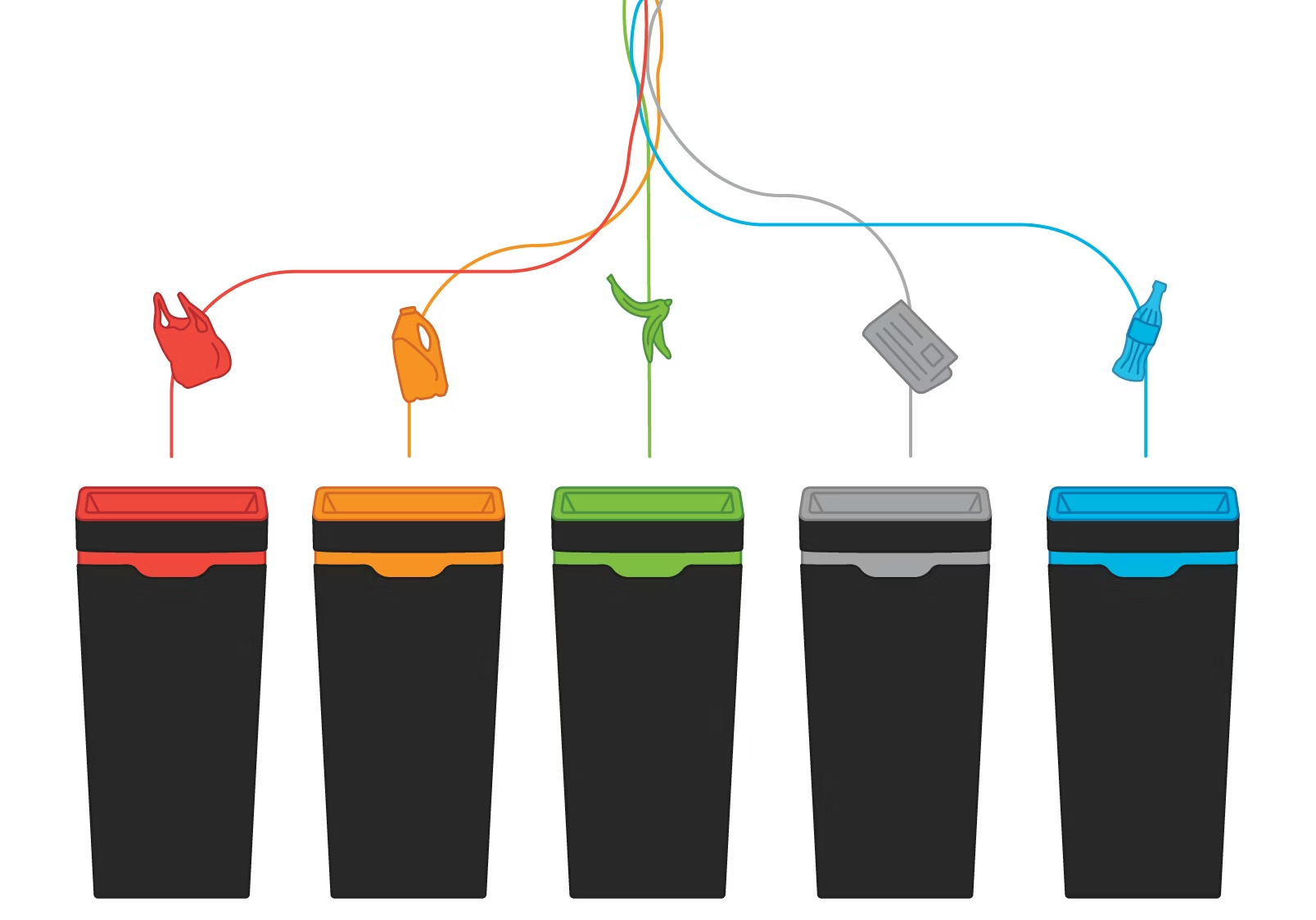
Effective organic waste separation starts with understanding the difference between compostable and non-compostable materials. Set up a simple system in your kitchen with clearly labelled containers: one for compostable materials and another for items that require different disposal methods. This makes proper separation automatic and prevents mistakes.
Follow this step-by-step separation process:
- Create a "green" container for nitrogen-rich materials such as vegetable scraps, fruit peels, and coffee grounds
- Designate a separate collection area for "brown" materials such as dry leaves, paper, and cardboard
- Establish a third category for problematic items that require special disposal or different composting methods
- Train household members on what goes where using simple visual guides
- Empty compostable materials regularly to prevent odours and fruit flies
Store your compostable materials in containers with tight-fitting lids and empty them every 2-3 days. Keep your collection container in a cool area, and consider using compostable liners to make emptying easier. For offices implementing waste management at the office, clear separation systems become even more critical because multiple people need to understand and follow the same guidelines.
How BINBIN helps with organic waste separation
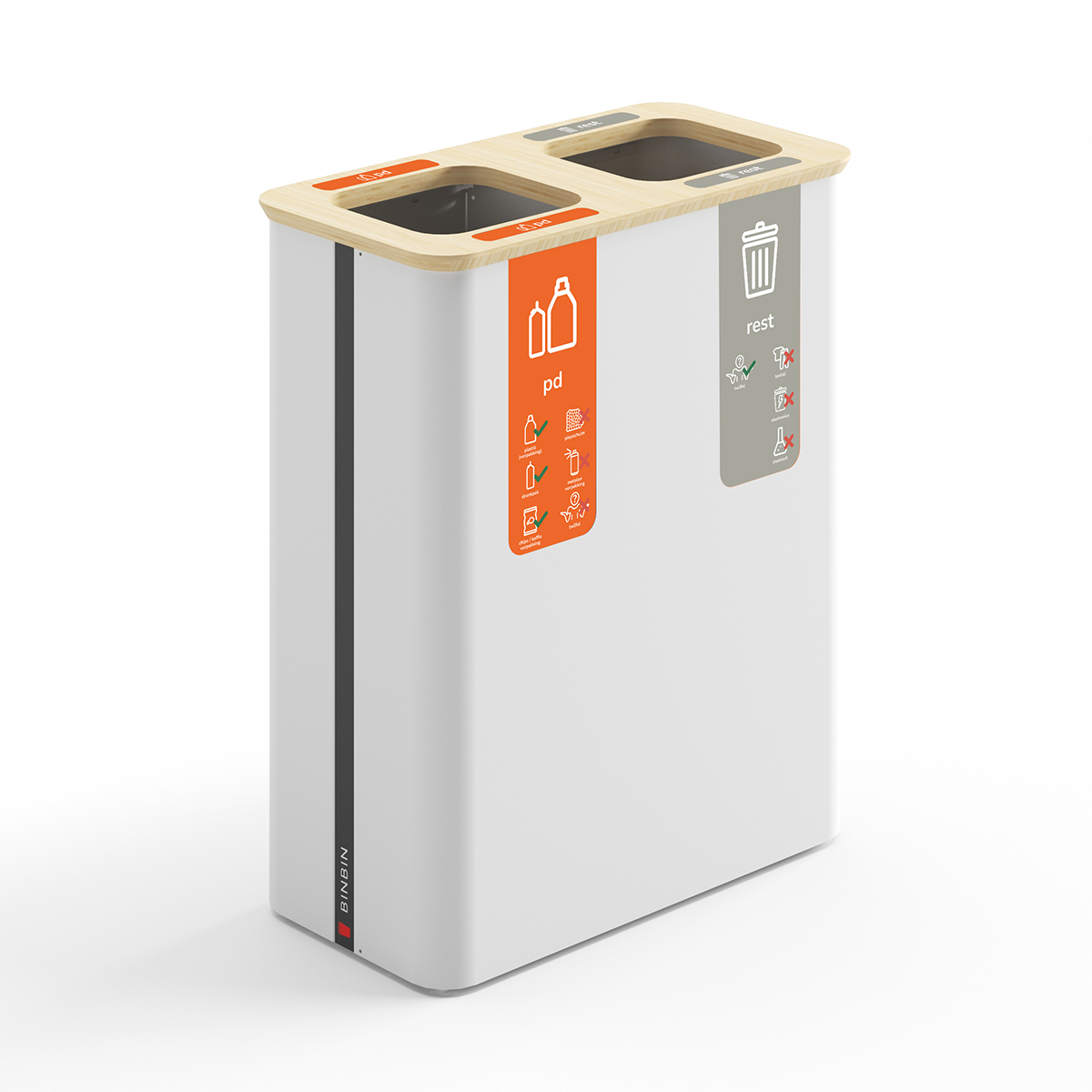
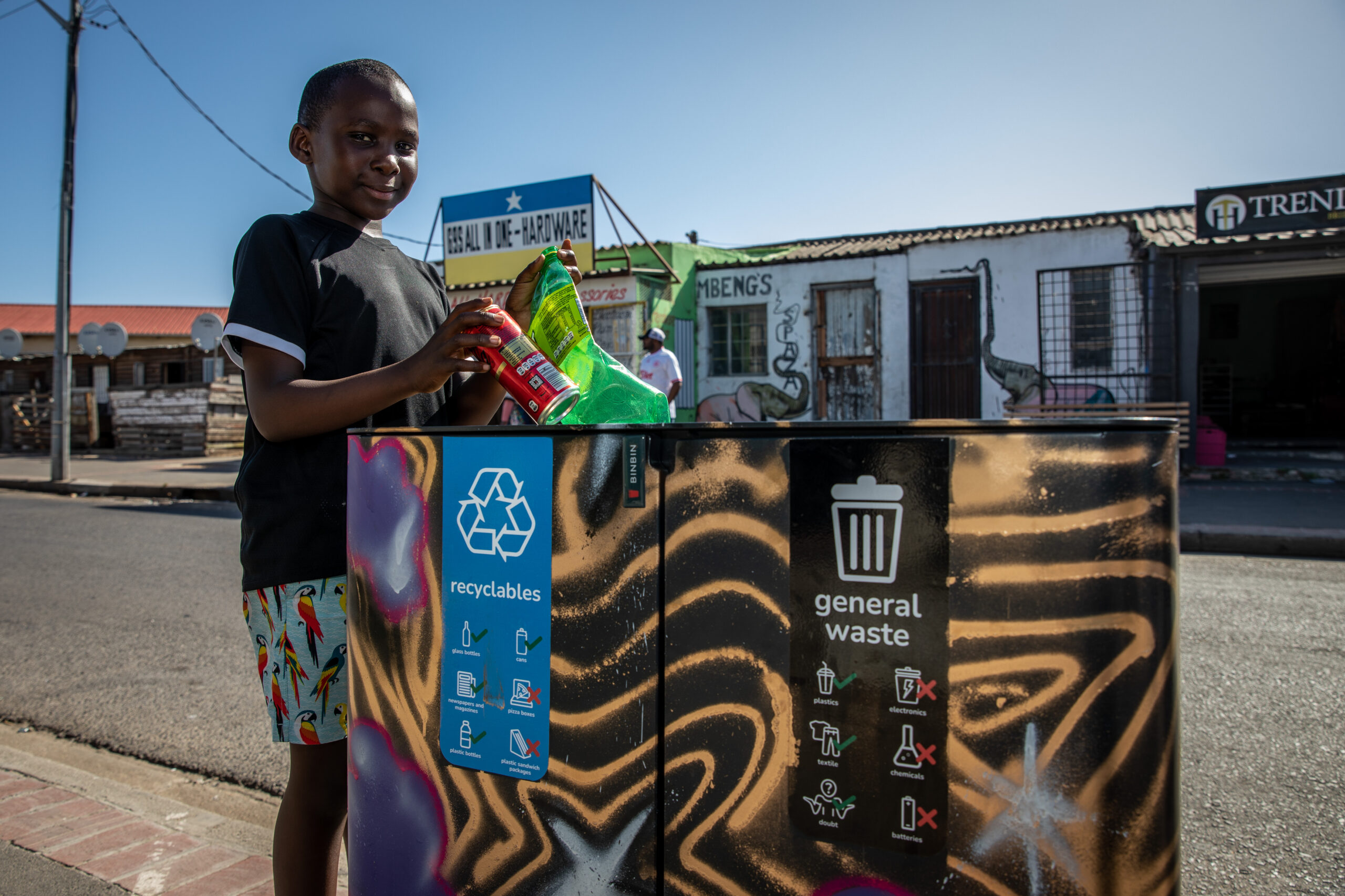
We provide modular waste separation systems that make organic waste sorting straightforward and efficient in any environment. Our solutions address the common challenge of implementing proper waste separation by offering intuitive, clearly labelled compartments that guide users toward correct disposal decisions.
Our organic waste separation solutions include:
- Clearly marked compartments for different waste streams, including dedicated organic waste sections
- Modular design allowing you to configure 1-8 different waste categories based on your specific needs
- Internal splitting options that eliminate the need for new bins as requirements change
- Custom labelling and pictograms that make separation obvious for all users
- Stylish designs that integrate seamlessly into office environments while encouraging proper use
Whether you're implementing composting programs in offices, schools, or hospitality venues, our modular systems adapt to your specific organic waste separation needs. We provide comprehensive implementation support, including staff training materials and ongoing guidance, to ensure your waste separation program succeeds.
Ready to improve your organic waste management? Contact us to discuss how our separation systems can streamline your composting efforts, or explore our trial placement option to test our solutions in your environment.