Waste separation involves sorting different types of waste materials into designated categories for proper disposal and recycling. This practice reduces environmental impact, lowers disposal costs, and helps organisations comply with legal requirements. Effective waste separation creates cleaner workplaces whilst contributing to sustainable business operations and circular economy principles.
What exactly is waste separation, and why does it matter?
Waste separation is the systematic sorting of discarded materials into different categories such as paper, plastic, organic waste, and general refuse. This process enables proper recycling, composting, and disposal whilst maximising resource recovery from waste streams.
The practice has become crucial because traditional waste disposal methods strain natural resources and contribute to environmental degradation. When waste materials are properly separated, valuable resources can be recovered and reused instead of being sent to landfill or incineration facilities.
For organisations, waste separation represents both an environmental responsibility and a practical necessity. Many jurisdictions now require businesses to separate certain waste types, making compliance essential to avoid penalties. Beyond legal requirements, proper waste sorting demonstrates corporate responsibility and can significantly improve a company's sustainability credentials.
The concept extends beyond simple sorting into bins. Effective waste separation requires understanding different material types, implementing appropriate collection systems, and ensuring consistent practices across all areas of an organisation.
What are the main environmental benefits of separating waste?
Proper waste separation significantly reduces landfill waste, conserves natural resources, and lowers carbon emissions associated with waste processing. It enables materials to be recycled into new products rather than being extracted from virgin resources.
When materials like paper, cardboard, and plastic are separated correctly, they can be processed into new products without requiring fresh raw materials. This conservation approach reduces the environmental impact of manufacturing processes and helps preserve natural ecosystems.
Organic waste separation enables composting, which creates valuable soil amendments whilst preventing methane emissions that occur when organic materials decompose in landfills. Methane is a greenhouse gas significantly more potent than carbon dioxide, making organic waste diversion particularly important for reducing climate impact.
The circular economy principles supported by waste separation ensure materials remain in productive use for longer periods. This approach minimises waste generation whilst creating economic value from materials that would otherwise be discarded.
How does waste separation save money for organisations?
Organisations typically save money through reduced waste processing fees, lower collection costs, and potential revenue from recyclable materials. Many waste management companies charge less for separated waste than for mixed general waste.
The financial benefits become apparent through several mechanisms:
- Lower disposal fees - Separated recyclable materials often cost less to process than general waste
- Reduced collection frequency - Less general waste means fewer expensive collections
- Revenue opportunities - Some materials like cardboard and metals can generate income
- Compliance cost avoidance - Proper separation prevents potential fines and penalties
Volume reduction represents another significant cost factor. When recyclable materials are removed from general waste streams, organisations often require smaller general waste containers or less frequent collections. This directly translates to lower monthly waste management expenses.
Some organisations discover that effective waste separation reveals opportunities for waste prevention, leading to additional cost savings through reduced purchasing and disposal needs.
What legal requirements exist for waste separation in the Netherlands?
Dutch law requires businesses to separate specific waste streams, including paper, cardboard, plastic packaging, and organic waste. The regulations apply to most commercial organisations and include penalties for non-compliance ranging from warnings to substantial fines.
The primary legislation governing business waste separation includes requirements for:
- Paper and cardboard separation for businesses generating significant quantities
- Plastic packaging waste separation, particularly for retail and distribution companies
- Organic waste separation for organisations producing food waste
- Proper handling and disposal of hazardous waste through certified contractors
- Documentation and reporting for certain waste types and quantities
Enforcement varies by municipality, but inspections can result in immediate compliance orders and financial penalties. Non-compliance can damage a business's reputation and create additional administrative burdens through required corrective actions and follow-up inspections.
The regulatory framework continues to evolve, with increasing emphasis on circular economy principles and extended producer responsibility. Staying current with requirements helps organisations avoid compliance issues whilst positioning themselves for future regulatory changes.
Which types of waste should organisations separate, and how?
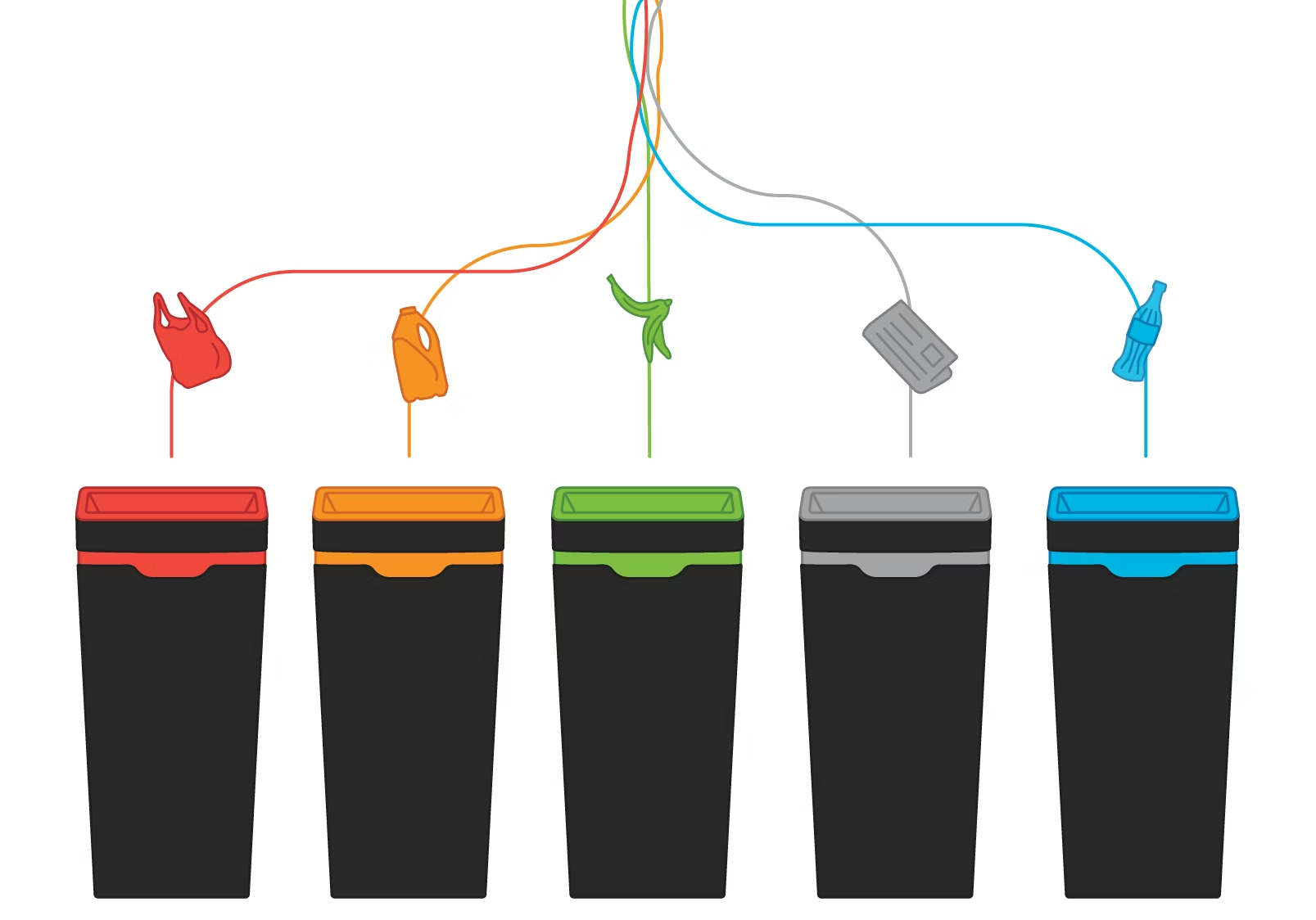
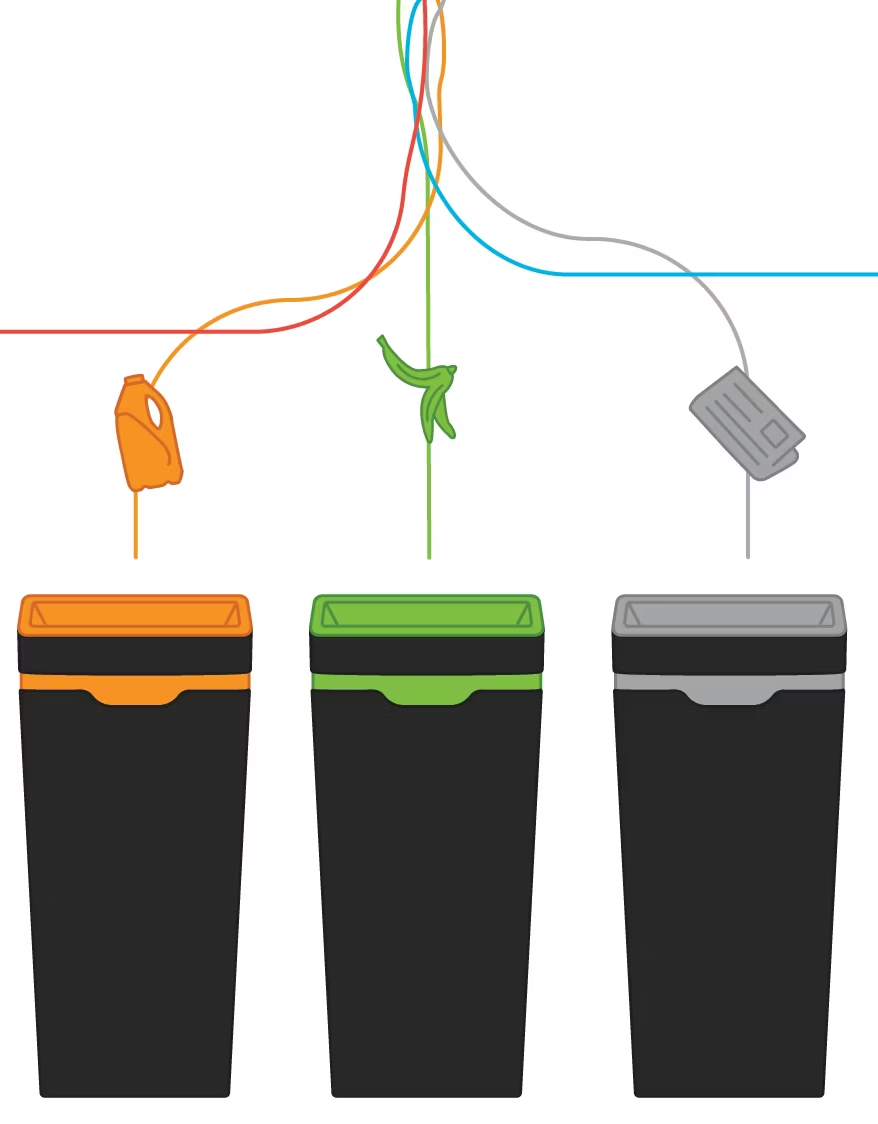
Most organisations should separate paper, cardboard, plastic packaging, organic waste, and general refuse as primary categories. Additional streams like glass, metals, and hazardous materials may require separation depending on business activities and local requirements.
Effective separation requires clear systems and consistent practices. Paper and cardboard should be kept dry and free from food contamination. Plastic packaging should be cleaned before disposal, whilst organic waste requires frequent collection to prevent odours and hygiene issues.
Best practices for workplace waste separation include:
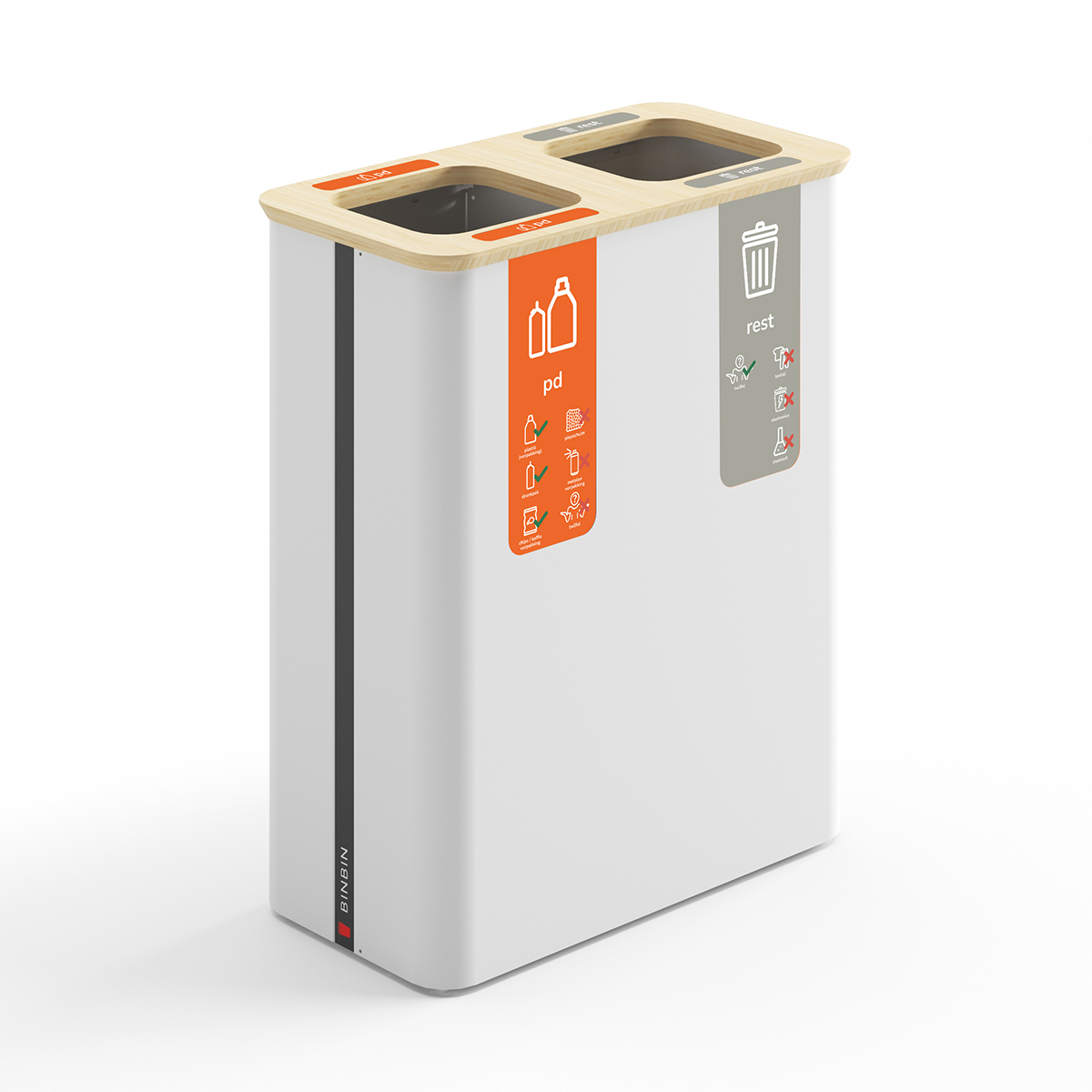
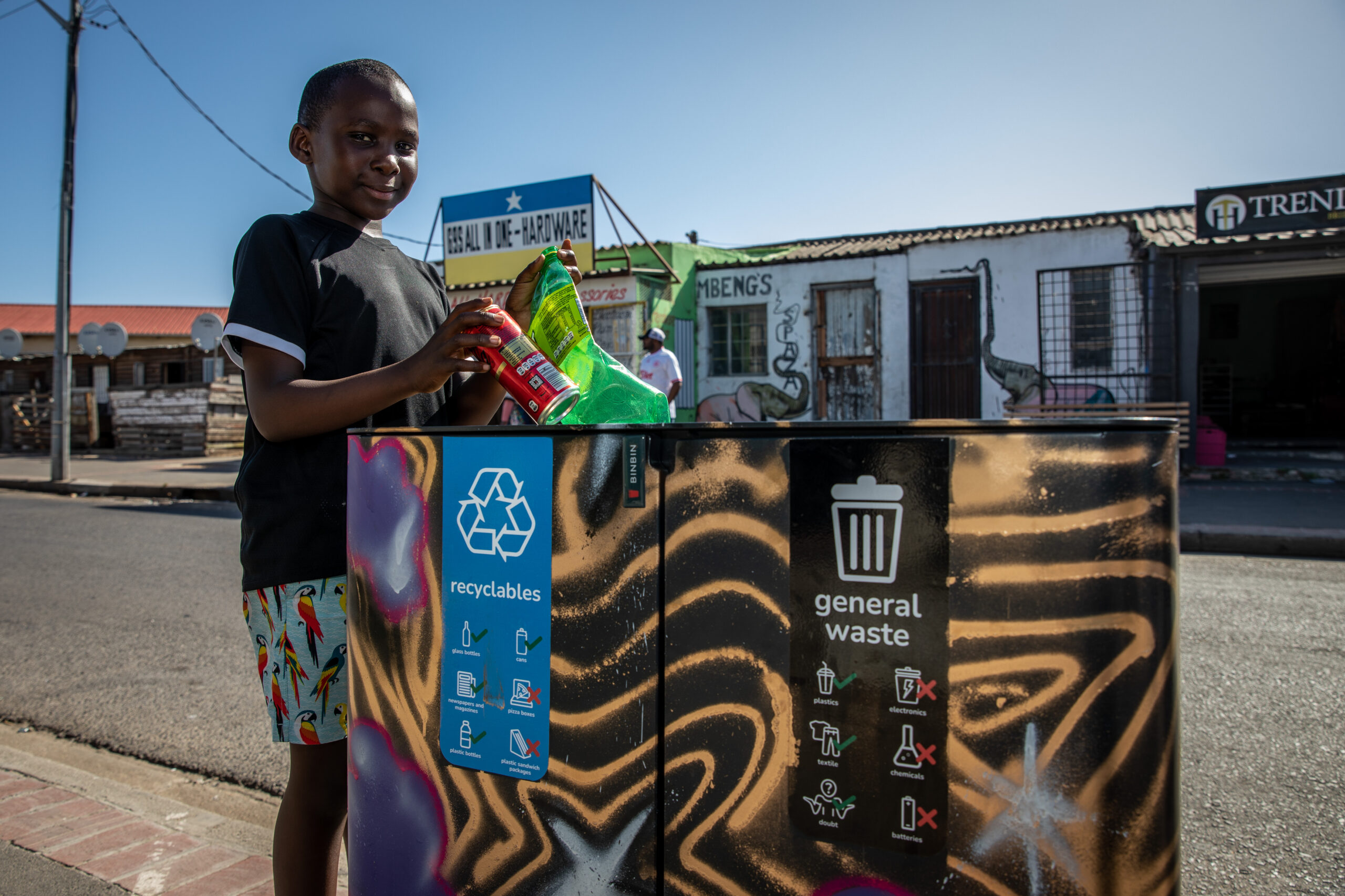
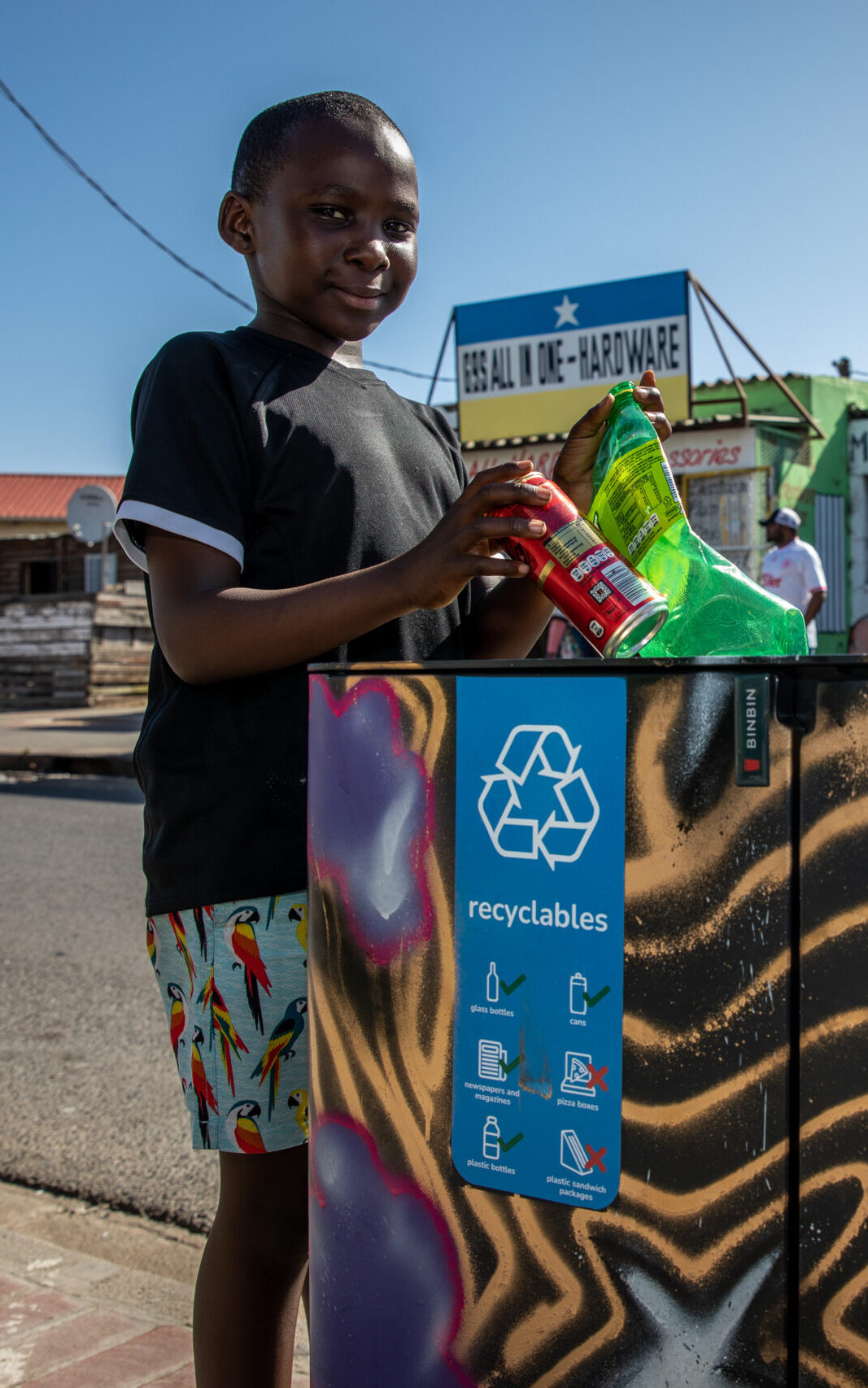
- Clearly labelled containers with visual indicators showing acceptable materials
- Strategic placement of separation bins in high-traffic areas
- Regular emptying schedules to maintain cleanliness and prevent overflow
- Staff training on proper sorting techniques and contamination prevention
Different areas within organisations may require tailored approaches. Office spaces typically generate paper and packaging waste, whilst kitchen areas produce organic waste and different packaging types. Industry-specific solutions can address unique waste generation patterns and separation requirements.
What challenges do companies face when implementing waste separation?
Common implementation challenges include changing employee behaviour, managing space constraints, handling initial setup costs, and maintaining consistent sorting practices across different areas. Employee resistance often stems from perceived inconvenience or a lack of understanding of proper procedures.
Behavioural change represents the most significant hurdle for many organisations. Employees accustomed to single-bin disposal may initially struggle with sorting decisions or find the process time-consuming. This challenge requires patience and consistent reinforcement of proper practices.
Space limitations in existing facilities can complicate bin placement and collection logistics. Organisations often need to reconfigure areas to accommodate multiple containers whilst maintaining accessibility and aesthetic standards.
Maintaining consistency across different shifts, departments, and locations requires ongoing attention. Without regular monitoring and feedback, sorting quality tends to decline over time, reducing the effectiveness of separation efforts.
Concerns about initial equipment investment and potential increases in waste management complexity can create hesitation. However, most organisations find that proper planning and phased implementation help manage these challenges whilst delivering long-term benefits.
How BINBIN helps with effective waste separation
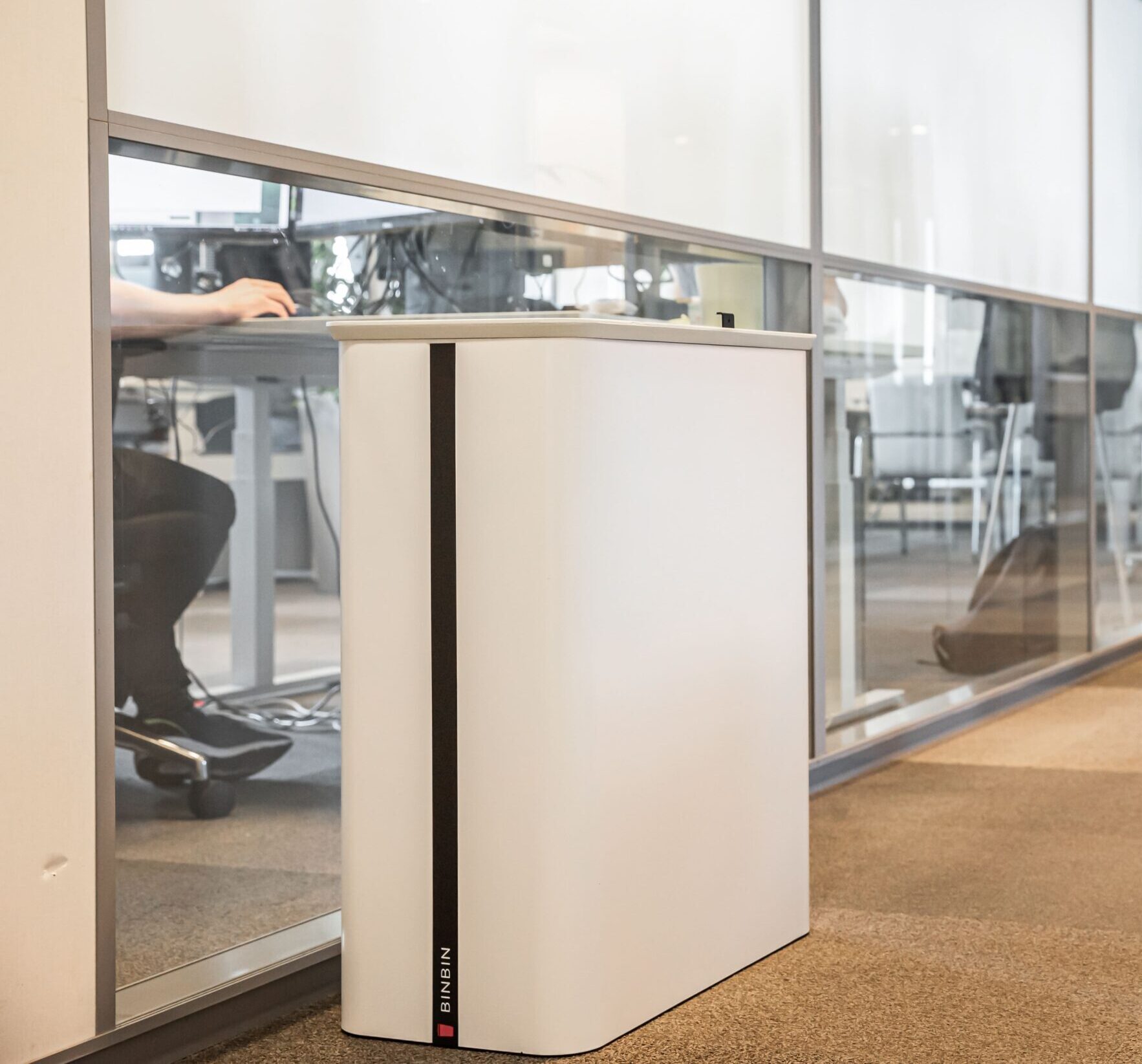
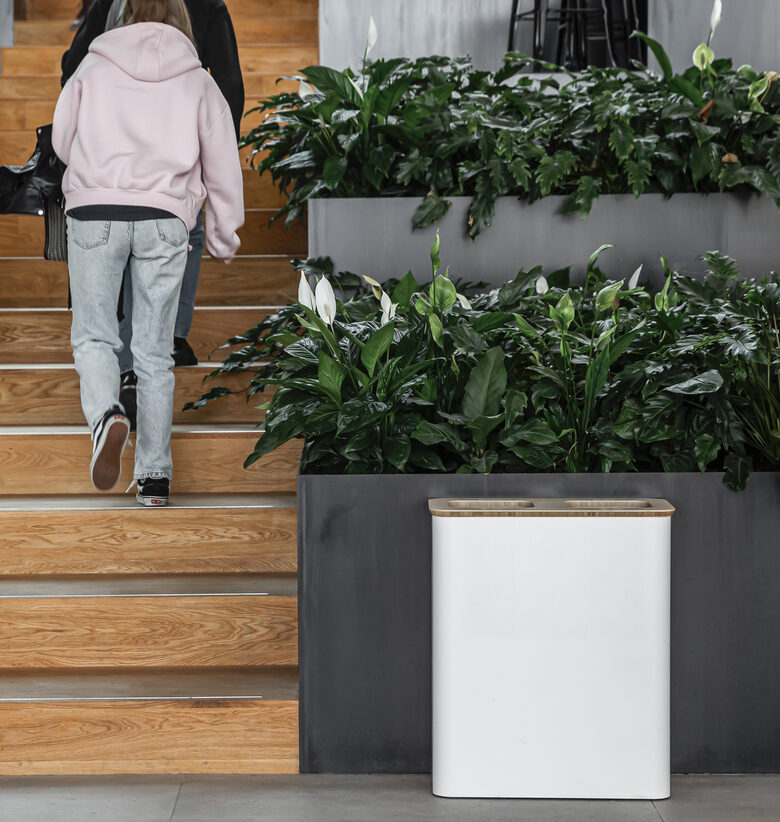
BINBIN provides modular waste separation solutions that address common implementation challenges through stylish, functional designs that integrate seamlessly into any workplace environment. Our systems make waste separation intuitive whilst maintaining the aesthetic standards organisations require.
Our approach includes:
- Modular flexibility - Configure 1 to 8 waste streams that adapt as your needs change
- Clean, professional design that complements modern office environments
- Internal splitting capabilities that eliminate the need for additional bins
- Customisation options, including branded solutions, that reinforce your sustainability message
- Comprehensive implementation support, including communication materials and staff guidance
We understand that successful waste separation requires more than just bins. Our personalised consultation service helps organisations develop effective implementation strategies, whilst our trial placement programme allows you to test solutions before committing to full implementation.
Ready to transform your waste separation approach? Request a consultation to discover how our modular solutions can address your specific requirements whilst supporting your sustainability goals.