On-site waste separation means sorting different types of waste materials directly at the location where they are generated, rather than sending mixed waste to external facilities for sorting. This approach allows organisations to separate paper, plastic, organic waste, and other materials immediately, improving recycling rates while reducing disposal costs. Understanding the benefits and challenges helps businesses implement effective waste management systems.
What does on-site waste separation actually mean?
On-site waste separation involves sorting waste materials into distinct categories directly at the source where waste is generated. Instead of throwing everything into general bins and relying on external sorting facilities, employees and users separate materials such as paper, plastic, glass, and organic waste immediately.
This approach differs significantly from centralised sorting, where mixed waste is transported to specialised facilities for mechanical or manual separation. Centralised systems often struggle with contamination and lower recovery rates because materials become mixed and damaged during collection and transport.
For organisations and workplaces, on-site waste separation requires providing multiple collection points, clear labelling systems, and employee training. The process involves strategically placing waste separation systems throughout facilities, ensuring staff understand sorting requirements, and maintaining consistent practices across all areas.
Why is proper waste separation becoming legally required?
Waste separation is becoming mandatory due to evolving environmental regulations and circular economy policies across many regions. Governments recognise that mixed waste leads to lower recycling rates and increased environmental impact, prompting legislation that requires businesses to separate materials at source.
The European Union's Waste Framework Directive requires member states to implement separate collection for paper, metal, plastic, and glass by 2025. Many countries have introduced extended producer responsibility schemes, making businesses accountable for their waste streams and encouraging better separation practices.
Compliance requirements vary by location and organisation size, but the trend is clearly moving towards stricter waste management obligations. Businesses face potential fines for non-compliance, while those implementing proper separation often benefit from reduced waste processing fees and improved environmental credentials.
What are the real financial benefits of separating waste on-site?
On-site waste separation delivers substantial cost savings through reduced waste processing fees and lower disposal costs. When materials are properly separated, organisations pay significantly less for waste collection because clean recyclables command better prices than mixed waste streams.
The financial advantages include:
- Lower disposal fees for general waste due to reduced volumes
- Potential revenue from selling clean recyclable materials
- Reduced collection frequency requirements for residual waste
- Avoided penalties and fines for regulatory non-compliance
- Improved operational efficiency through streamlined waste management
Long-term economic benefits extend beyond direct cost savings. Companies with strong environmental practices often see improved brand reputation, enhanced employee satisfaction, and better positioning for contracts requiring sustainability credentials.
How does on-site waste separation support environmental goals?
On-site waste separation significantly reduces environmental impact by ensuring materials maintain quality for effective recycling. When waste is separated at source, contamination levels drop dramatically, allowing more materials to re-enter production cycles rather than ending up in landfills or incineration facilities.
This approach directly supports circular economy principles by keeping resources in productive use for longer periods. Clean separation enables materials to maintain their value through multiple recycling cycles, reducing demand for virgin resources and associated extraction impacts.
Carbon footprint reduction occurs through several mechanisms: decreased transport requirements for mixed-waste processing, reduced energy consumption in sorting facilities, and lower emissions from manufacturing new materials. Resource conservation benefits include preserving natural habitats, reducing water consumption in production processes, and minimising chemical use in material processing.
What challenges do organisations face when implementing waste separation?
Employee adoption represents the most significant challenge in implementing waste separation systems. Many staff members resist changing established habits, particularly when new systems seem complex or time-consuming compared to single-bin disposal methods.
Common implementation obstacles include:
- Space constraints in existing facilities limiting placement options
- Initial investment costs for separation infrastructure
- Ongoing training requirements for staff and visitors
- Maintaining system cleanliness and preventing contamination
- Monitoring compliance and addressing incorrect sorting behaviours
System complexity can overwhelm users when too many categories are introduced simultaneously. Successful implementation requires gradual introduction, clear visual guidance, and consistent communication about proper sorting practices. Regular monitoring and feedback help maintain engagement and improve separation quality over time.
How BINBIN helps with on-site waste separation
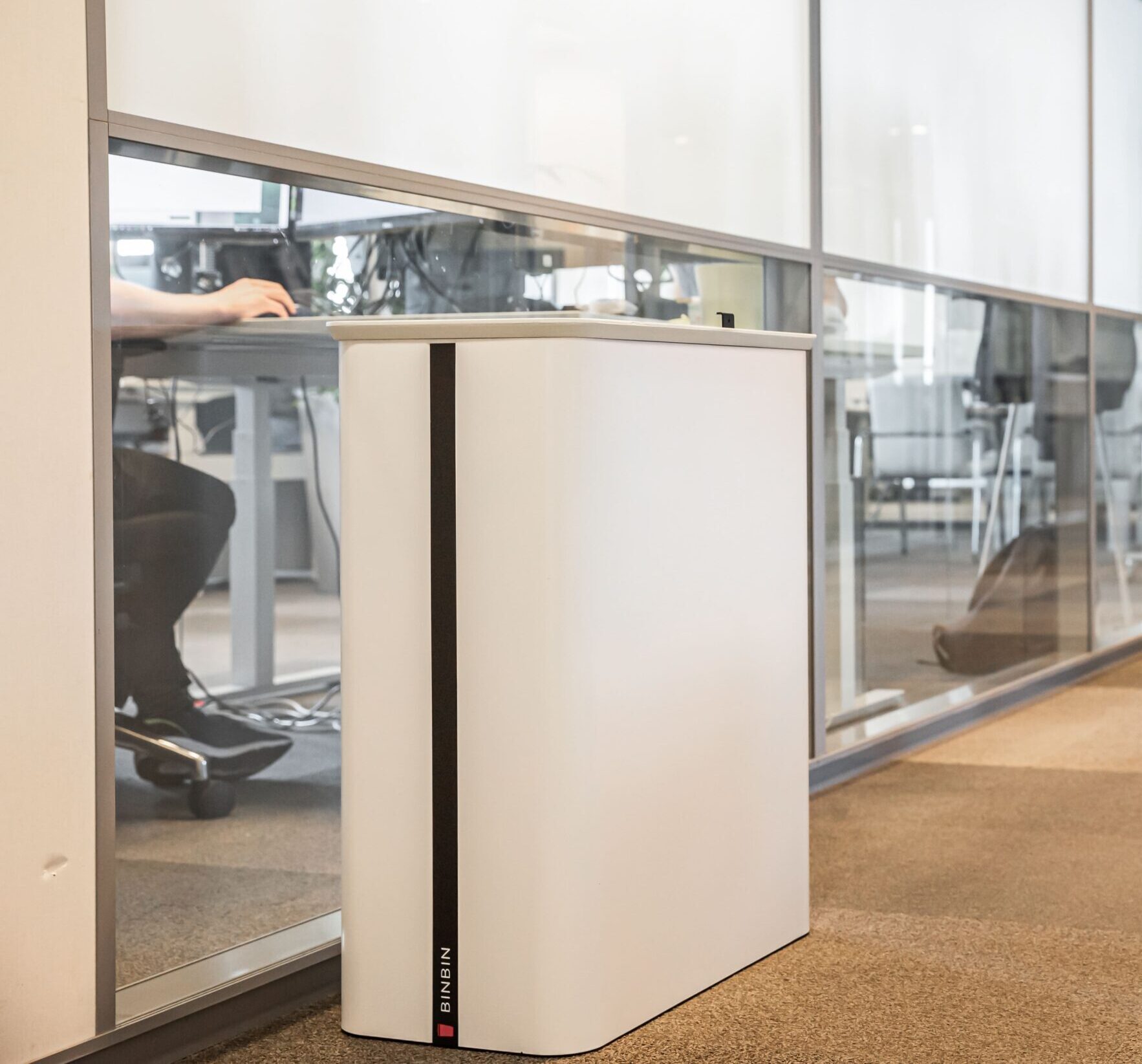
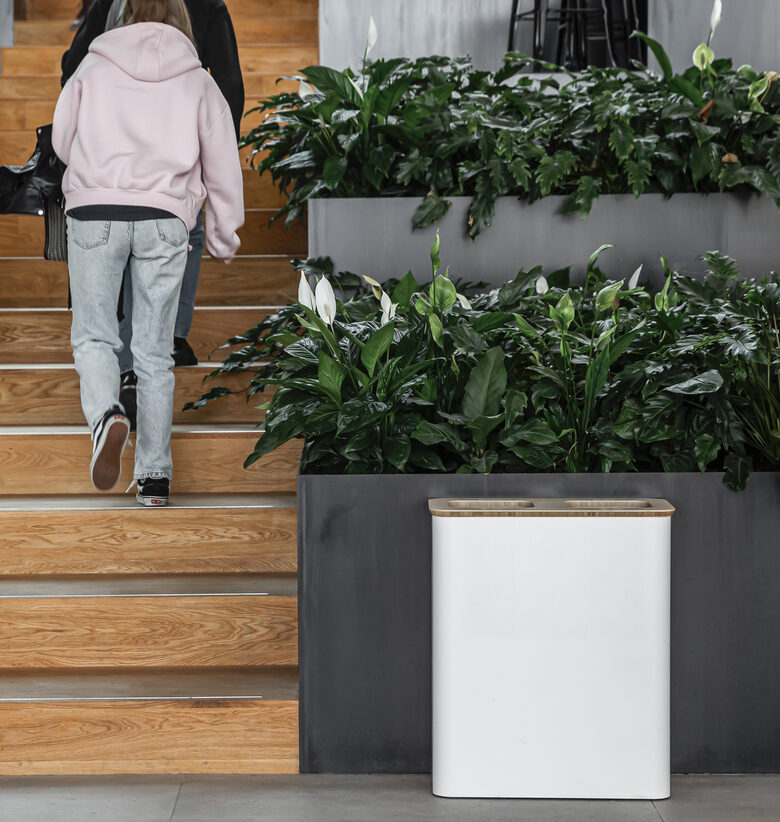
BINBIN provides comprehensive solutions that address the practical challenges organisations face when implementing effective waste separation. Our modular systems adapt to different workplace environments while maintaining the professional aesthetics that modern offices require.
Our approach includes:
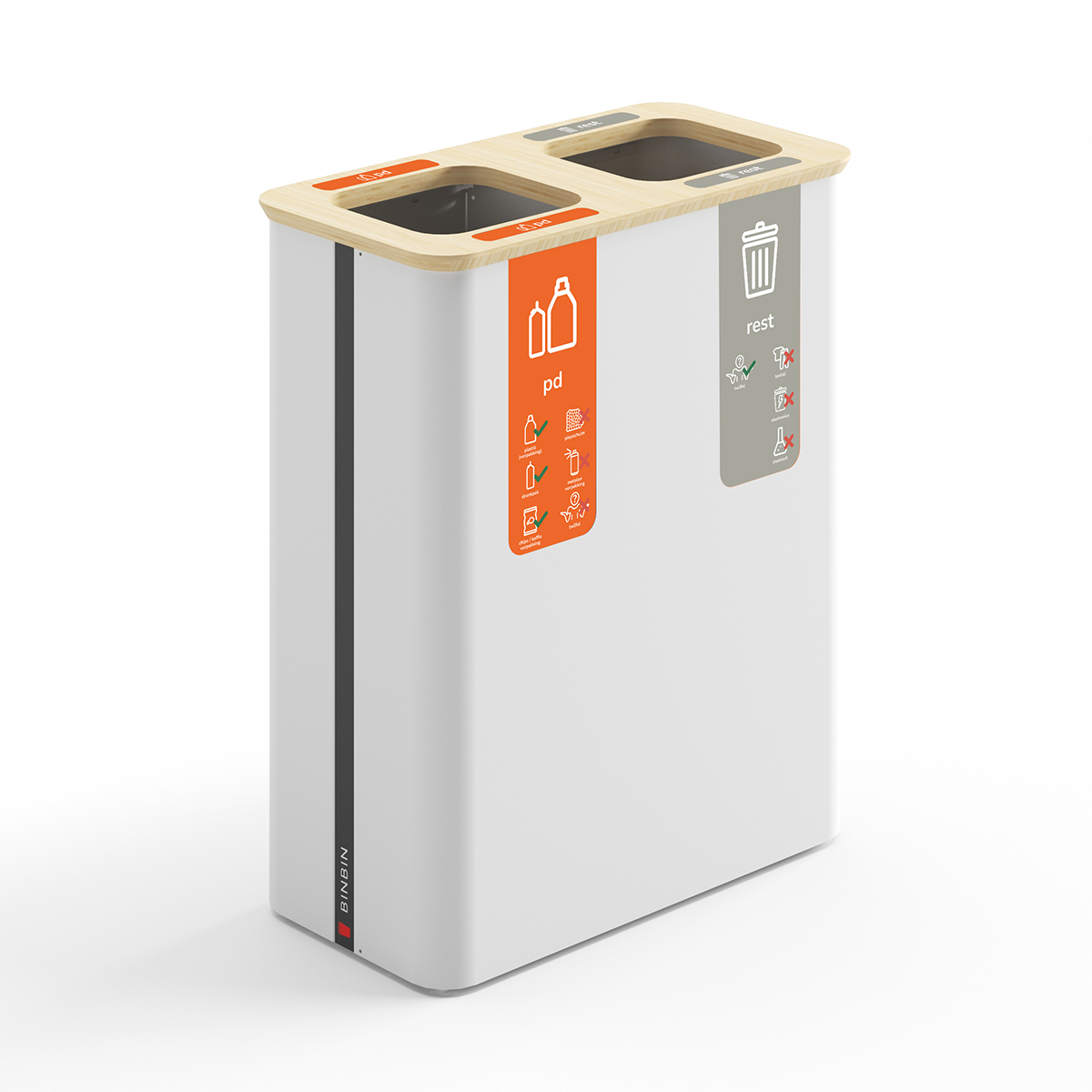
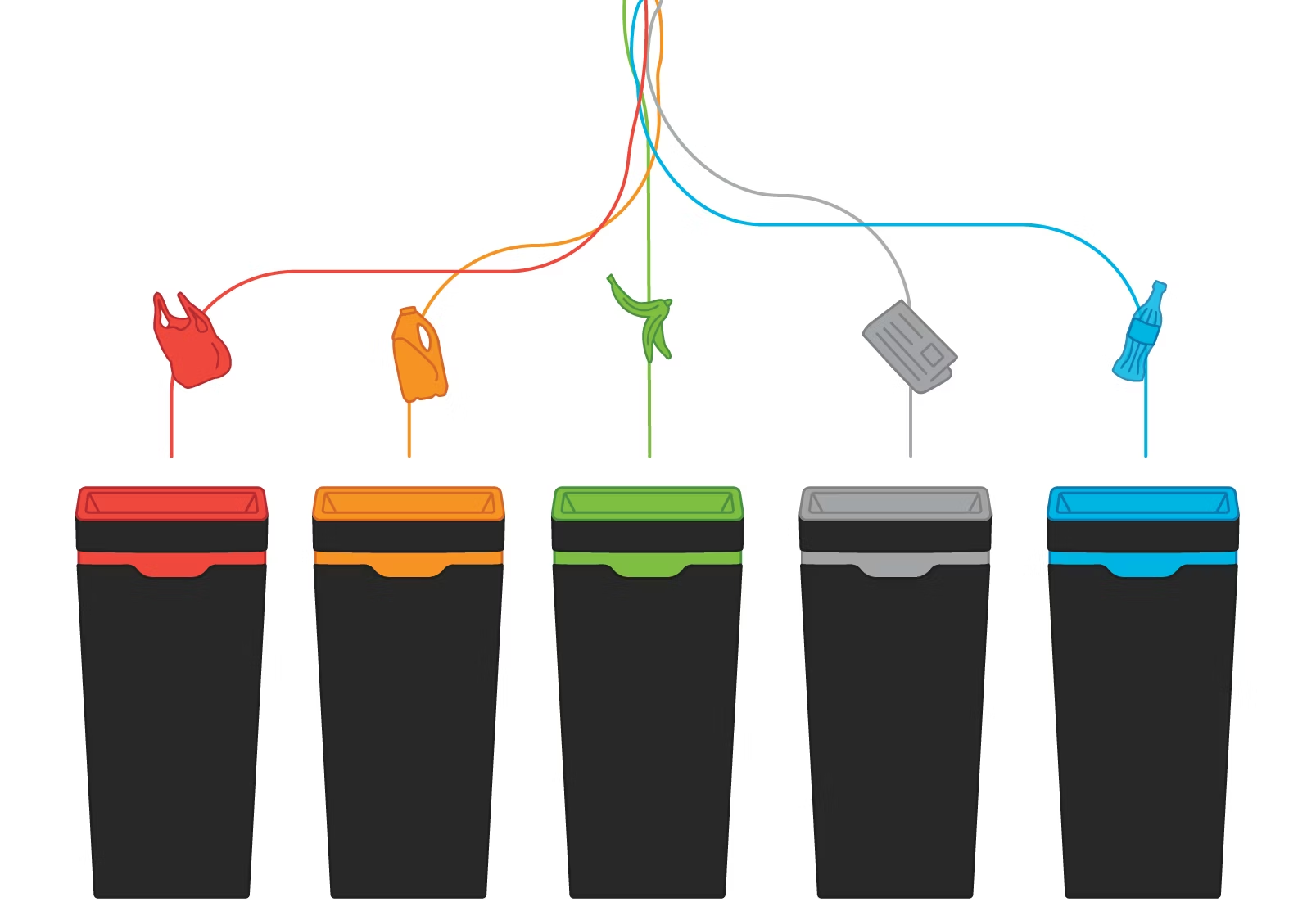
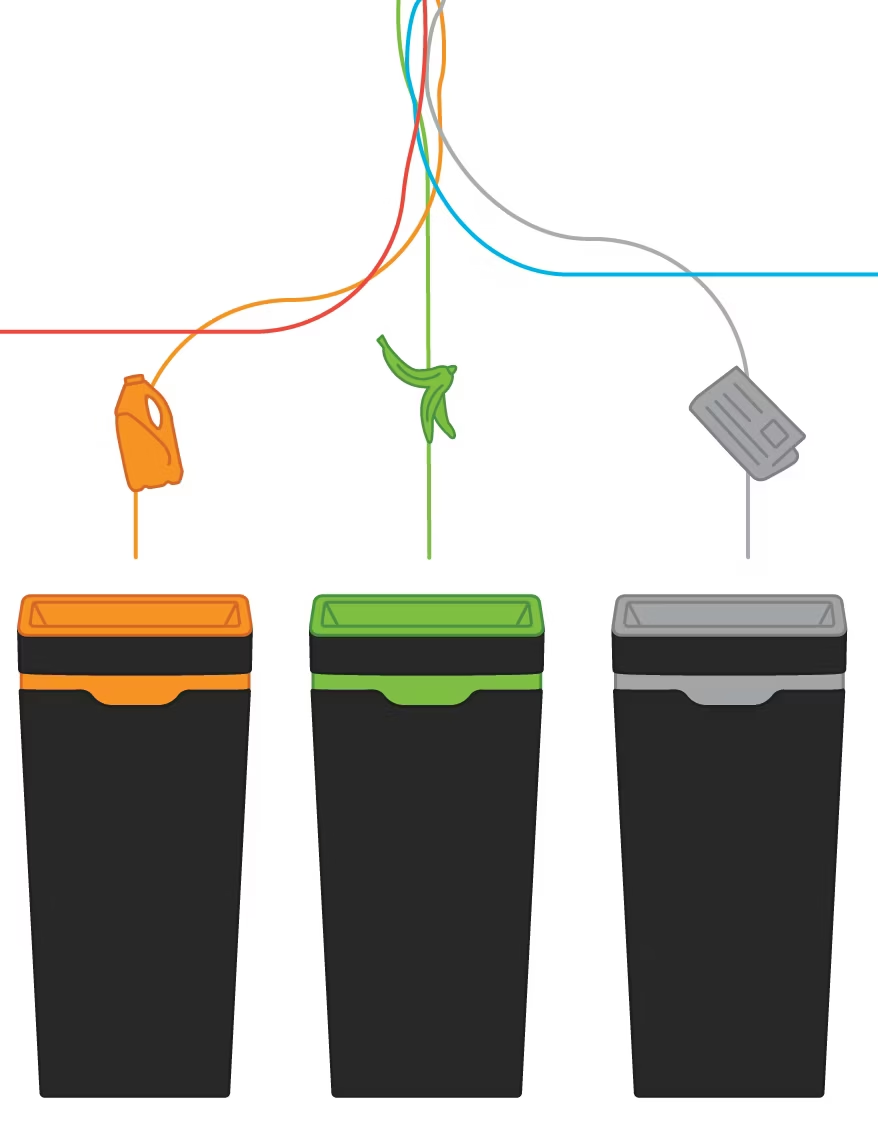
- Modular waste bins that can expand from 1 to 8 separation streams as needs evolve
- Customisable designs that integrate seamlessly with existing office décor
- Complete implementation support, including space planning and employee training materials
- Ongoing consultation to optimise separation systems based on actual usage patterns
We understand that successful waste separation requires more than just providing bins. Our service includes comprehensive guidance on placement strategies, communication materials, and system maintenance to ensure long-term success.
Ready to transform your organisation's waste management approach? Request a trial placement to experience how our solutions work in your specific environment, or get a customised quote tailored to your facility's requirements.