To register with a Producer Responsibility Organisation (PRO) in South Africa, you need to identify an accredited PRO relevant to your product category, submit a registration application with your company and production data, sign a membership agreement, and begin reporting your volumes and paying the associated fees. Registration is a legal requirement under South Africa's Extended Producer Responsibility (EPR) regulations, which came into effect in 2021. This article walks through every key question surrounding PRO registration, from who qualifies to what happens if you do not comply.
What is a Producer Responsibility Organisation in South Africa?
A Producer Responsibility Organisation (PRO) in South Africa is an accredited, industry-funded body that manages the collection, sorting, and recycling of post-consumer waste on behalf of producers, importers, and brand owners. PROs are established under the Extended Producer Responsibility regulations, which form part of the National Environmental Management: Waste Act. They act as the operational mechanism through which businesses meet their legal recycling and recovery targets.
Rather than each business managing its own waste recovery infrastructure, a PRO pools resources from multiple members to fund collection networks, recycling programmes, and public awareness initiatives. The PRO model shifts financial and operational responsibility for end-of-life products from municipalities and consumers back to the companies that place those products on the market.
South Africa's EPR framework currently covers three main sectors: paper and packaging, electrical and electronic equipment (e-waste), and the lighting industry. Each sector has its own set of PROs operating under the oversight of the Department of Forestry, Fisheries and the Environment (DFFE).
Who is legally required to register with a PRO in South Africa?
Any producer, importer, or brand owner who places covered products on the South African market above a defined threshold is legally required to register with an accredited PRO. This obligation applies specifically to businesses dealing in paper and packaging, electrical and electronic equipment, or lighting products under the EPR regulations.
In practical terms, this means the following types of organisations must register:
- Manufacturers who produce paper, packaging, electronics, or lighting products in South Africa
- Importers who bring these product categories into the country for sale or distribution
- Brand owners whose name or trademark appears on covered products, even if they do not manufacture them directly
- Retailers who self-brand products in these categories
Small businesses below certain volume thresholds may be exempt, but the threshold is relatively low. If your business places any meaningful volume of covered products on the market, it is worth verifying your obligations with the DFFE or an accredited PRO directly, rather than assuming you fall below the limit.
Which PROs are accredited to operate in South Africa?
Several PROs are accredited by the DFFE to operate across South Africa's three regulated product sectors. Accreditation means the PRO has met the legal requirements to collect fees, manage recycling programmes, and report compliance data on behalf of its members.
In the paper and packaging sector, well-known accredited PROs include PACSA (Packaging South Africa), The Industry Waste Management Plan (IWaMPs) bodies, and PETCO for PET plastic specifically. In the e-waste sector, organisations such as e-Waste Association of South Africa (eWASA) affiliated bodies operate. The lighting sector has its own dedicated PRO structures.
It is important to choose a PRO that covers your specific product category. Some businesses that handle multiple product types may need to register with more than one PRO. Always verify current accreditation status directly with the DFFE, as the landscape of approved organisations can change as new applications are approved or existing accreditations are reviewed.
How do you register with a Producer Responsibility Organisation?
Registering with a PRO in South Africa follows a structured process that typically takes a few weeks from first contact to confirmed membership. The steps below outline the standard registration journey across most accredited PROs.
- Identify the correct PRO for your product category by consulting the DFFE's list of accredited organisations or contacting the department directly.
- Contact the PRO to request a registration pack or access their online registration portal, depending on the organisation.
- Complete the registration application with your company details, product categories, and an estimate of the volumes you place on the market annually.
- Submit supporting documentation as required, including proof of business registration, tax compliance, and any product-specific data.
- Review and sign the membership agreement, which outlines your obligations, reporting schedule, and fee structure.
- Receive confirmation of membership and your unique producer registration number, which you will use for all future reporting.
- Begin reporting your volumes on the schedule set by the PRO, typically quarterly or annually.
Most PROs offer support during the registration process, including guidance on calculating your volumes and categorising your products correctly. It is worth engaging early rather than waiting, as registration deadlines align with regulatory reporting cycles.
What documents and data do you need to complete registration?
To complete PRO registration in South Africa, you will typically need your company registration documents, tax compliance status, product category descriptions, and an estimate of the annual volumes you place on the market. The exact requirements vary slightly between PROs, but the core information is consistent across most organisations.
Commonly required documents and data include:
- CIPC company registration certificate
- SARS tax clearance certificate or tax compliance pin
- A description of your product types and the materials they contain (for example, paper, glass, plastic, metal)
- Annual volume data, expressed in tonnes or units, of covered products placed on the South African market
- Contact details for the compliance officer or responsible person within your organisation
- Banking details for fee payment purposes
If your business is new or you are registering mid-year, PROs will often accept projected volume estimates for the current period, with actual data to be confirmed in the next full reporting cycle. Accurate volume data is important because your annual membership fee is typically calculated as a levy per tonne of material placed on the market.
What happens after you register with a PRO?
After registering with a PRO, you become a formal member of the scheme and take on ongoing reporting and fee obligations. Your PRO will issue you a membership certificate and producer registration number, and you will be integrated into their compliance tracking system.
On a practical level, your responsibilities after registration include submitting regular volume reports (typically quarterly), paying the applicable levies based on your reported volumes, and cooperating with any audits or verification processes the PRO conducts. Some PROs also require members to participate in awareness or educational initiatives as part of their membership obligations.
Your PRO, in turn, uses the collected fees to fund recycling infrastructure, collection programmes, and recovery targets on your behalf. This means your compliance obligation is effectively discharged through the PRO, provided you report accurately and pay your levies on time. Annual compliance certificates are issued to members who meet their obligations, which can be used to demonstrate EPR compliance to clients, investors, or regulatory bodies.
For businesses managing waste across multiple sites or sectors, office waste management systems that support accurate waste stream tracking can make volume reporting significantly easier.
What are the penalties for not registering with a PRO in South Africa?
Failure to register with an accredited PRO in South Africa is a contravention of the EPR regulations under the National Environmental Management: Waste Act and can result in significant penalties. Non-compliant businesses face administrative fines, potential criminal liability for directors and responsible persons, and reputational consequences in an increasingly sustainability-conscious market.
The DFFE has the authority to issue compliance notices, impose administrative fines, and refer persistent non-compliance cases for criminal prosecution. Directors and officers of non-compliant companies can be held personally liable in certain circumstances, which raises the stakes considerably for senior management.
Beyond formal penalties, there are commercial risks. Increasingly, large retailers and procurement teams require EPR compliance as a condition of doing business. Being unable to demonstrate registration with a PRO can exclude your business from supply chains and tender processes. In 2026, regulatory enforcement continues to tighten as the DFFE builds out its compliance monitoring capacity, making early and accurate registration more important than ever.
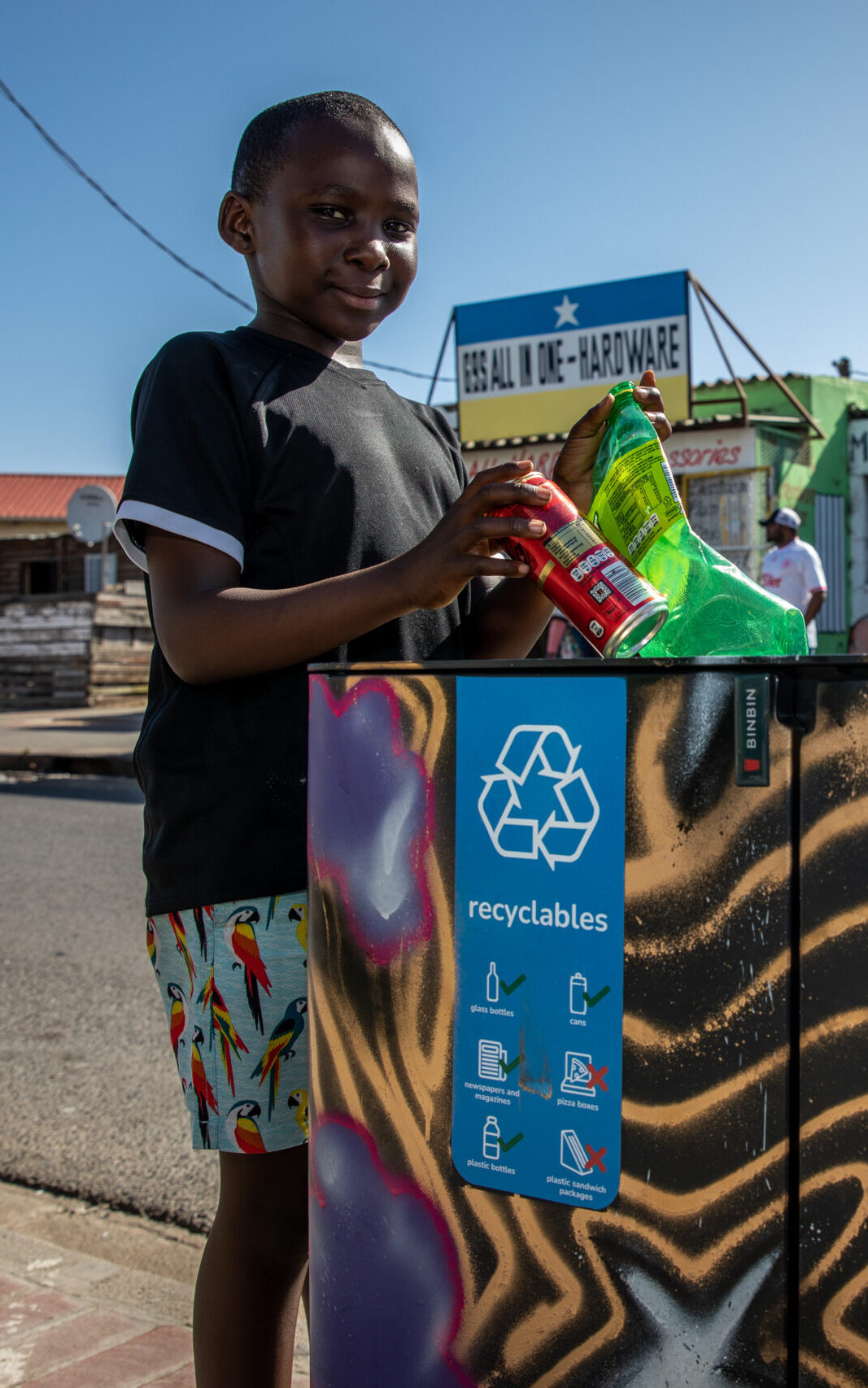
How BINBIN supports responsible waste separation
While PRO registration handles your legal compliance at a reporting and levy level, the physical reality of waste separation on your premises is equally important. Accurate waste stream data depends on materials actually being separated at source, and that starts with having the right infrastructure in place.
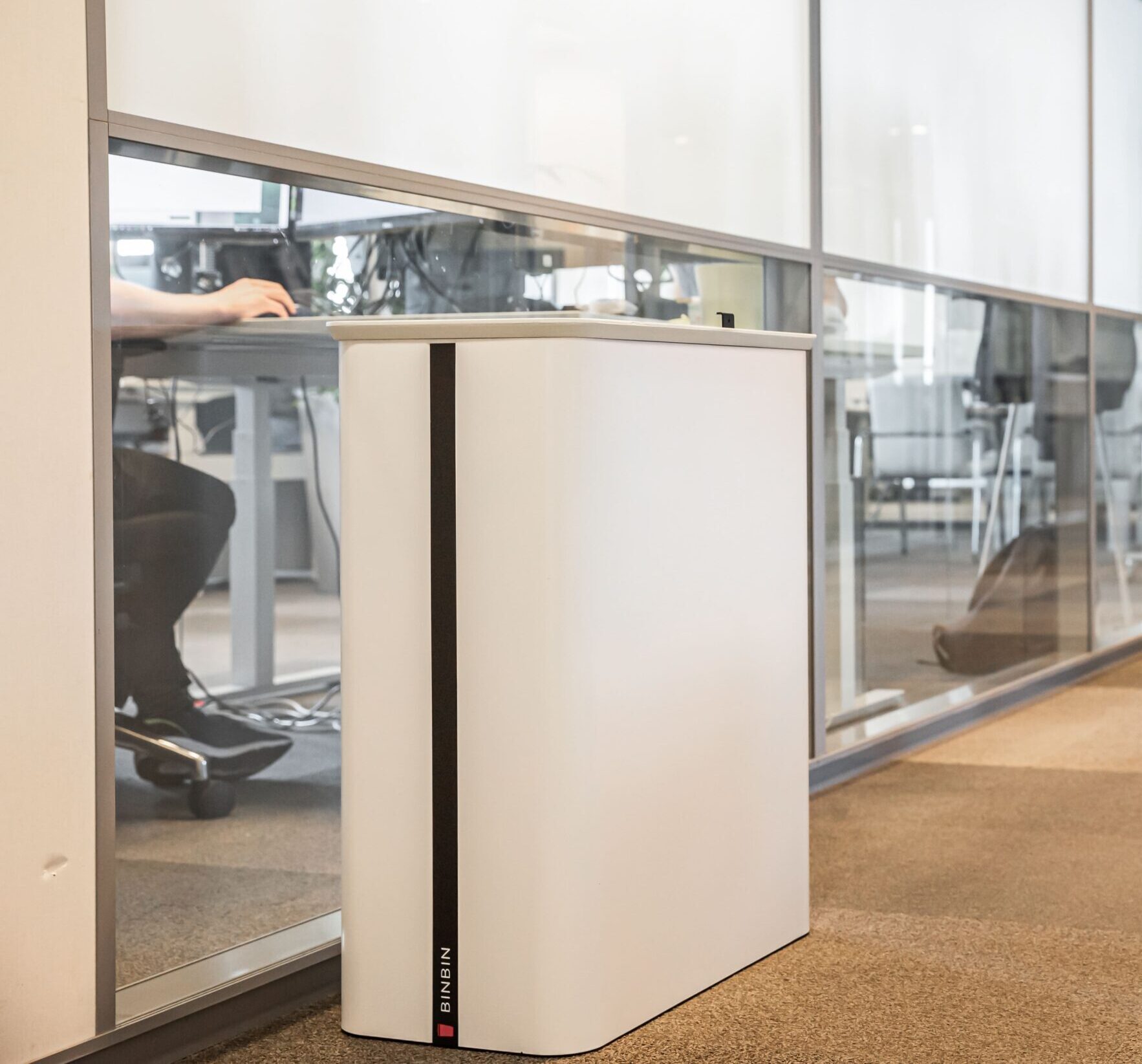
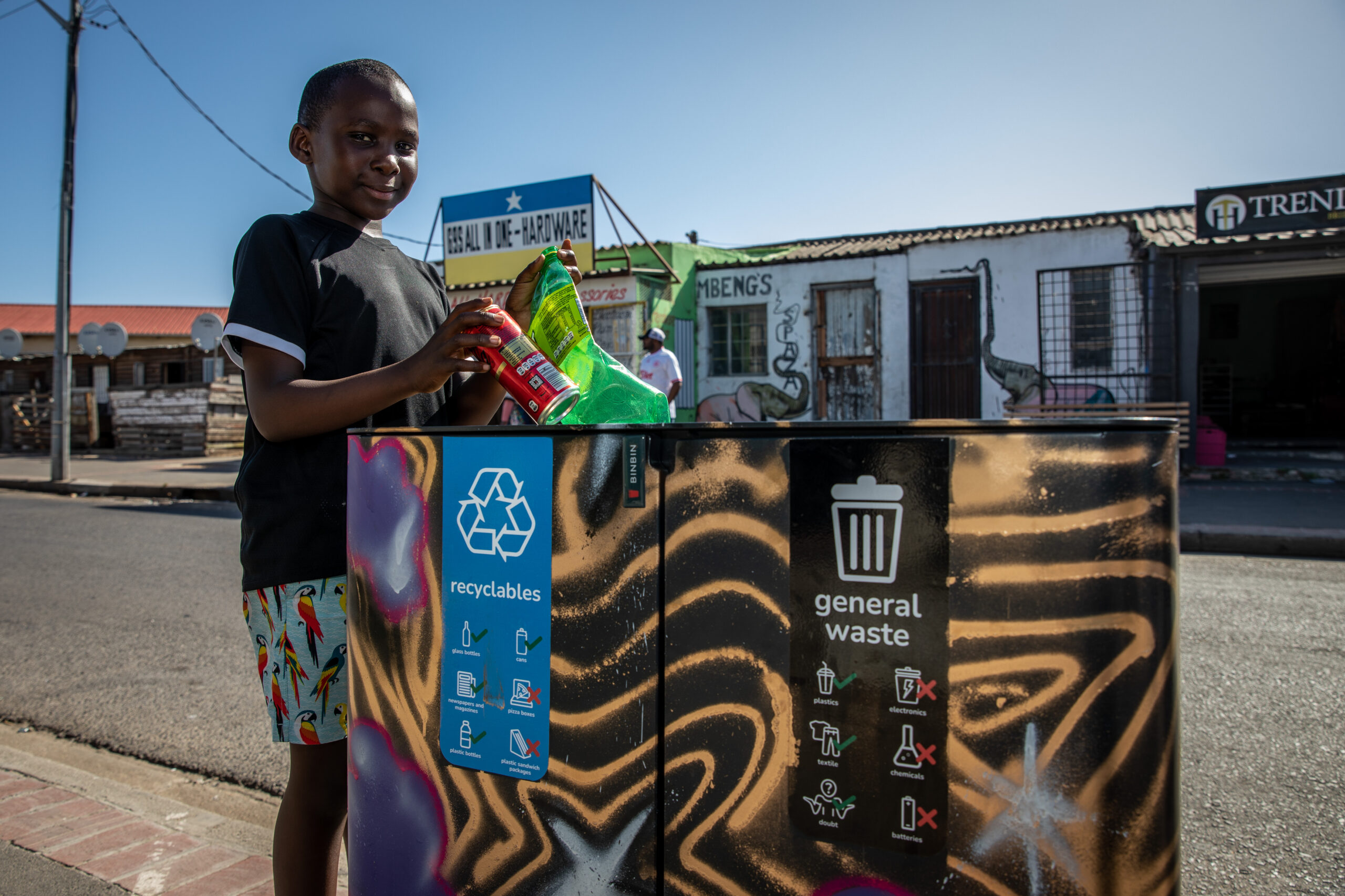
We at BINBIN offer modular waste separation solutions designed to make source separation practical and consistent across any environment, from offices and warehouses to hospitality and public spaces. Our approach supports businesses working toward EPR compliance by making it easier to capture clean, separated waste streams. Here is what our solutions offer:
- Configurable bins for 1 to 8 waste streams, adaptable as your reporting categories change
- Internal splitters that allow a single unit to handle multiple streams without buying new bins
- Clean, professional designs that encourage consistent use by staff and visitors
- Branding and labelling options to reinforce correct sorting behaviour
- Scalable systems that grow with your facility's needs
Explore our full range of BINBIN product collections to find the right configuration for your site. If you are ready to take the next step, you can request a quote tailored to your requirements, or start with a trial placement to see how our systems work in your environment before committing.