


News updates
Business waste compliance in South Africa for 2026
South Africa is rapidly tightening its waste-management rules, and by 2026 businesses will need to prove compliance with both EPR obligations and on-site waste separation.

Blogs
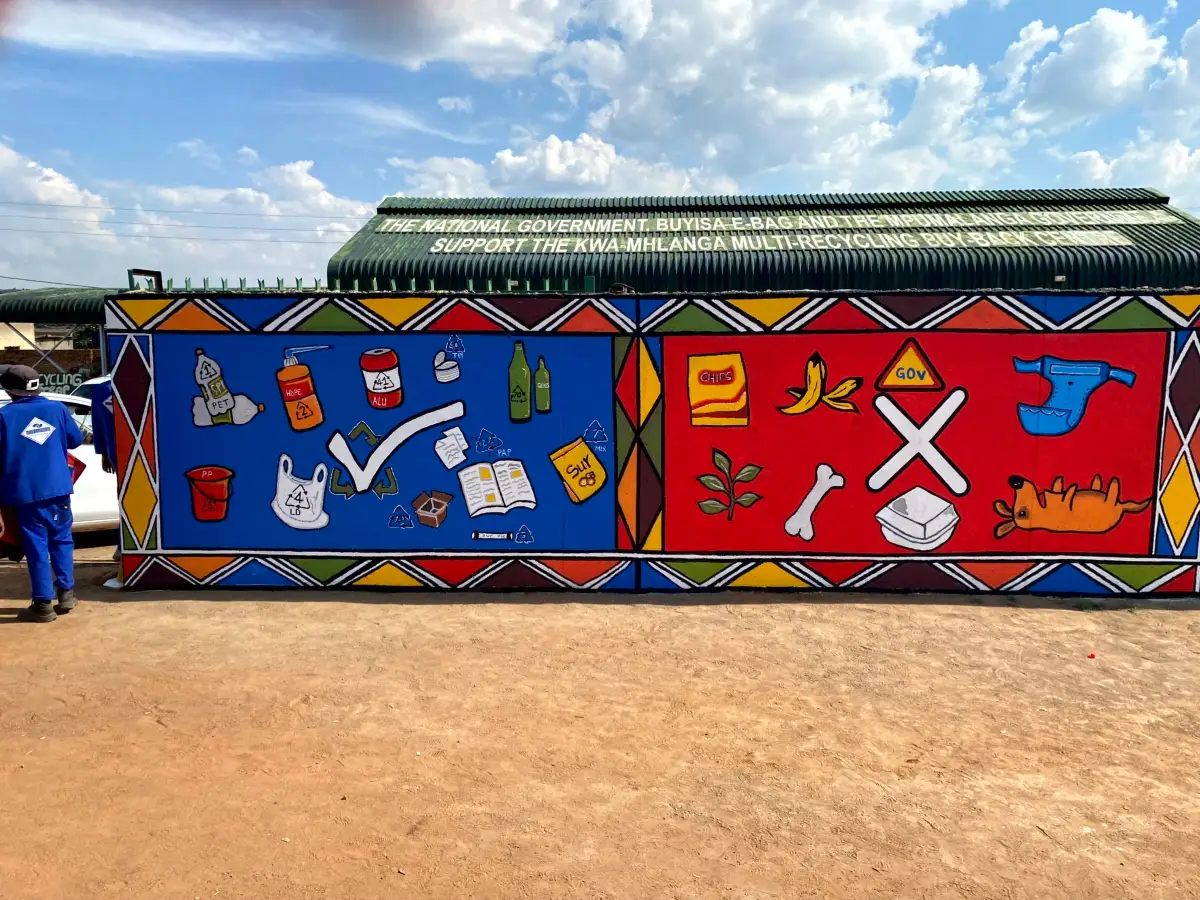
Source separation in South Africa
Source separation is not as simple as it sounds.
You might think that if you place a few bins and add a sticker it would be done.
But anyone working in public spaces like shopping malls, food courts, offices, or campuses knows, that’s when it really starts.
Because the real question is not, “do people separate their waste?”
The real question is, “what happens next?”
If waste streams are correctly separated at the front, but end up mixed again at the back, you lose: Impact, motivation, trust and most of all, valuable resources.
In this blog, you’ll learn how to organise waste separation in South Africa in a smart and futureproof way, from the shop floor to the waste room and from the facility team to the waste collector.
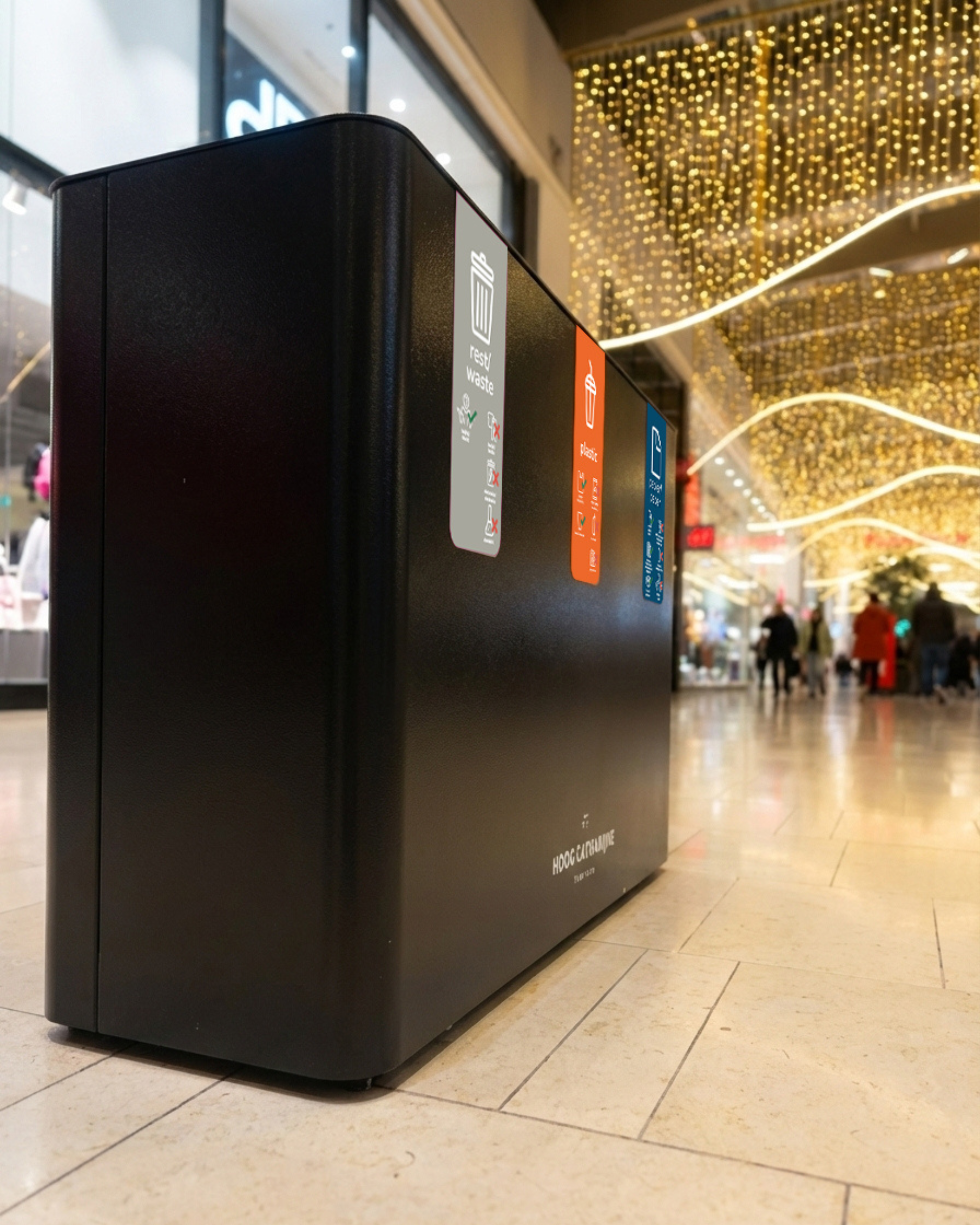
In a shopping mall, office building, or public location, waste does not appear “out of nowhere”. It is created by people, by shops, by restaurants and by visitors. That is why responsibility never sits with just one party.
The owner (landlord) and the tenants need to tackle this together.
Why? Because both sides influence the outcome:
And let’s be honest, we cannot keep throwing away valuable waste streams as if they have no value.
Because what we often do today is simple:
That is a waste. Not only for the environment, but also because you are literally throwing away raw materials you can reuse.
Waste is not an end point, it is a new resource
When you separate waste in a smart way, you regain control over the stream. That is where it becomes interesting, because separated waste streams can return as new products such as:
And this is exactly where source separation makes the difference.
Not at the end of the chain, but at the start.
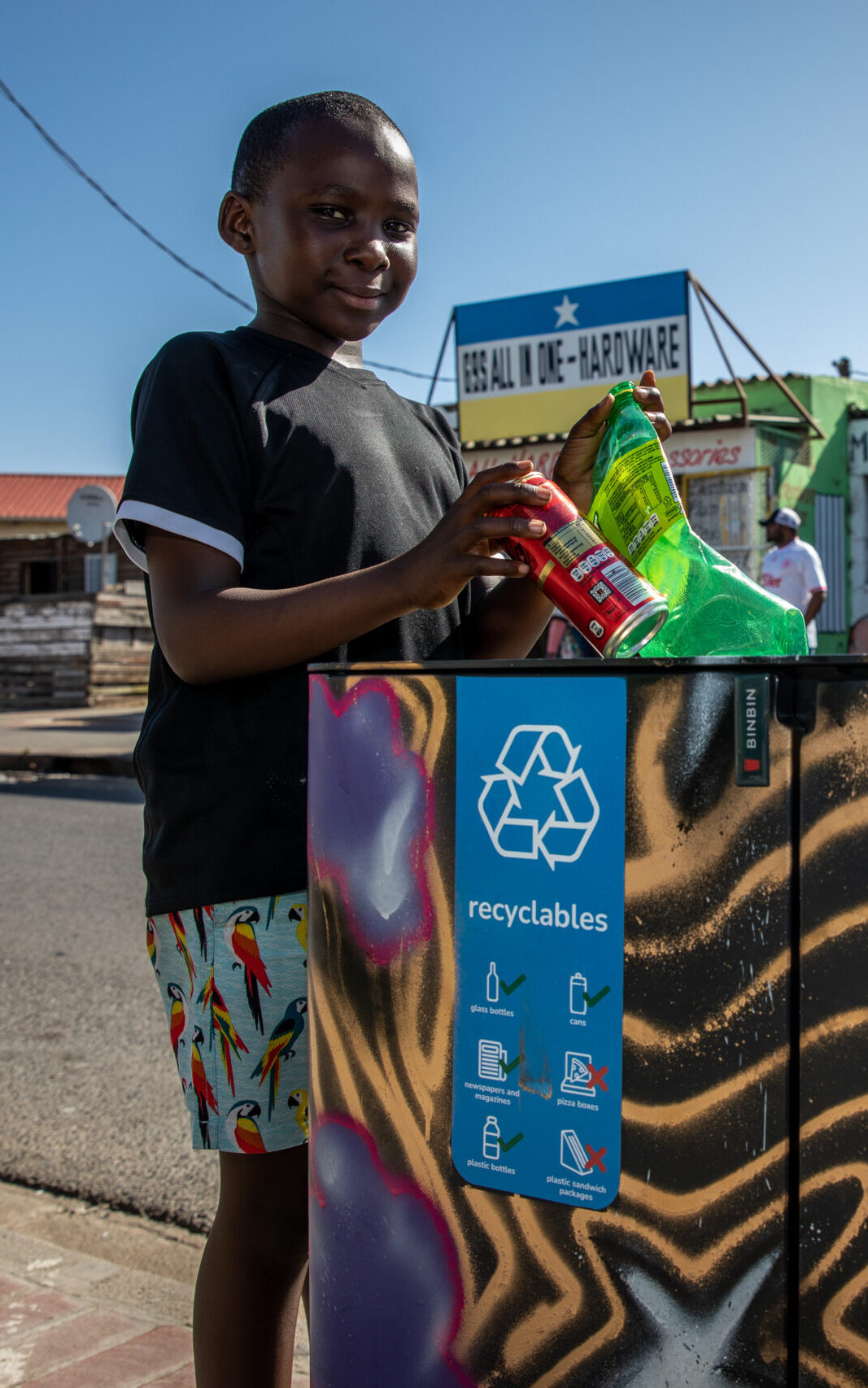
BINBIN is a great example of that
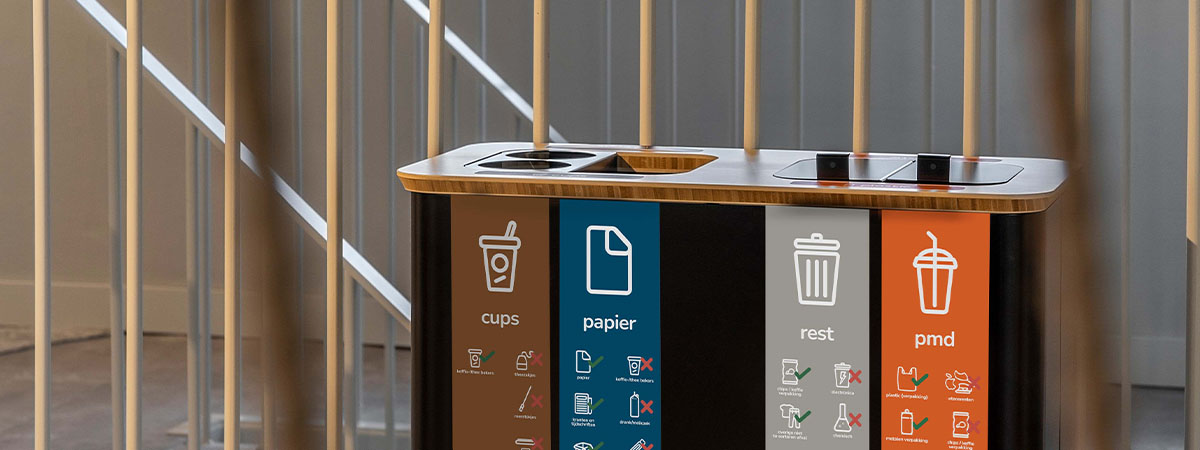
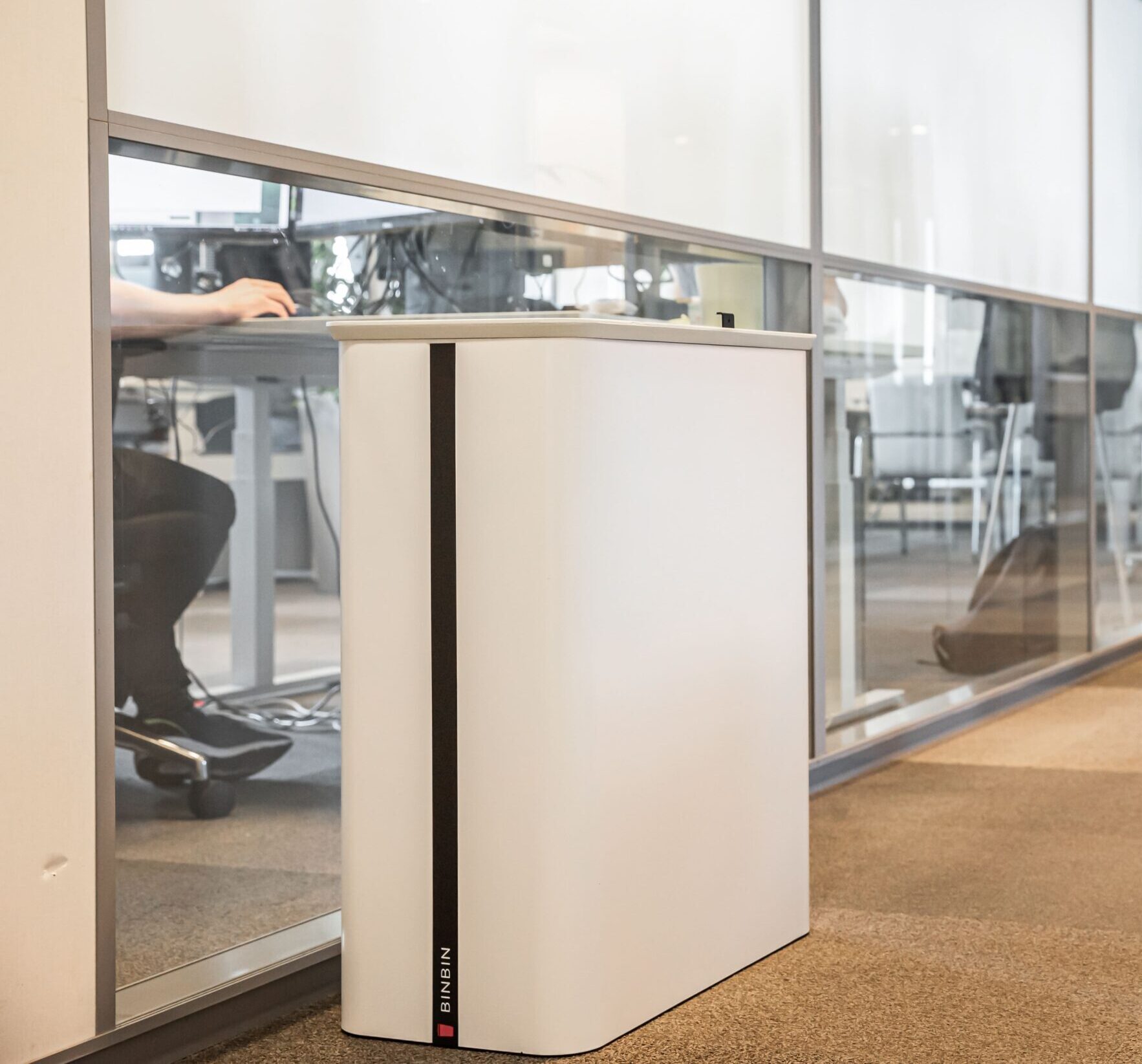
At BINBIN, design and circularity should strengthen each other. It needs to look good, and it needs to make sense.
Did you know our waste bins are made from steel that consists of 88% recycled steel?
That is exactly the mindset you want to build into your waste process as well, do not throw it away, bring it back into the loop.

Waste separation is not only a sustainable idea, it also aligns with South Africa’s official direction.
Waste Act 59 of 2008, the foundation
The most important law is the National Environmental Management: Waste Act (No. 59 of 2008). This law was created to protect health and the environment, and to improve waste management across the country.
The core is clear, prevent where possible, reuse where it works, recycle where it makes sense, and only dispose as a last resort.
If you want to support this properly in your blog or landing page, these are strong sources to mention:
National Waste Management Strategy 2020, the roadmap
Next to the law, there is also the National Waste Management Strategy (NWMS) 2020. This is the national strategy that describes how South Africa wants to make waste management smarter, cleaner, and more circular.
For your business, this matters because the strategy strongly focuses on:
The official NWMS publication is available via the Department of Forestry, Fisheries and the Environment (DFFE). The publication in the Government Gazette can also be used as a formal reference.
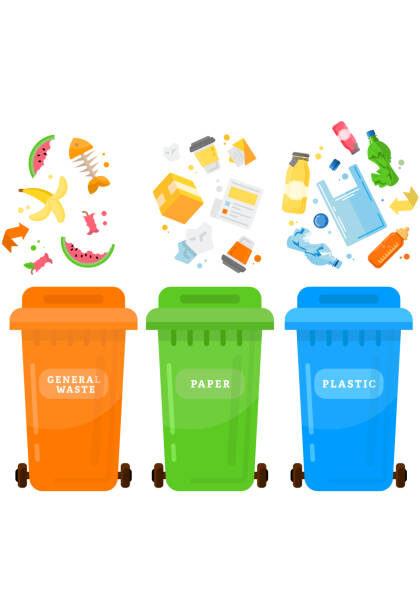
In practice, you can see provinces, municipalities, and businesses pushing harder towards less landfill. Especially in the Western Cape, there is a strong drive to reduce waste streams that are perfectly reusable.
A key theme is organic waste, think food waste from restaurants, food courts, supermarkets, and events.
There are publications referring to the ambition towards 2027 to stop sending organic waste to landfill in the Western Cape.
This is highly relevant for shopping centres, because that is exactly where large volumes of organic waste are generated. If you organise this properly now, you will not be playing catch-up later.
Most mistakes do not happen in the waste room, they happen on the floor, where people dispose of waste.
And one simple rule applies:
if it is unclear, it goes wrong.
In busy environments like malls, stations, and food courts, there is no time for long explanations. People choose based on instinct, speed, and convenience.
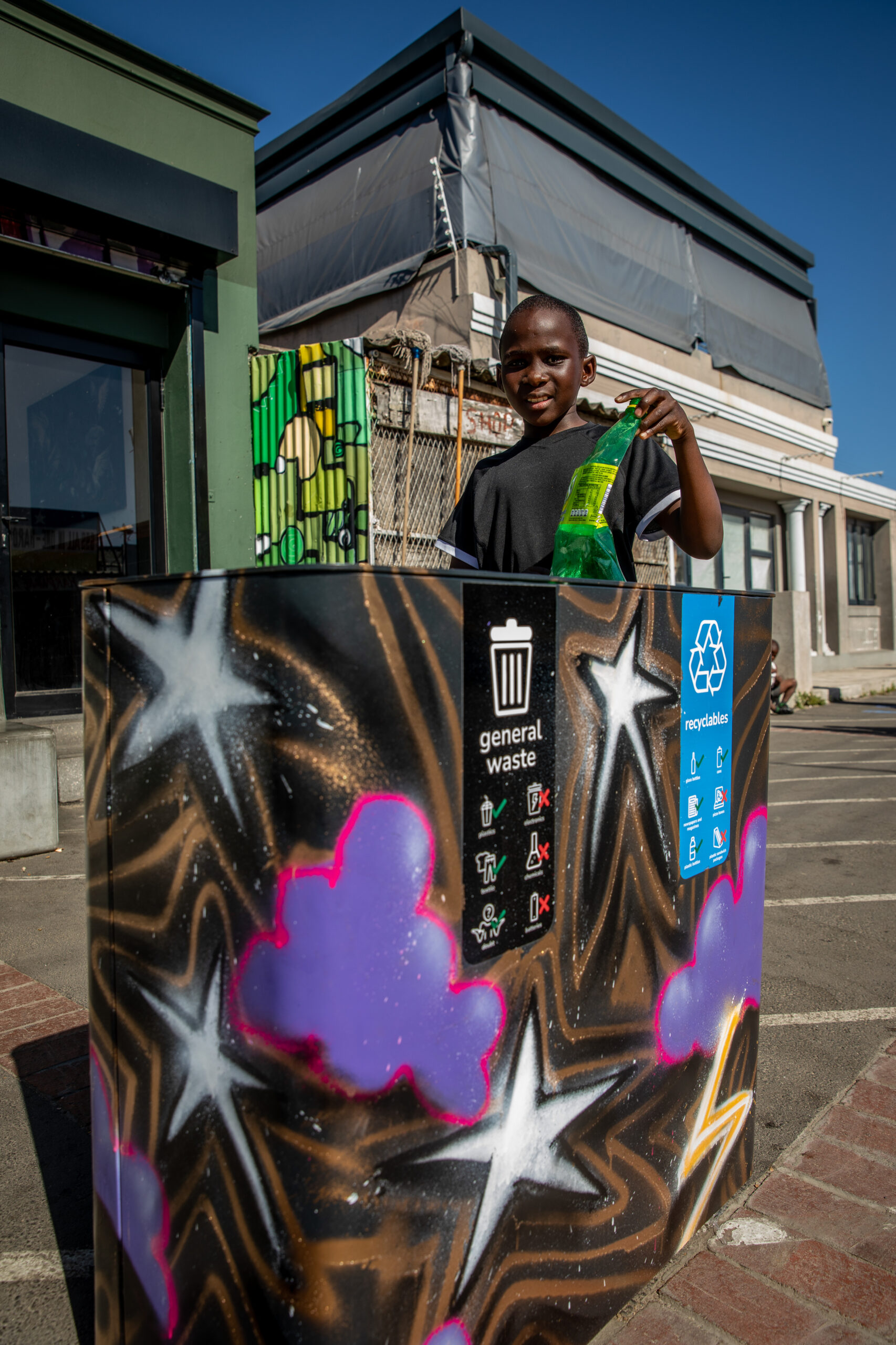
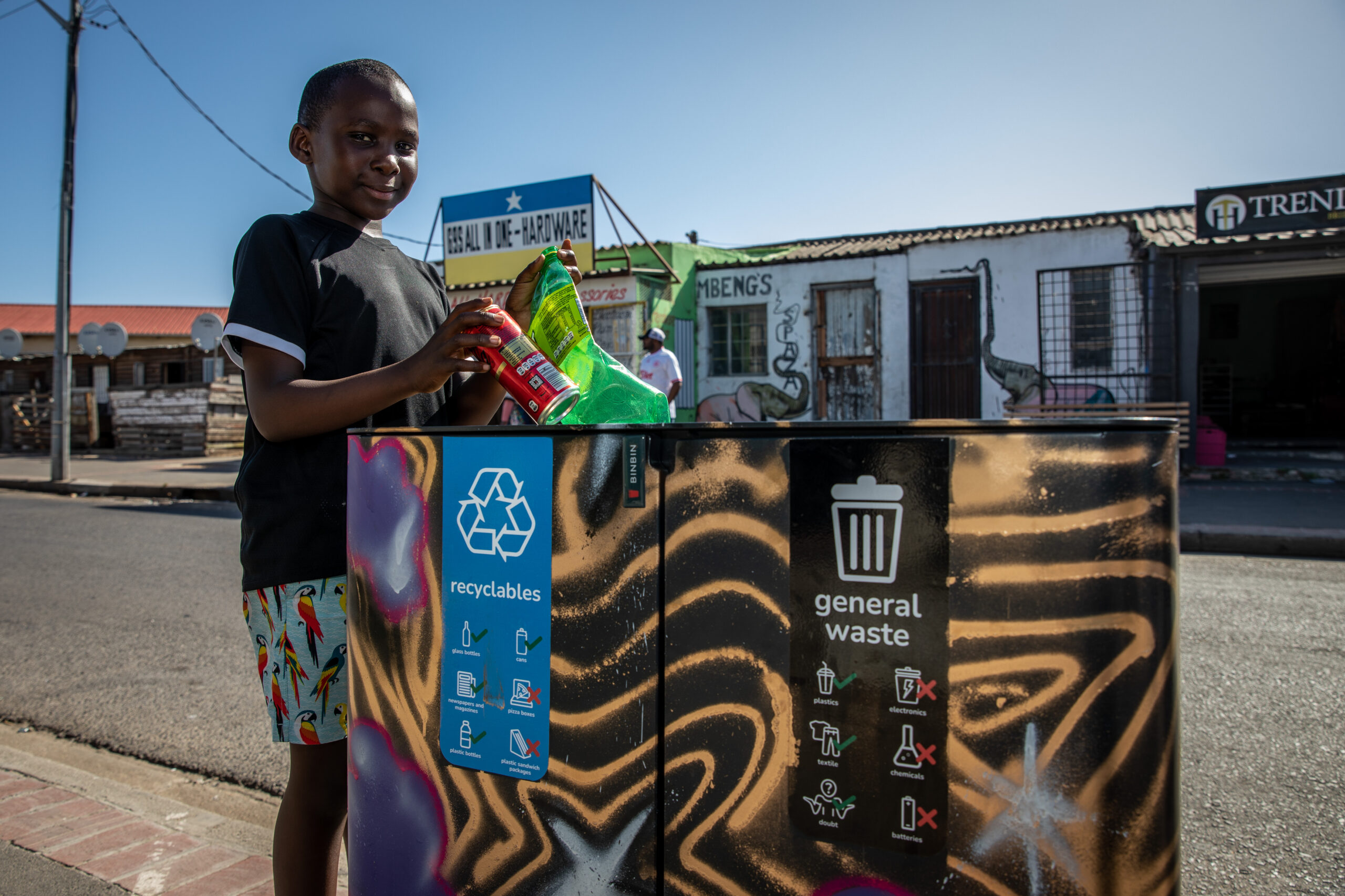
That is why source separation only works when you design it smart:
A good waste bin is not just a “container”.
It is a decision tool.
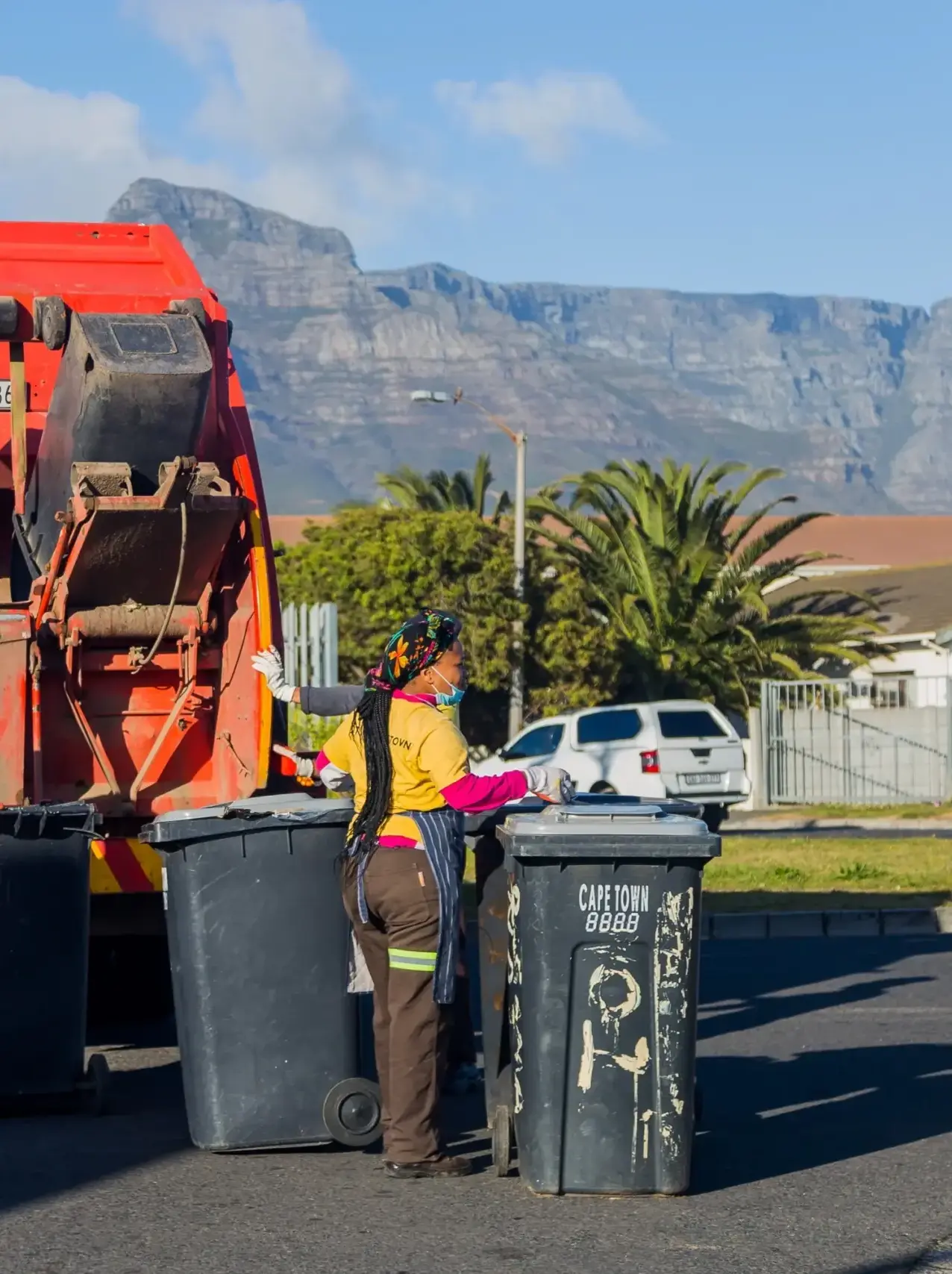
In South Africa, commercial waste can be organised in two ways. This is an important nuance, and many businesses recognise this immediately.
Option A, via the municipality
In some areas, the municipality manages collection and processing. This can be well organised, but it varies significantly by region.
The challenge is that, as a business, you do not always automatically have insight into:
Option B, via a commercial waste service provider
Many businesses choose a private waste service provider, because it often gives you more control over:
The key point to remember is this:
it is not about “municipal or commercial”, it is about control and agreements.
The biggest mistake you can make is this:
You separate perfectly at the front, but at the back everything gets mixed again “because it’s faster”.
Then your entire system breaks.
The back-of-house needs to be just as well organised as the floor.
Think of:
Because if the back is chaos, the front will become chaos too.
In many buildings, the facility partner or cleaning team is the key.
They see everything. They handle everything. They keep it running.
If you take waste separation seriously, you give them a clear role.
Not only emptying bins, but also:
The best part is, it does not need to be complicated.
With a short training and a simple checklist, you can already make a huge difference.
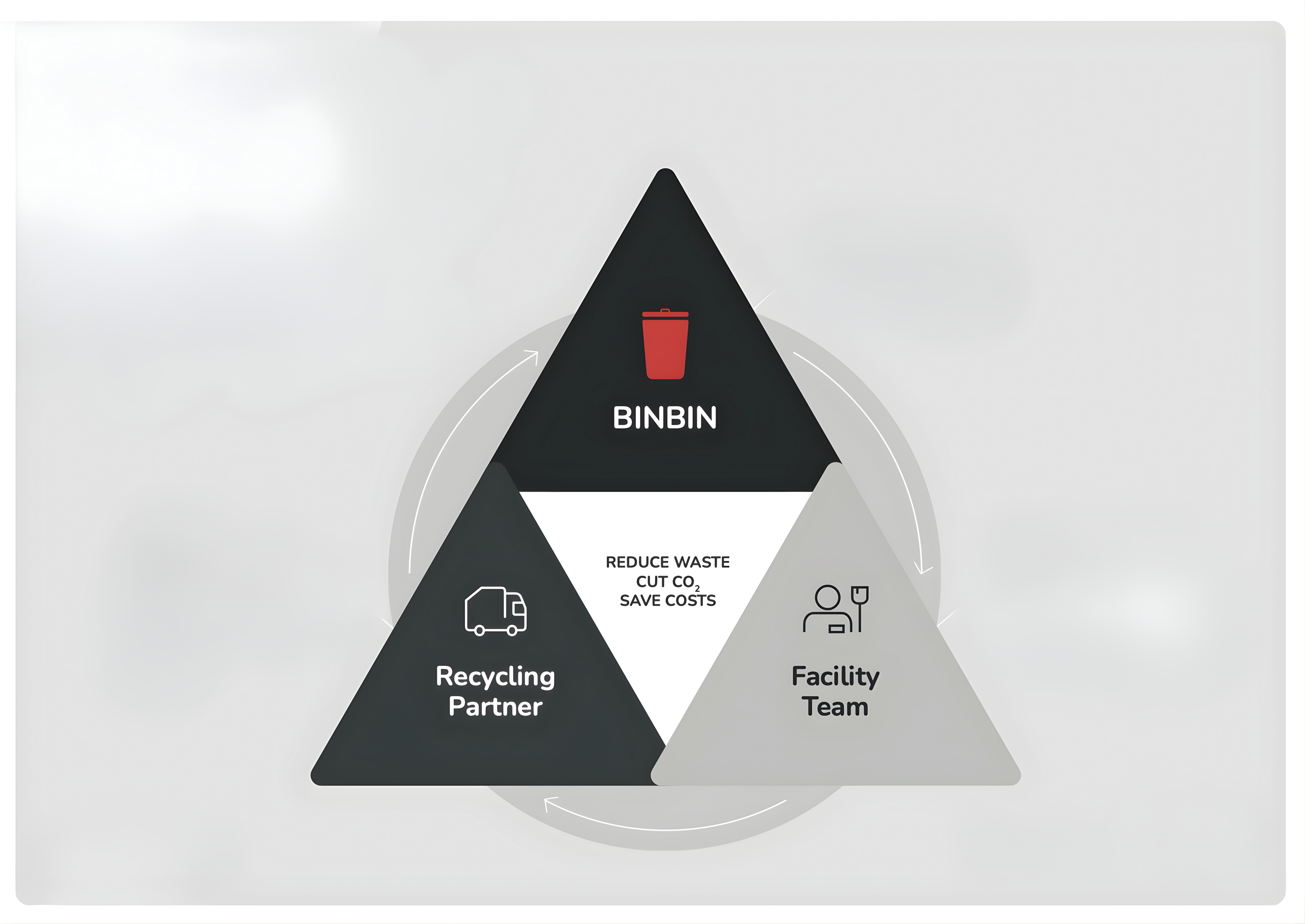
The strongest approach is working in a triangle:
You achieve that through smart design and clear communication.
They make sure separation is not just an idea, but a routine.
And you need agreements that guarantee this.
When you align these three players, you get a system that works.
Not only on paper, but in real life.
You do not need a complex sustainability report.
But you do want to know, is it working?
That is why reporting is smart, because it helps you steer on:
Commercial waste providers often offer this as standard. Municipalities vary, and you sometimes need to request it proactively.
But this is the core:
if you make it measurable, you can improve it.
And if you can improve it, you can scale it.
You can have the best bins, but without communication it will still become messy.
In public spaces, communication only works if it is clear within one second.
What works well:
You can strengthen this with campaigns such as:
The goal is not to tell people what they do wrong.
The goal is to help people do it right.
Source separation is one of the smartest steps you can take.
But it only becomes truly valuable when you include the full chain.
That is why this approach works so well:
smart separation bins on the floor, a facility team that checks and corrects, a municipality or commercial partner with clear agreements and reporting that proves it works.
This makes waste separation not only sustainable, but also practical, attractive, and futureproof.
And the best part?
You turn waste from a problem into a resource.
WASTE IS ONLY
WASTE IF WE
WASTE IT
Other articles
News updates
BINSPIRATIONS


Blogs