Effective waste separation communication combines clear messaging, strategic visual design, and consistent engagement to overcome employee resistance and build lasting recycling habits. Success depends on understanding psychological barriers, choosing appropriate communication channels, and maintaining momentum through ongoing feedback and recognition. The key lies in making waste disposal feel convenient, meaningful, and socially supported within your organisation’s culture.
Why do employees resist waste separation initiatives?
Employee resistance to waste separation stems primarily from convenience concerns, lack of understanding, and insufficient organisational support systems. Most staff members want to contribute to sustainability efforts, but practical barriers often prevent consistent participation in waste management programmes.
The strongest resistance typically emerges when waste separation requires significant behavioural changes without clear benefits. Employees accustomed to single-bin disposal find multi-stream sorting inconvenient, especially when bins are poorly located or inadequately labelled. Many workers also harbour misconceptions about recycling effectiveness, believing their individual contributions won’t make a meaningful environmental impact.
Organisational culture plays a crucial role in adoption rates. When leadership doesn’t visibly support waste separation, or when programmes lack clear communication about expectations, employees interpret this as optional rather than essential. Time pressure compounds these issues, as busy staff members default to familiar disposal patterns rather than learning new sorting requirements.
Psychological barriers include decision fatigue from determining the correct disposal methods, social awkwardness about making mistakes in front of colleagues, and resistance to changing established routines. Addressing these concerns requires understanding that resistance to waste separation often reflects broader workplace dynamics rather than environmental indifference.
What communication channels work best for waste separation campaigns?
Multi-channel communication approaches deliver the strongest results for waste separation campaigns, combining digital platforms with physical signage and peer-to-peer messaging. Email communications work well for detailed information and policy updates, while visual signage at disposal points provides immediate guidance at the moment decisions are made.
Team meetings create opportunities for interactive education and Q&A, particularly when managers demonstrate proper sorting techniques. Digital displays in common areas can showcase progress metrics and celebrate achievements, maintaining programme visibility without overwhelming staff with information.
Informal communication often proves most influential in driving behaviour change. When respected colleagues naturally discuss waste separation practices, or when champions emerge organically within departments, adoption rates increase significantly. Social proof becomes a powerful motivator when employees observe peers participating successfully.
The most effective campaigns layer formal announcements with ongoing informal reinforcement. Consider these proven channel combinations:
- Initial email announcements followed by visual reminder systems
- Training sessions combined with peer mentor programmes
- Digital progress dashboards paired with physical recognition displays
- Management communications reinforced through team-level discussions
How do you create compelling messaging that motivates waste sorting behaviour?
Compelling waste separation messaging connects individual actions to meaningful outcomes while addressing practical concerns and emotional motivations. Effective messages emphasise personal agency, organisational values, and tangible benefits rather than focusing solely on environmental guilt or compliance requirements.
Start with clear value propositions that resonate with your audience’s priorities. Cost-conscious organisations respond well to messages about reduced waste disposal fees and potential revenue from recyclable materials. Sustainability-focused companies prefer messaging about environmental impact and corporate responsibility achievements.
Personal relevance increases engagement when messages connect workplace actions to values at home. Many employees who separate waste at home appreciate consistency in their professional environment. Messaging that acknowledges this connection feels authentic and reduces cognitive dissonance between personal and professional behaviours.
Address common objections proactively within your messaging strategy. Acknowledge time concerns while demonstrating efficiency gains from well-designed systems. Counter doubts about effectiveness with specific examples of your organisation’s waste diversion achievements. Frame participation as professional competence rather than an additional burden.
Emotional triggers work best when balanced with practical information. Pride in organisational achievement, satisfaction from contributing to team goals, and positive social recognition motivate continued participation more effectively than fear-based messaging about environmental consequences.
What role does visual communication play in successful waste separation?
Visual communication serves as the primary decision-support system for waste separation, providing instant guidance when employees need to choose appropriate disposal methods. Effective visual systems reduce cognitive load, eliminate guesswork, and create consistent sorting behaviours across diverse user groups.
Colour coding creates intuitive associations that become automatic over time. Standardised systems using green for organics, blue for recyclables, and black for general waste help employees transfer knowledge between different areas and organisations. However, consistency within your specific environment matters more than adherence to external standards.
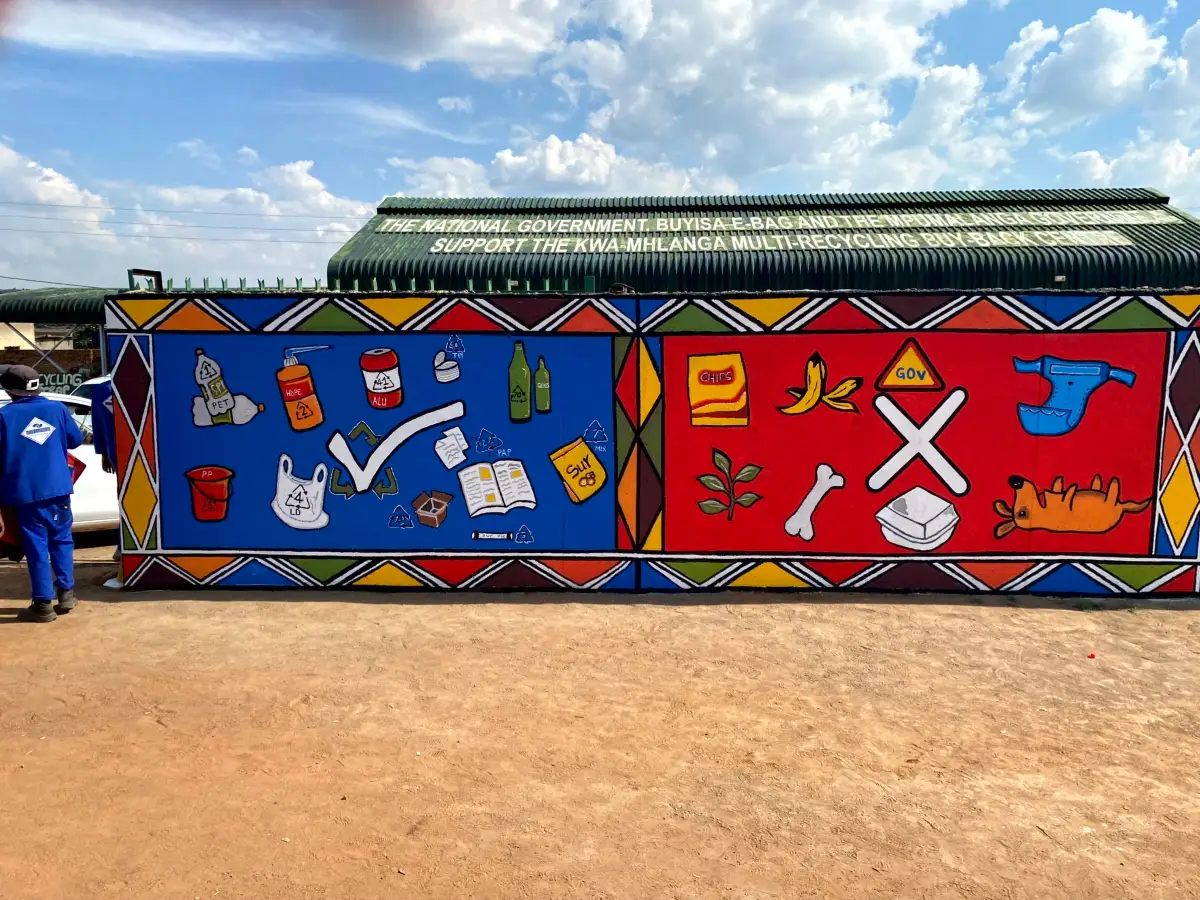
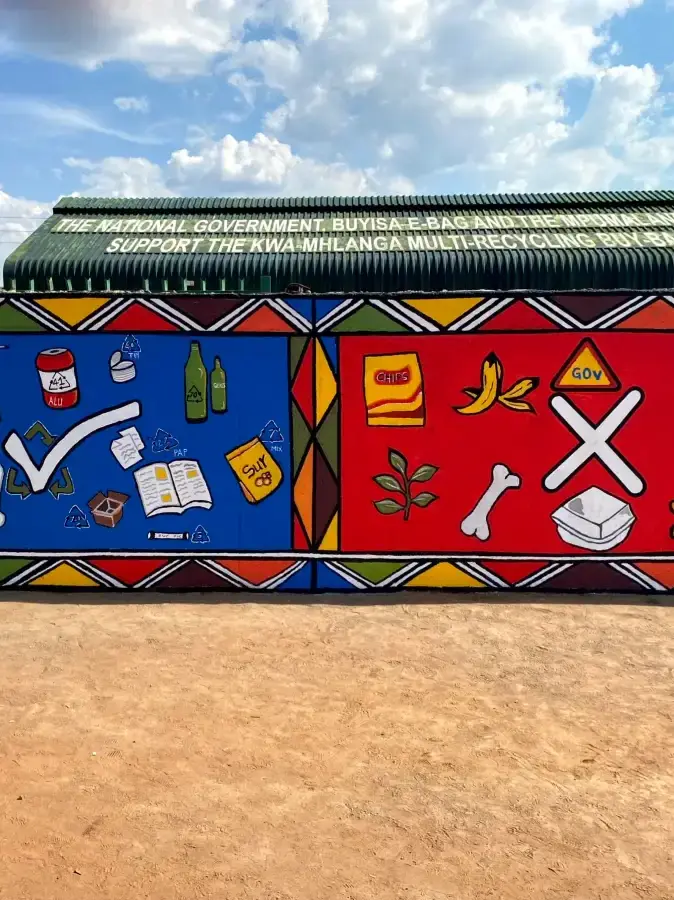
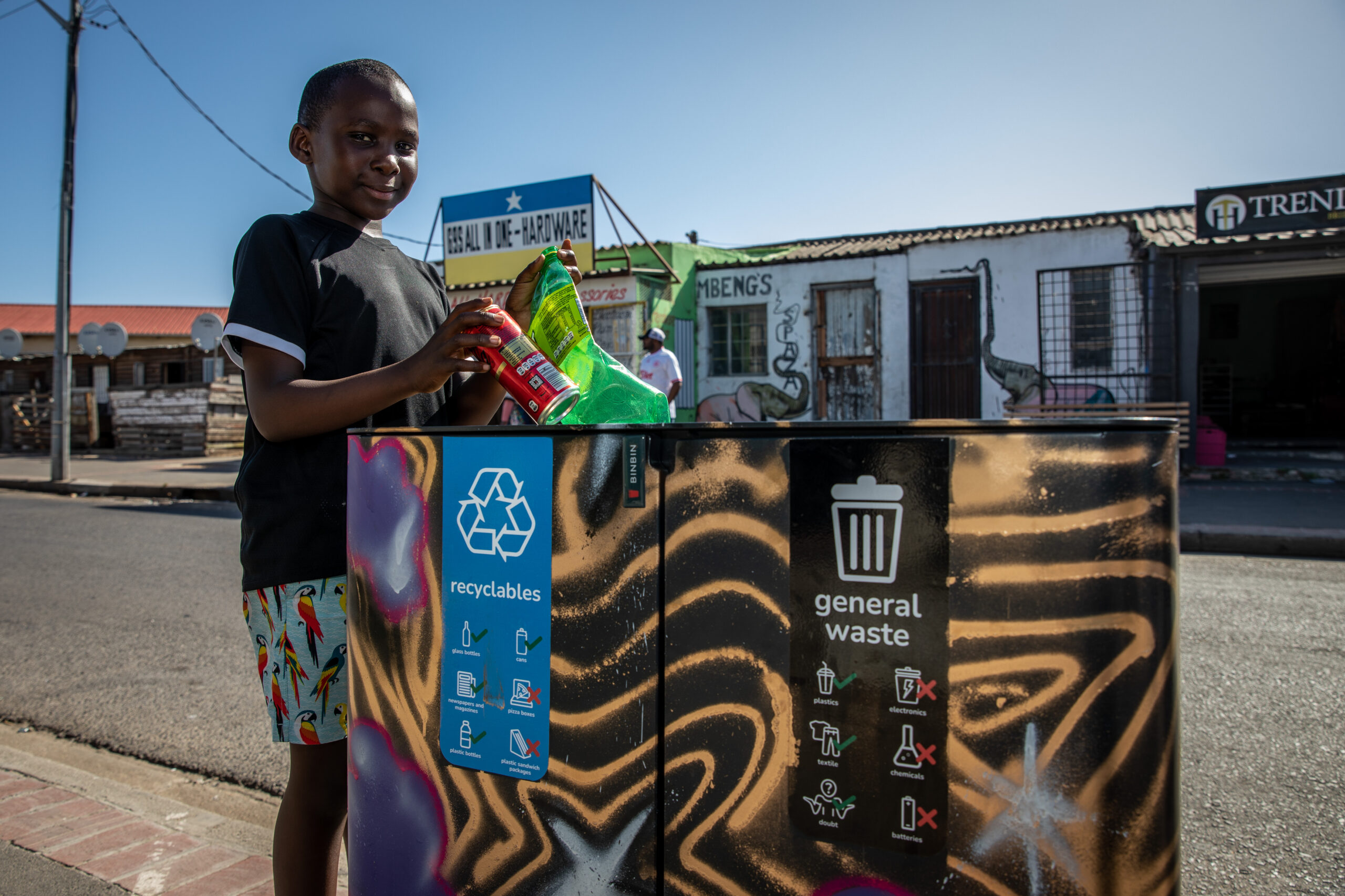
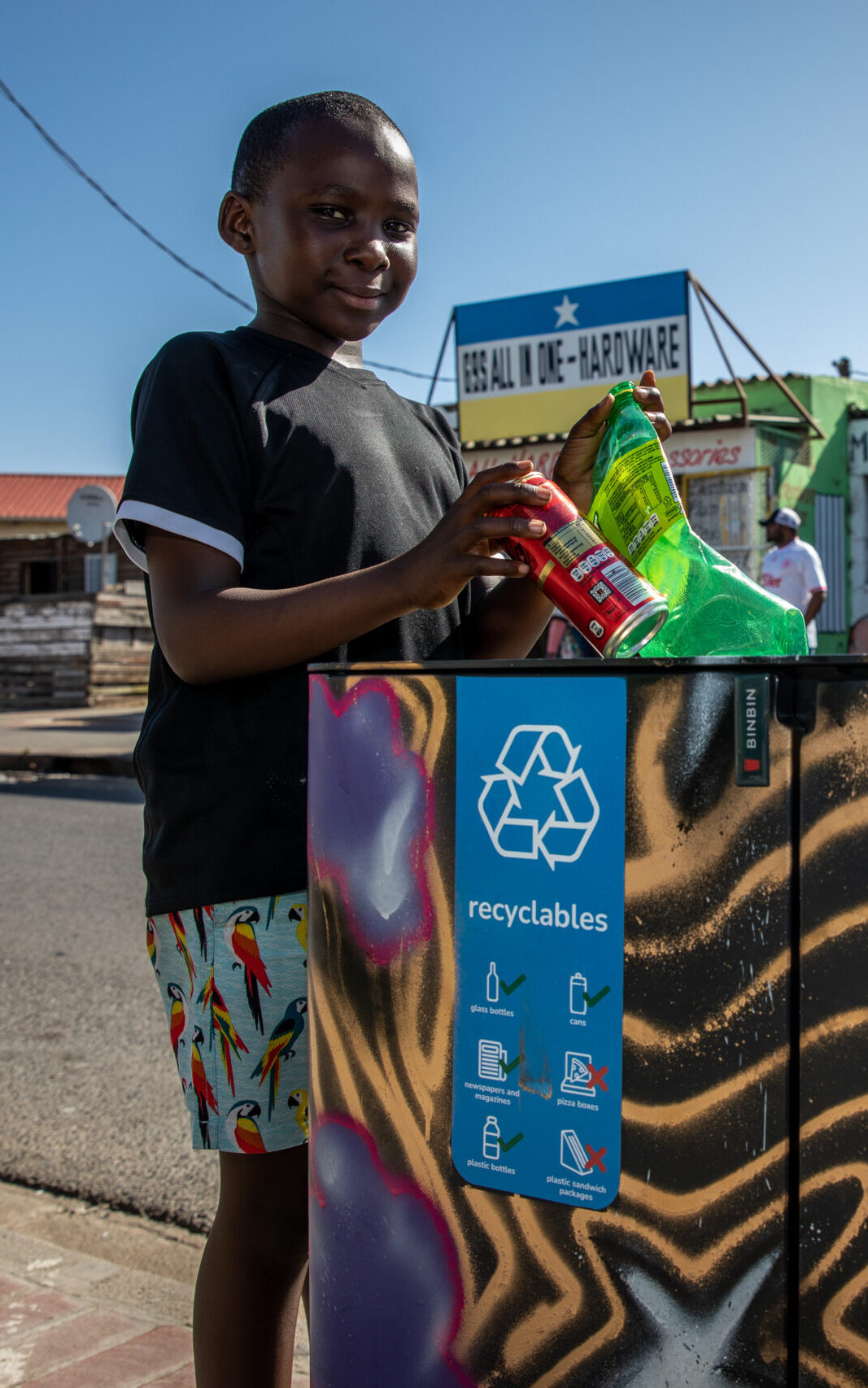
Clear pictorial guides work better than text-heavy instructions, particularly in multilingual workplaces. Images of common waste items positioned directly on or near the appropriate bins eliminate confusion about proper disposal methods. Infographics explaining the consequences of contamination help employees understand why precision matters to programme success.
Strategic placement of visual cues maximises impact at decision-making moments. Floor graphics leading to waste stations, overhead signage visible from multiple approaches, and bin-level labels all contribute to a seamless user experience. The goal is to make correct disposal feel obvious rather than requiring conscious decision-making.
Progress visualisation maintains engagement beyond initial implementation. Charts showing diversion rates, before-and-after photos of waste reduction, and celebration graphics recognising achievements keep waste separation visible in organisational consciousness.
How do you maintain long-term engagement with waste separation programmes?
Sustained engagement requires systematic feedback mechanisms, regular programme evolution, and ongoing recognition that prevents waste separation from becoming an invisible routine. Most programmes experience a decline in participation after initial enthusiasm, making a long-term strategy essential for continued success.
Establish measurement systems that track both compliance and outcomes. Regular audits of bin contents provide objective feedback on sorting accuracy, while waste diversion metrics demonstrate programme impact. Share this data transparently with participants, celebrating improvements and addressing challenges collaboratively.
Recognition programmes maintain motivation when they acknowledge both individual contributions and team achievements. Monthly recognition for departments with the highest diversion rates, individual appreciation for waste separation champions, and organisation-wide celebrations of milestone achievements create positive reinforcement cycles.
Programme evolution prevents stagnation by introducing new elements periodically. This might include:
- Expanding separation categories as habits develop
- Introducing composting programmes after recycling becomes routine
- Adding waste reduction challenges alongside separation activities
- Incorporating employee suggestions for system improvements
- Connecting waste separation to broader sustainability initiatives
Continuous education addresses knowledge gaps and reinforces proper techniques. Brief refresher sessions, updated visual guides reflecting common mistakes, and new employee orientation ensure consistent understanding across a changing workforce.
How BINBIN helps with waste separation communication
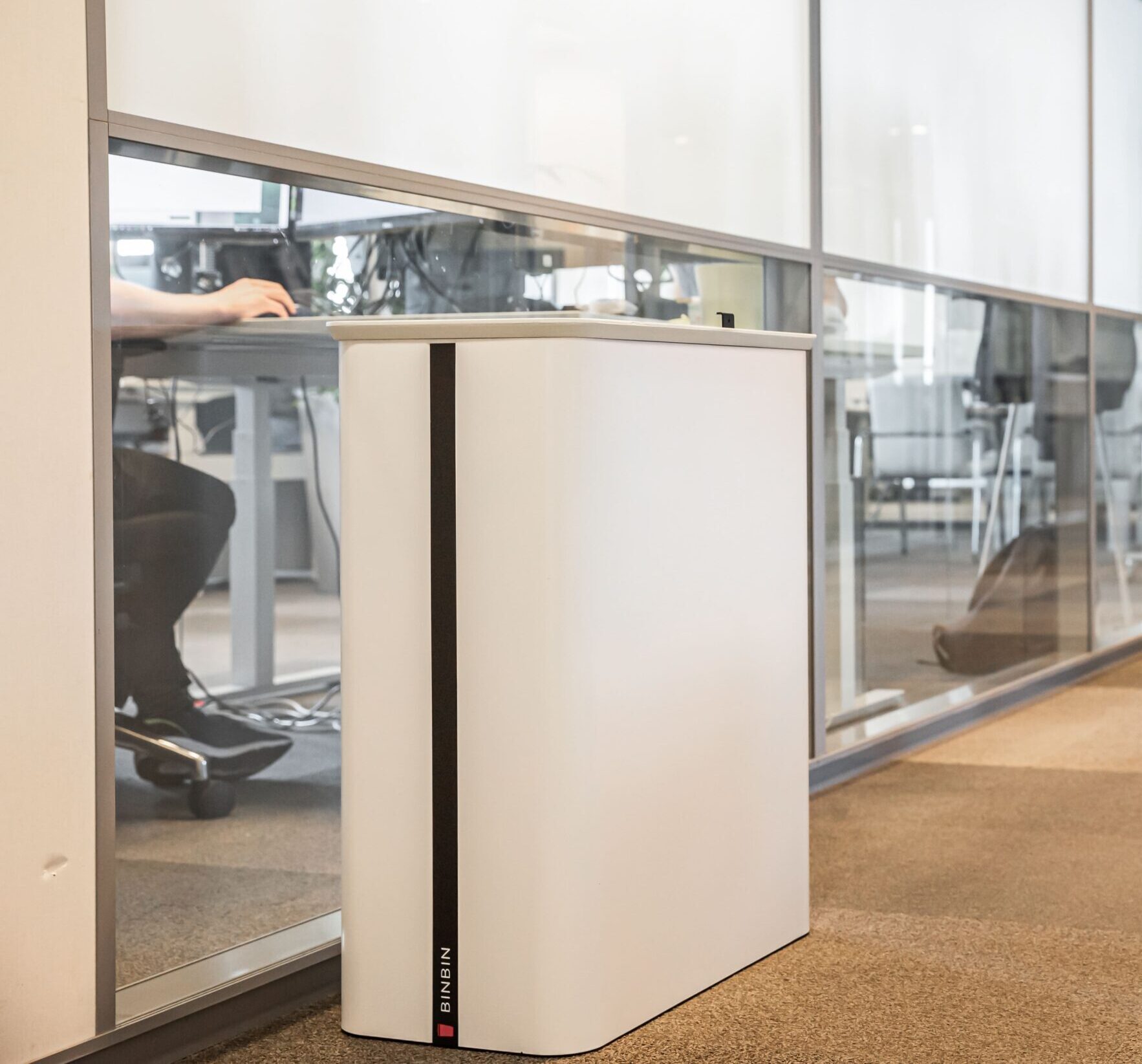
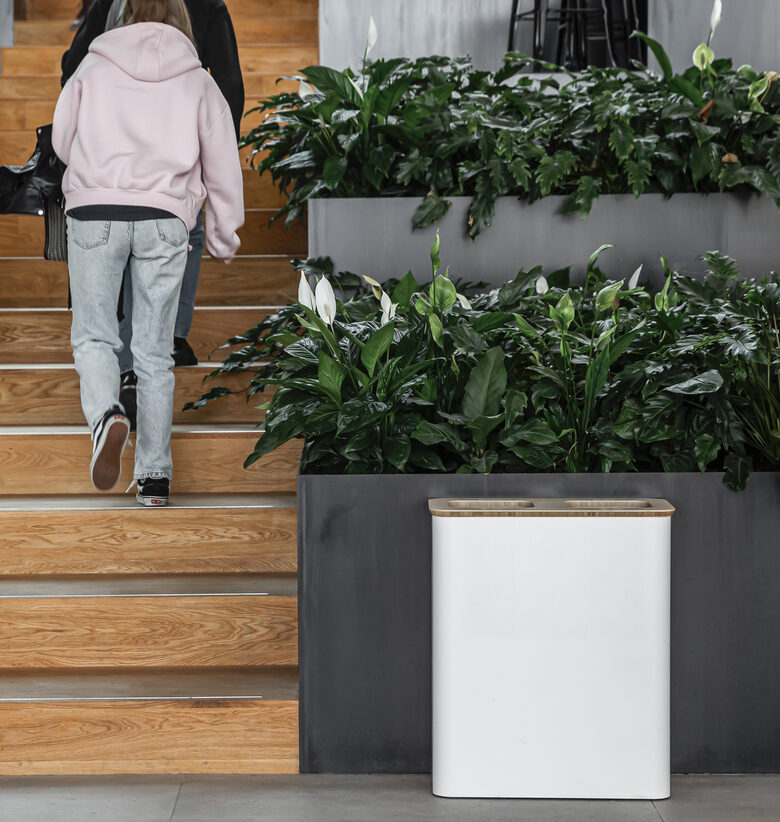
BINBIN’s modular waste solutions support effective communication strategies through intuitive design, clear labelling systems, and adaptable configurations that make waste separation messaging more impactful. Our office waste management systems integrate seamlessly with comprehensive communication programmes to maximise employee participation and sorting accuracy.
Our approach addresses common communication challenges through design-led solutions:
- Visual clarity: Clean, professional aesthetics that complement modern office environments while providing unmistakable sorting guidance
- Flexible messaging: Customisable labelling and branding options that align with your organisation’s communication style and sustainability messaging
- Intuitive functionality: Modular configurations that grow with your programme, allowing communication to focus on benefits rather than complex operational changes
- Ongoing support: Communication materials, including pictograms, stickers, and educational resources, that reinforce proper waste disposal practices
Ready to transform your waste separation communication strategy? Request a trial placement to experience how our solutions support effective messaging, or explore our complete range of modular waste systems designed for lasting communication success.