Workplace waste management is a systematic approach to collecting, separating, and disposing of different waste streams generated in office environments. It involves implementing proper waste disposal systems, employee training programmes, and monitoring procedures to ensure compliance with environmental regulations while reducing operational costs and supporting corporate sustainability goals.
What exactly is workplace waste management?
Workplace waste management encompasses the systematic collection, separation, and disposal of various waste streams within office environments. It includes establishing proper waste separation systems, training employees on correct disposal methods, and ensuring compliance with environmental regulations while maintaining cost-effective operations.
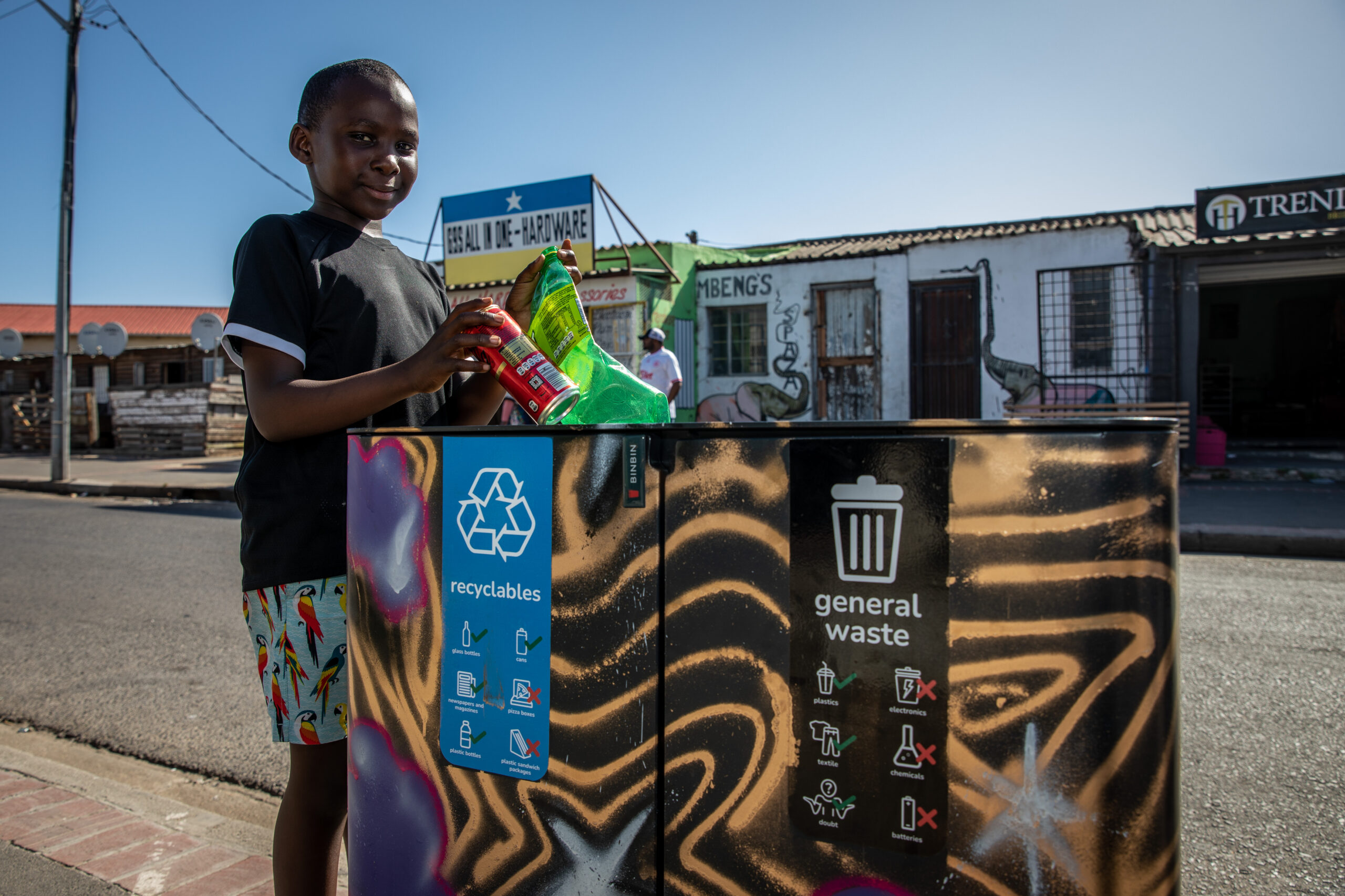
The core components of effective workplace waste management include waste separation systems that allow employees to sort different materials at the source, collection procedures that maintain hygiene standards, and disposal methods that align with local regulations. Modern office environments require integrated approaches that combine functionality with aesthetic appeal to encourage employee participation.
Successful implementation involves strategic placement of waste separation units throughout the workplace, clear labelling systems that eliminate confusion, and regular monitoring to ensure proper usage. The system must accommodate various waste streams while fitting seamlessly into existing office layouts and design schemes.
Why is proper waste management becoming mandatory in offices?
Proper waste management is becoming mandatory due to environmental legislation requiring businesses to implement separation at the source, reduce landfill waste, and demonstrate corporate responsibility. Legal compliance is now essential for avoiding penalties, while proper waste management also delivers significant cost savings and enhances brand reputation.
Environmental regulations across various jurisdictions mandate that organisations implement waste separation systems to reduce the volume of mixed waste sent to landfills. These requirements are part of broader circular economy initiatives aimed at minimising environmental impact and promoting sustainable business practices.
Beyond compliance, businesses benefit from reduced waste disposal costs when materials are properly separated for recycling. Clean, separated waste streams command better prices from waste management companies, while contaminated mixed waste incurs higher processing fees. Additionally, employees and clients increasingly expect organisations to demonstrate environmental responsibility through visible sustainability practices.
What types of waste do offices typically generate?
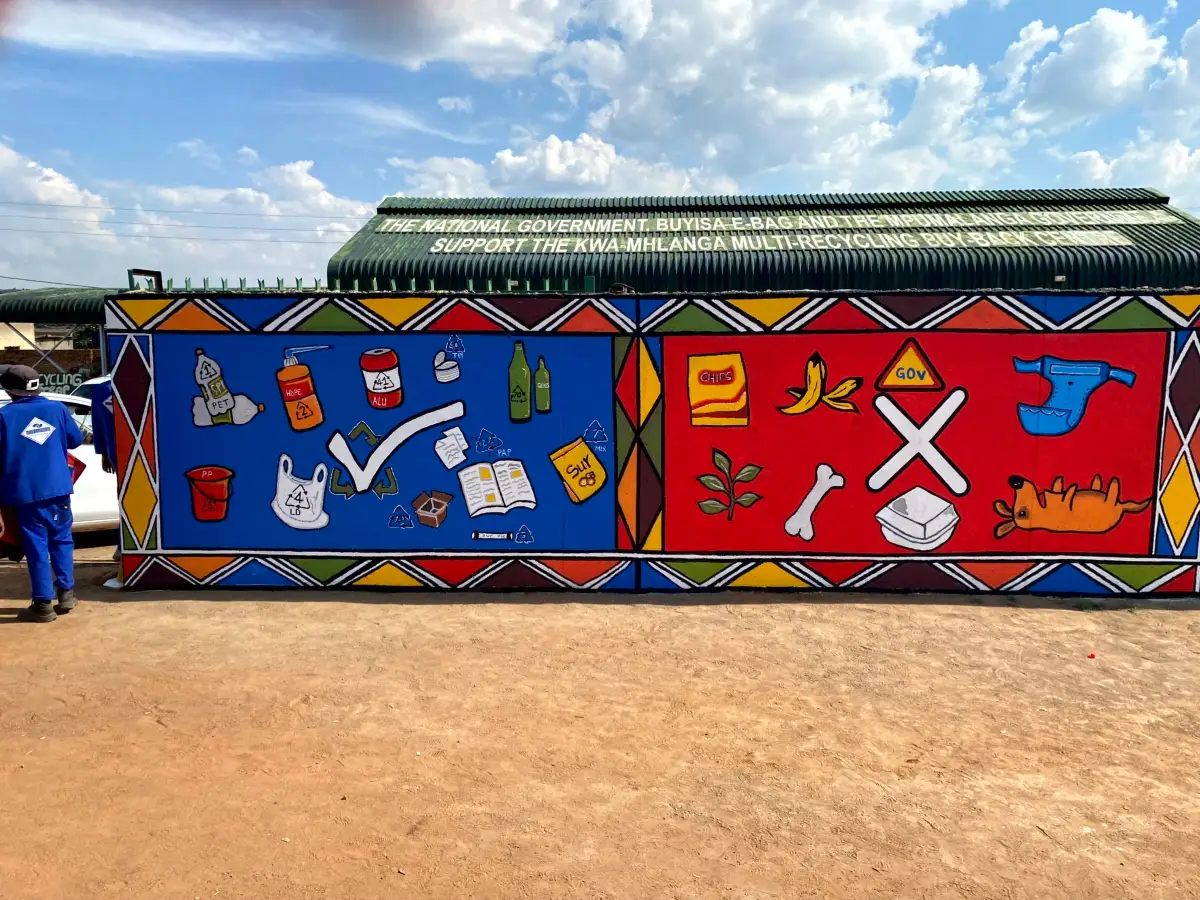
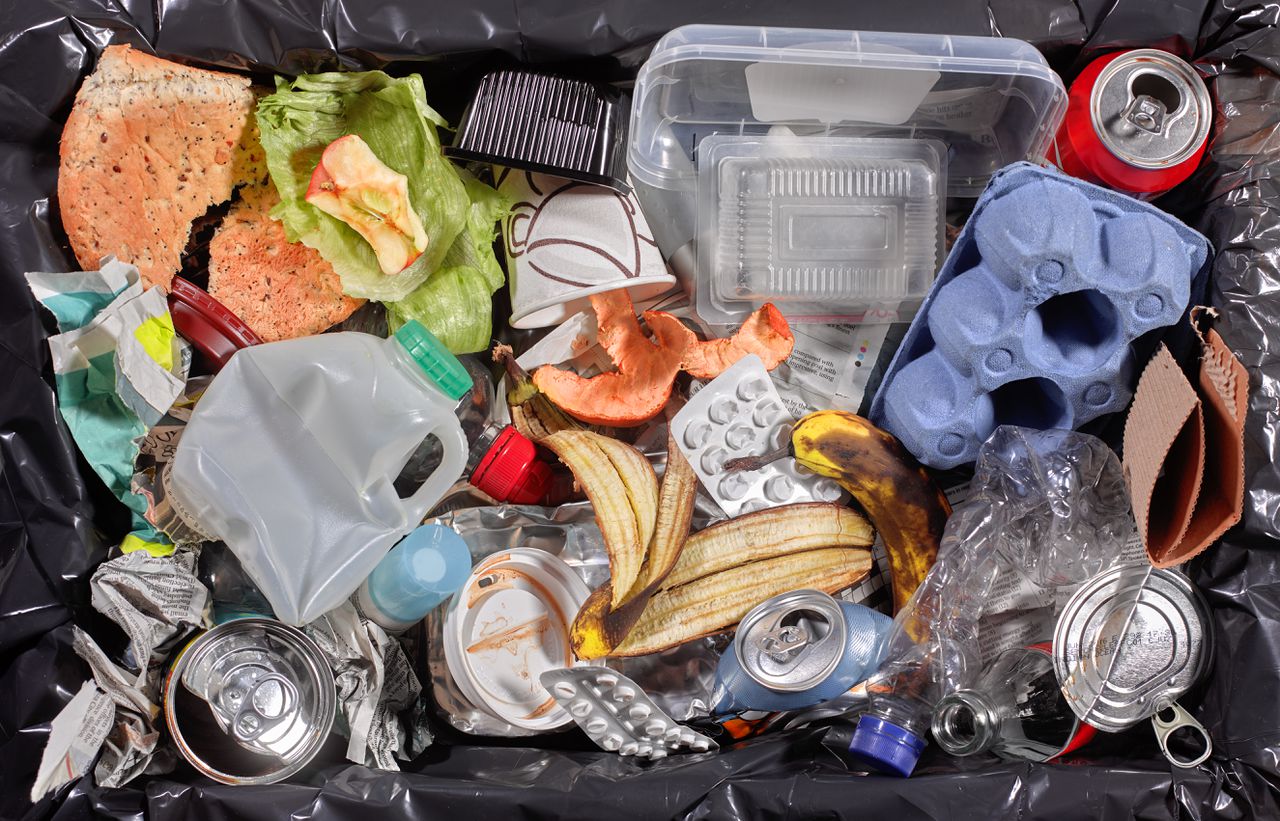
Offices typically generate five main waste streams: paper and cardboard, plastic packaging and containers, organic waste from kitchens and break areas, electronic waste from equipment, and general refuse. Each stream requires different handling procedures, with paper usually representing the largest volume, followed by mixed recyclables and organic waste.
Paper waste includes documents, newspapers, magazines, and cardboard packaging from deliveries. This stream often accounts for 60–70% of total office waste volume and is highly recyclable when kept separate from other materials. Contamination from food waste or liquids significantly reduces recycling value.
Plastic waste encompasses bottles, containers, packaging materials, and disposable items from catering areas. Electronic waste includes computers, printers, mobile phones, and batteries, requiring specialised disposal methods due to hazardous components. Understanding these patterns helps facilities managers plan appropriate collection systems and container sizes:
- Paper and cardboard: Highest volume; daily collection needed
- Plastic packaging: Moderate volume; weekly collection sufficient
- Organic waste: Variable volume; requires frequent collection to prevent odours
- Electronic waste: Low frequency; quarterly collection is typically adequate
- General refuse: Reduced volume when other streams are properly separated
How do you implement an effective waste separation system?
Implementing effective waste separation requires strategic placement of clearly labelled collection points, comprehensive employee training programmes, and regular monitoring systems. Begin with high-traffic areas like kitchens and copy centres, then expand coverage based on usage patterns and employee feedback.
Placement strategy determines system success. Position waste separation units where employees naturally dispose of waste, ensuring convenient access without disrupting workflow. Kitchen areas require organic waste collection alongside recyclables, while workstations need paper and general waste options. Copy centres should include paper recycling and toner cartridge collection.
Employee training must cover which materials belong in each stream, contamination prevention, and the business benefits of proper separation. Visual guides and regular reminders help maintain compliance. Consider appointing waste champions on each floor to provide ongoing support and feedback.
Implementation steps include:
- Conduct a waste audit to understand current volumes and types
- Select appropriate collection systems for each area
- Install clear signage and labelling systems
- Train employees on proper separation procedures
- Monitor usage patterns and adjust placement as needed
- Measure contamination rates and provide additional training where necessary
What are the main challenges with office waste management?
The primary challenges include employee compliance issues, space constraints for multiple collection points, contamination between waste streams, and integrating functional systems with office aesthetics. Many facilities struggle with inconsistent usage, limited storage space, and maintaining clean, professional appearances while accommodating multiple waste streams.
Employee compliance remains the biggest obstacle, with studies showing that convenience and clear labelling significantly impact participation rates. When waste separation systems are inconveniently located or poorly labelled, employees often default to general waste disposal, undermining the entire programme.
Space constraints in modern offices limit options for waste disposal systems. Traditional multiple-bin approaches consume valuable floor space and can appear cluttered. Contamination occurs when employees dispose of items incorrectly, rendering entire batches unsuitable for recycling and increasing processing costs.
Aesthetic integration challenges arise when functional waste management systems clash with carefully designed office environments. Many facilities managers struggle to find solutions that satisfy both operational requirements and design standards, leading to compromised implementations that fail to achieve full employee adoption.
How BINBIN helps with workplace waste management
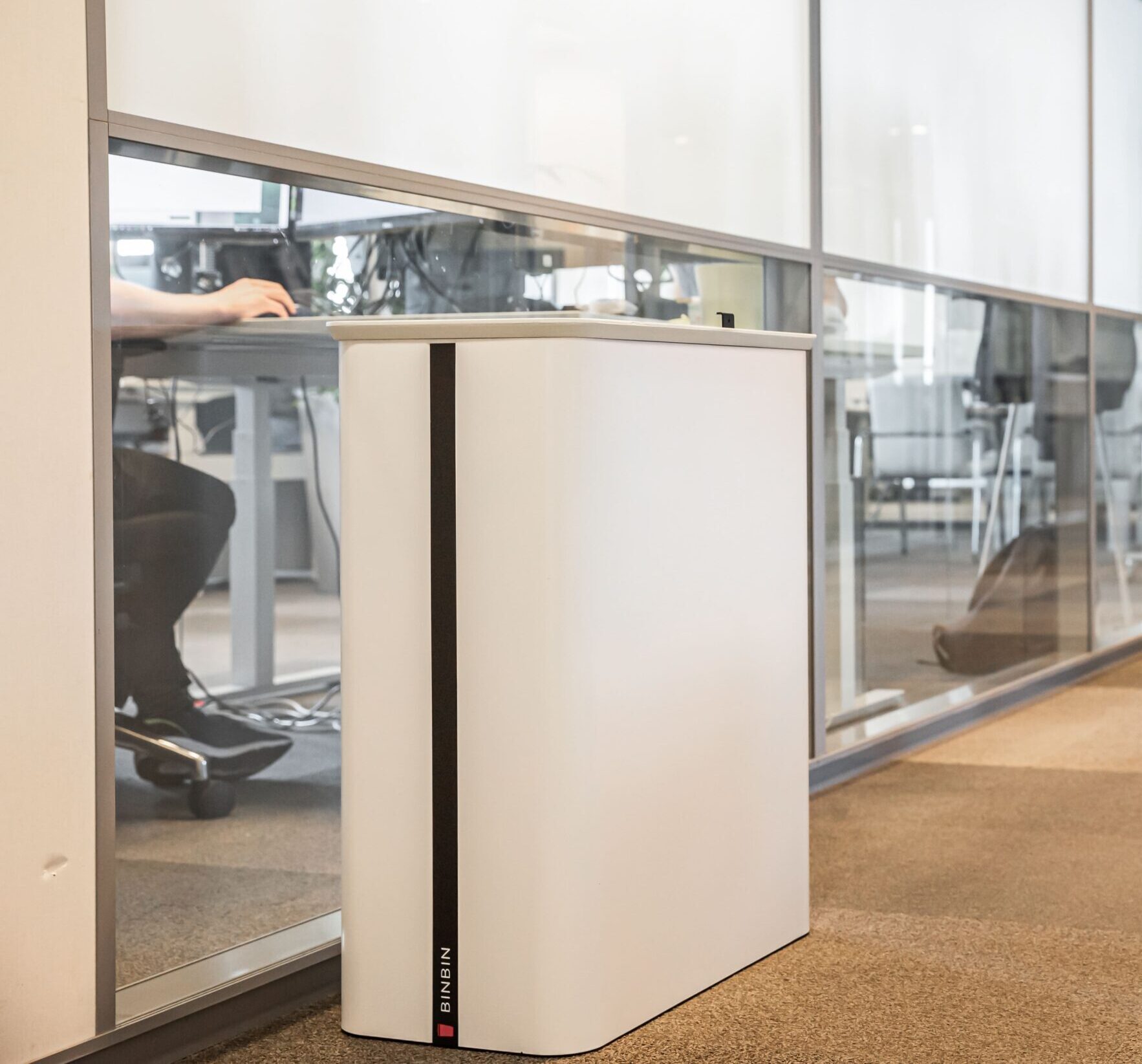
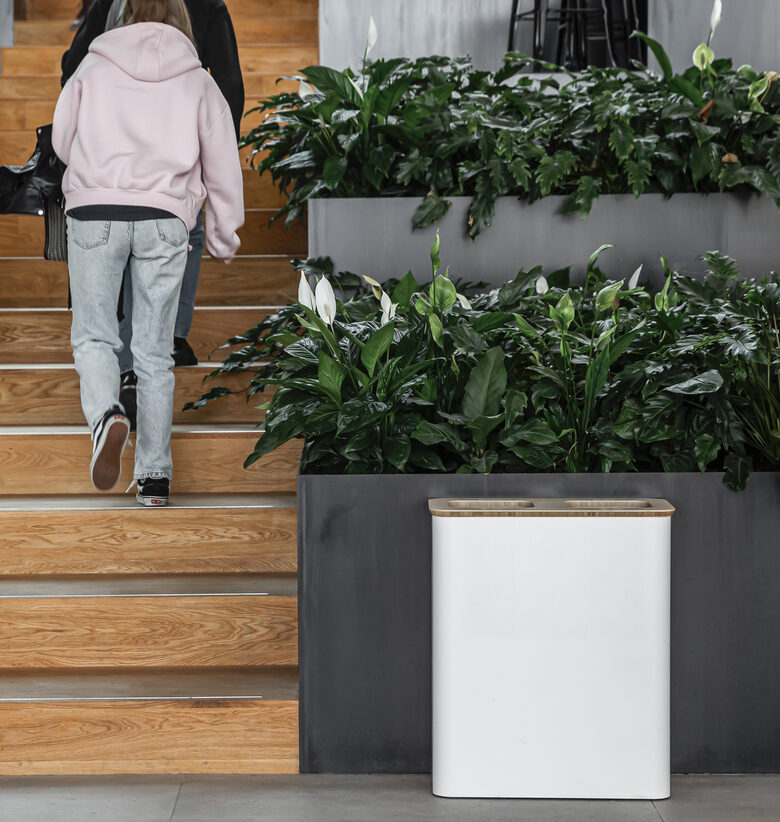
We provide modular waste separation solutions specifically designed for office environments, combining functionality with aesthetic appeal. Our systems address space constraints through flexible configurations while maintaining the professional appearance essential for modern workplaces.
Our approach focuses on practical solutions that encourage employee participation:
- Modular design allows 1–8 waste streams in a single footprint, maximising space efficiency
- Internal splitting capabilities enable stream adjustments without purchasing new equipment
- Clean, professional aesthetics integrate seamlessly with office design schemes
- Customisable branding options reinforce corporate sustainability messaging
- 99% circular materials demonstrate genuine environmental commitment
We provide comprehensive implementation support, including waste audits, placement recommendations, and employee training materials. Our circular design philosophy ensures long-term value while supporting your sustainability objectives.
Ready to transform your workplace waste management? Contact us for a consultation and trial placement to experience how our solutions can solve your facility's waste management challenges while enhancing your office environment.