Successful office waste separation requires the right combination of employee engagement, system design, and clear processes. Key factors include convenient bin placement, clear labelling, regular communication, and choosing systems that match your workplace culture and waste streams. Most importantly, employees need to understand both the environmental benefits and their specific role in making separation work effectively.
What makes employees actually participate in office waste separation?
Employee participation depends on making waste separation convenient and intuitive while connecting it to personal values and company culture. When separation feels effortless and meaningful, compliance rates increase dramatically.
Convenience is the most critical factor. Bins must be placed exactly where employees generate waste—near printers for paper, in kitchen areas for organic waste, and at workstations for general waste. If someone needs to walk more than a few steps to dispose of waste correctly, they often won’t bother.
Clear visual communication eliminates confusion. Use colour-coded bins with pictures showing exactly what belongs where. Text instructions should be minimal and in multiple languages where relevant. The goal is instant recognition without reading or thinking.
Regular reinforcement keeps participation high. Brief monthly reminders, progress updates, and addressing common mistakes help maintain momentum. Avoid lengthy lectures—focus on quick, positive messaging that celebrates progress.
Cultural integration makes separation feel natural rather than imposed. When leadership visibly participates and waste separation aligns with stated company values, employees see it as part of their professional identity rather than an additional burden.
How do you choose the right waste separation system for your office?
The right system matches your specific waste streams, office layout, and employee behaviour patterns. Start by conducting a waste audit to understand what your office actually generates, then select systems that handle those streams efficiently.
Begin with a waste stream analysis. Most offices generate paper, general waste, plastic packaging, and organic waste from kitchens. Some also produce electronic waste, batteries, or specialised materials. Document quantities and the locations where each stream originates.
Consider your space constraints and workflow patterns. Open-plan offices need different solutions than individual offices. High-traffic areas require higher-capacity systems, while quiet zones need unobtrusive options that won’t disrupt work.
Evaluate scalability requirements. Your needs will change as teams grow or move. Modular systems that can be reconfigured offer better long-term value than fixed installations that become obsolete.
Factor in maintenance and servicing. Systems requiring frequent emptying or complex cleaning procedures often fail because they become burdensome for facilities teams. Choose solutions that integrate smoothly with existing cleaning routines.
What are the most common mistakes that kill office recycling programmes?
The biggest programme killers are poor bin placement, confusing labelling, and inadequate ongoing support. These seemingly small issues create frustration that leads to the abandonment of separation efforts entirely.
Placement mistakes doom programmes from the start. Putting recycling bins in central locations while leaving general waste bins at every desk creates an obvious convenience gap. Employees choose the easiest option, which undermines the entire system.
Confusing or inconsistent labelling causes contamination and frustration. Using different colour schemes in different areas, unclear symbols, or overly complex sorting rules makes compliance feel impossible. When people aren’t sure, they default to general waste.
Launch-and-forget approaches fail within months. Without regular communication, feedback, and system adjustments, initial enthusiasm fades quickly. Programmes need ongoing attention to address problems and maintain engagement.
Inadequate capacity planning creates visible failures. Overflowing recycling bins send the message that the system doesn’t work, leading employees to give up on separation entirely.
Why do some offices struggle with waste separation compliance?
Compliance struggles typically stem from insufficient change management, competing priorities, and a lack of clear accountability. In South Africa, the National Environmental Management: Waste Act requires waste separation, but many organisations focus on legal compliance rather than practical implementation.
Change management failures occur when organisations treat waste separation as a simple policy change rather than a behavioural shift. Without proper introduction, training, and support, employees resist new requirements that seem to complicate their daily routines.
Competing priorities undermine compliance when waste separation isn’t integrated into existing workflows. If employees feel torn between productivity demands and environmental responsibilities, productivity usually wins.
Unclear accountability creates inconsistent results. When nobody owns the programme’s success, problems go unaddressed and standards drift over time. Successful programmes assign specific responsibility for monitoring and improvement.
Resource constraints affect system effectiveness. Inadequate bin capacity, infrequent collection, or poor maintenance creates practical barriers that make compliance difficult even for willing participants.
How do you measure if your office waste separation is actually working?
Effective measurement combines contamination rates, participation levels, and waste disposal cost tracking. These metrics provide a complete picture of both environmental impact and programme effectiveness.
Track contamination rates by regularly checking separated waste streams. Successful programmes maintain contamination below 10% for most streams. Higher contamination indicates system problems or training gaps that need immediate attention.
Monitor participation through observation and feedback. Count how many workstations have appropriate bins, observe disposal behaviour during busy periods, and survey employees about their experience with the system.
Measure waste disposal costs and diversion rates. Calculate the following key indicators:
- Total waste diverted from general disposal
- Cost per kilogram for different waste streams
- Monthly waste disposal expense trends
- Recycling revenue or cost savings achieved
- Overall waste generation per employee
Document system usage patterns to identify improvement opportunities. Which bins fill fastest? Where does contamination occur most often? What times of day see the most disposal activity?
How BINBIN helps with successful office waste separation
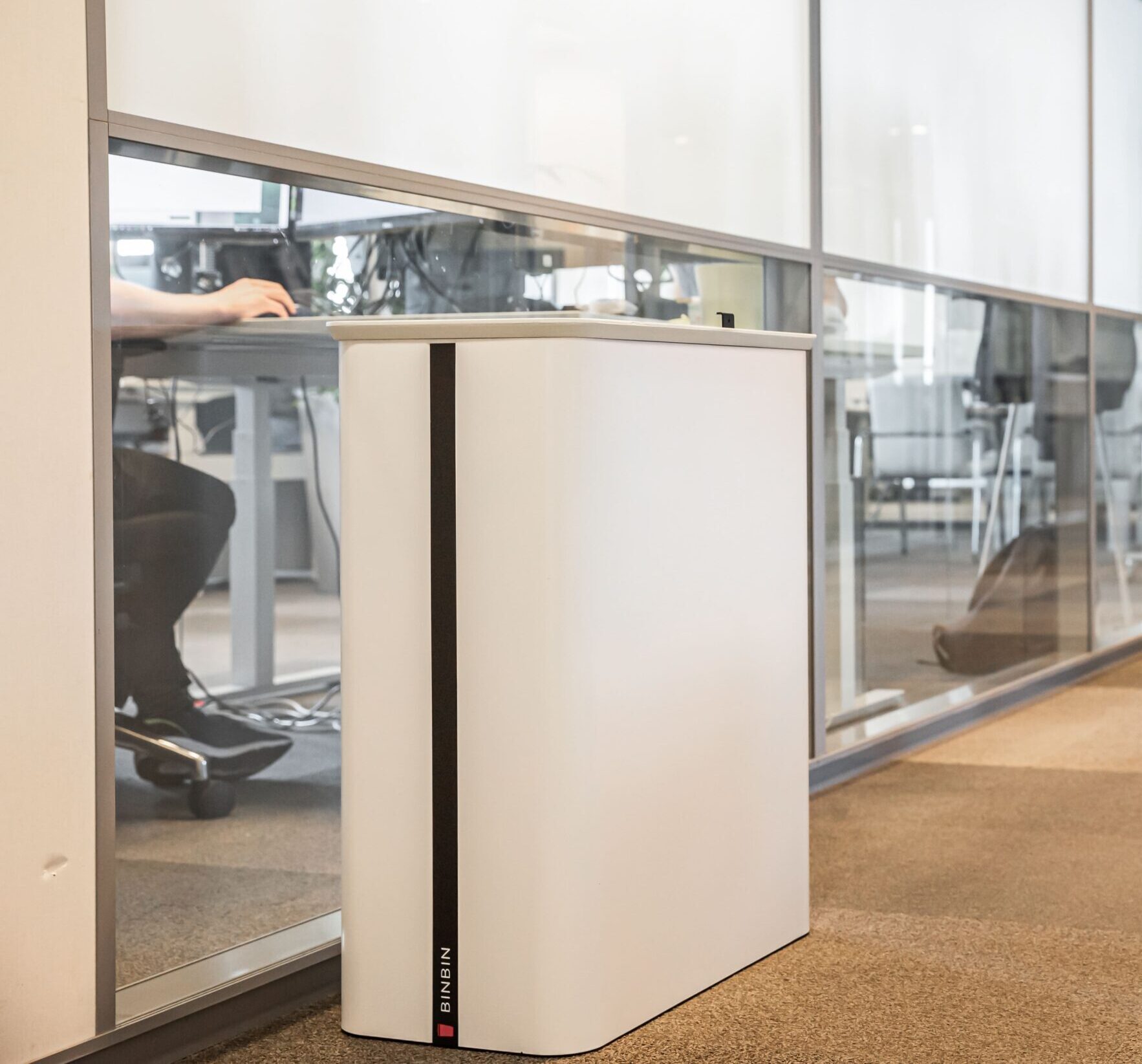
BINBIN’s modular office waste management systems address the key factors that make separation successful. Our solutions combine employee-friendly design with flexible configuration options that adapt to your specific workplace needs.
Our approach includes:
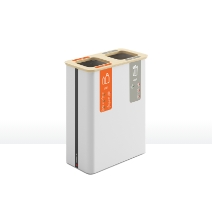
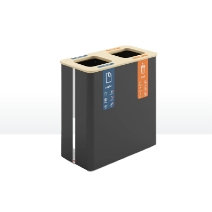
- Modular systems that grow from 1 to 8 waste streams as your programme develops
- Clean, intuitive design that integrates seamlessly with professional office environments
- Customisable labelling and branding to match your company identity
- Expert guidance on placement strategies and employee engagement
- Comprehensive implementation support, including communication materials and training resources
The BINBIN team provides personalised consultation to identify your specific waste streams and recommend optimal configurations. We also offer trial placement programmes so you can test systems before committing to full implementation.
Ready to create a waste separation programme that actually works? Explore our range of office solutions or contact us for a customised consultation that addresses your specific compliance and sustainability goals.