Healthcare waste bins require specialised features such as infection control compatibility, secure containment systems, and regulatory compliance capabilities that distinguish them from standard commercial waste solutions. Medical facilities generate multiple waste streams, including infectious materials, pharmaceuticals, and sharps, that demand specific handling protocols. The right waste management system ensures patient safety, staff protection, and regulatory adherence while supporting efficient clinical workflows.
What makes healthcare waste management different from other industries?
Healthcare waste management operates under stringent infection control protocols and regulatory frameworks that do not apply to other sectors. Medical facilities must handle infectious materials, contaminated items, pharmaceuticals, and hazardous substances that pose serious health risks if improperly managed.
The complexity extends beyond standard waste separation. Healthcare environments generate pathological waste, cytotoxic materials, radioactive substances, and sharps that require immediate containment at the point of generation. Each waste stream demands specific handling procedures, storage requirements, and disposal methods to prevent cross-contamination and protect public health.
Unlike office waste management systems, healthcare facilities operate under continuous scrutiny from health authorities. Staff turnover, emergency situations, and high-pressure environments mean waste systems must be intuitive and fail-safe, requiring minimal training while maintaining absolute compliance standards.
Which types of waste bins are essential in healthcare facilities?
Healthcare facilities require multiple specialised bin categories to handle distinct waste streams safely and compliantly. Essential types include sharps containers for needles and scalpels, infectious waste bins for contaminated materials, pharmaceutical disposal units for expired medications, and general waste receptacles for non-hazardous items.
Sharps containers must feature puncture-resistant construction with secure, one-way openings that prevent retrieval once items are deposited. These containers require strategic placement in treatment rooms, laboratories, and patient areas where sharp instruments are used regularly.
Infectious waste bins need colour-coded systems, typically using yellow containers for clinical waste, red for pathological materials, and specialised purple containers for cytotoxic waste. Each category requires different liner specifications and containment protocols to prevent leakage or contamination during transport.
- Sharps containers with puncture-proof construction and secure lids
- Infectious waste bins with appropriate colour coding and leak-proof design
- Pharmaceutical disposal units for controlled substance management
- General waste receptacles for non-contaminated materials
- Recycling bins for appropriate healthcare materials, where permitted
How do infection control requirements affect waste bin selection?
Infection control standards mandate touchless operation features and antimicrobial surfaces to minimise cross-contamination risks in healthcare environments. Bins must incorporate foot-pedal mechanisms, sensor-activated lids, or hands-free opening systems that prevent direct contact during disposal activities.
Surface materials require antimicrobial properties or easy-clean finishes that withstand frequent disinfection with hospital-grade cleaning agents. Smooth, non-porous surfaces without crevices or joints prevent bacterial accumulation and facilitate thorough sanitisation between uses.
Design elements must support infection prevention protocols, including secure lid closure, leak-proof construction, and containment systems that prevent aerosol generation during waste disposal. Bins positioned in sterile environments require additional considerations to maintain aseptic conditions during use.
What are the key features to look for in healthcare waste bins?
Essential healthcare waste bin features include foot-pedal operation systems, secure locking lids, clear colour-coding identification, appropriate capacity sizing, mobility options for efficient collection, and robust construction that withstands constant use in demanding medical environments.
Foot-pedal mechanisms ensure hands-free operation, which is critical for maintaining sterile procedures and preventing contamination. Pedals must be durable enough for frequent use while remaining responsive and easy to operate, even when staff wear protective footwear.
Secure lid systems prevent unauthorised access and contain odours while ensuring proper waste segregation. Locking mechanisms protect against tampering and accidental opening during transport, maintaining containment integrity throughout the disposal process.
- Implement foot-pedal operation for hands-free waste disposal
- Ensure secure lid systems with proper locking mechanisms
- Establish clear colour coding that matches regulatory requirements
- Select appropriate capacity sizes for different clinical areas
- Include mobility features for efficient waste collection routes
- Verify durability standards for high-frequency healthcare use
How should healthcare facilities organise waste separation systems?
Effective healthcare waste separation requires strategic bin placement at point-of-generation locations, with clear visual identification systems and workflow integration that supports clinical efficiency. Each treatment area, laboratory, and patient room needs appropriately sized containers for the specific waste types generated in those spaces.
Placement strategies must consider clinical workflows to ensure waste disposal does not interrupt patient care activities. Bins should be positioned within easy reach of work areas while maintaining clear pathways and not interfering with emergency procedures or equipment access.
Visual identification systems using standardised colour coding, clear labelling, and pictorial guides help staff quickly identify correct disposal methods, even during high-stress situations. Consistent placement patterns throughout the facility reduce confusion and support proper segregation habits.
Staff training programmes must address waste identification, proper disposal techniques, and emergency procedures for spills or contamination incidents. Regular refresher sessions ensure compliance standards are maintained as staff changes occur and new waste streams are introduced.
What compliance standards must healthcare waste bins meet?
Healthcare waste bins must satisfy local health department standards, infection control guidelines, environmental regulations, and industry-specific certifications that govern medical waste management systems. In South Africa, facilities must comply with National Health Act regulations for healthcare waste management in health establishments.
The South African National Standard, SANS 452, provides specifications for non-reusable medical devices used in healthcare waste management. This standard covers container requirements, labelling systems, and handling protocols that ensure safe waste management from generation through final disposal.
Provincial health departments may impose additional requirements beyond national standards, requiring facilities to verify local compliance obligations. Metropolitan and local municipalities may issue by-laws specifying waste management services and related requirements, creating multiple regulatory layers that healthcare facilities must navigate.
Registration requirements mandate that healthcare waste generators register with relevant environmental and health authorities. Transport and processing facilities handling medical waste must obtain the appropriate licences and meet specific regulatory requirements, creating accountability throughout the waste management chain.
How BINBIN helps with healthcare waste management solutions
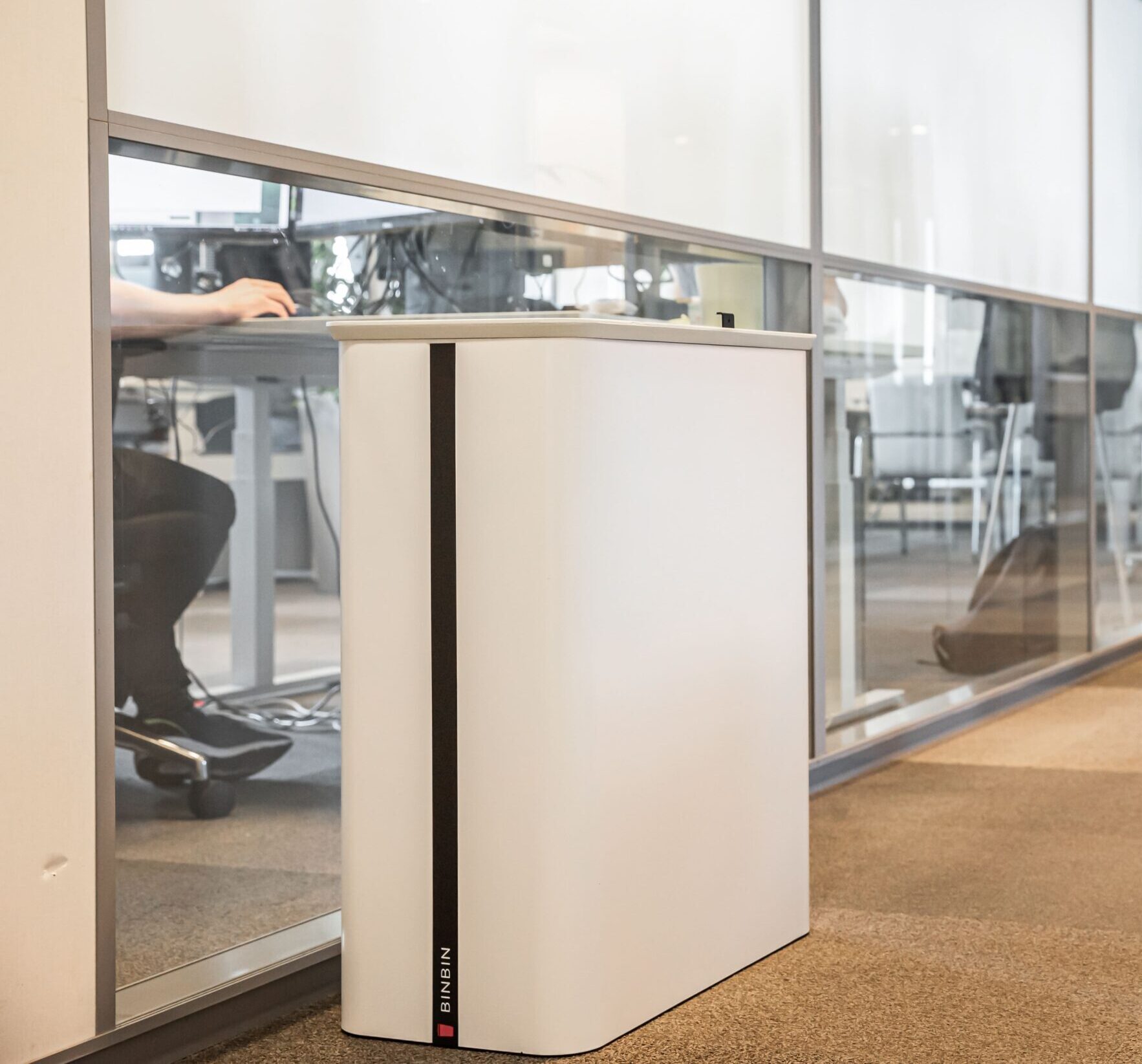
BINBIN's modular waste separation systems provide healthcare-compatible solutions that adapt to medical facility requirements while supporting infection control protocols and regulatory compliance. Our Globular series enables facilities to configure 1 to 8 waste streams with flexible compartment arrangements that evolve with changing clinical needs.
Our healthcare waste solutions feature:
- Antimicrobial surface treatments compatible with hospital-grade disinfectants
- Foot-pedal operation systems for hands-free waste disposal
- Colour-coding options that align with South African healthcare waste regulations
- Modular design allowing easy reconfiguration as waste streams change
- 99% circular construction using recycled and recyclable materials
This modular approach means healthcare facilities never need new bins when waste requirements change. Internal compartment splitting and stream-combination capabilities provide maximum flexibility for evolving medical practices and regulatory updates.
Ready to implement compliant healthcare waste management? Contact us for a trial placement to experience how our modular systems enhance your facility's waste management efficiency while maintaining the highest standards of infection control and regulatory compliance.